
Free on-site gate assessment - hinges, posts, and your LiftMaster or Nice gate operator checked before anything is quoted
The assessment is free and the quote is the invoice.


 Before
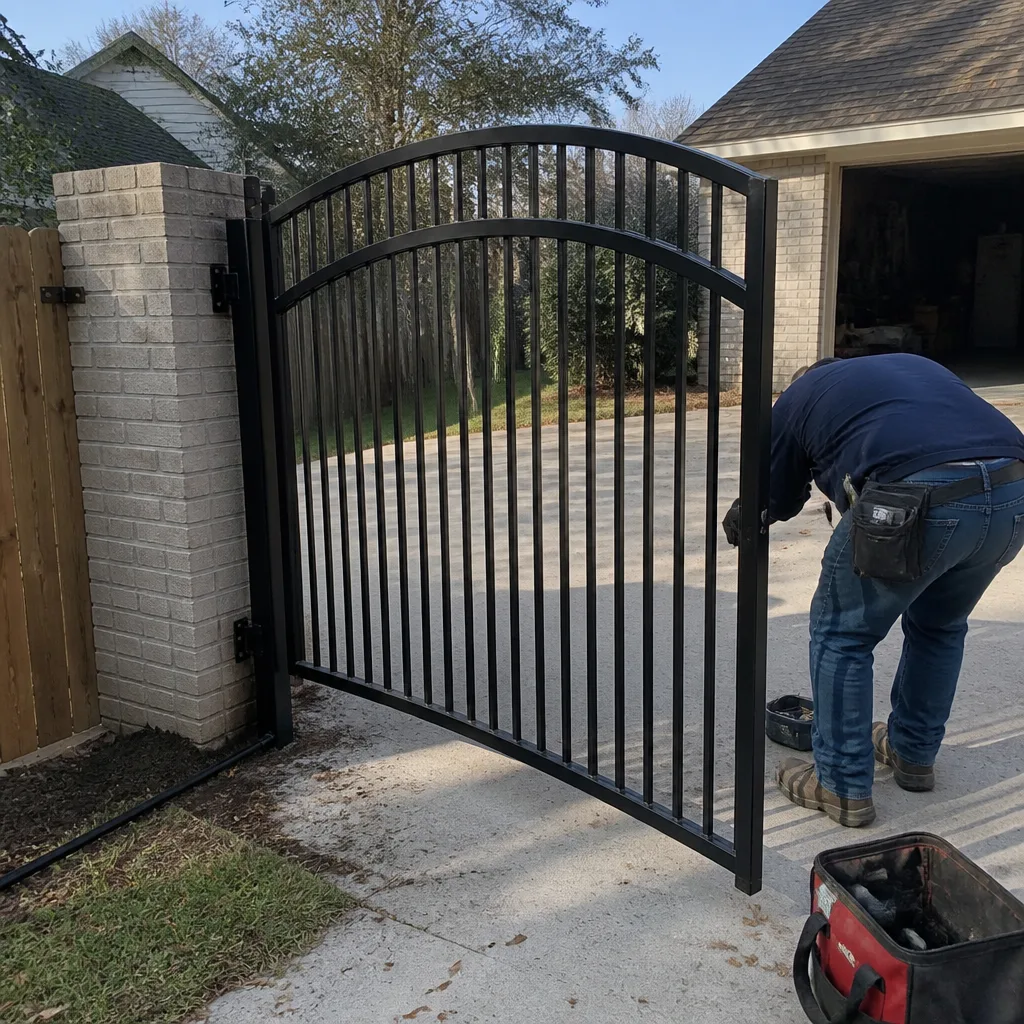 After
After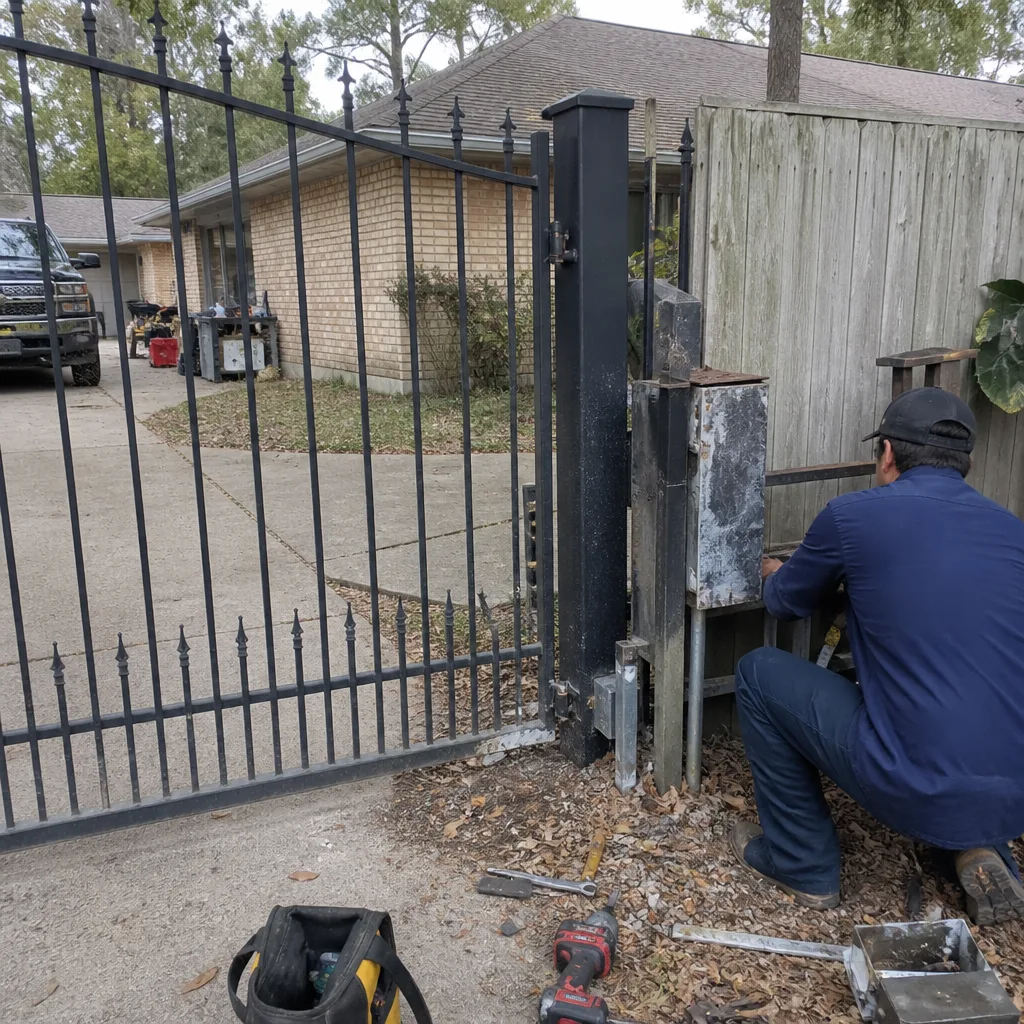 Before
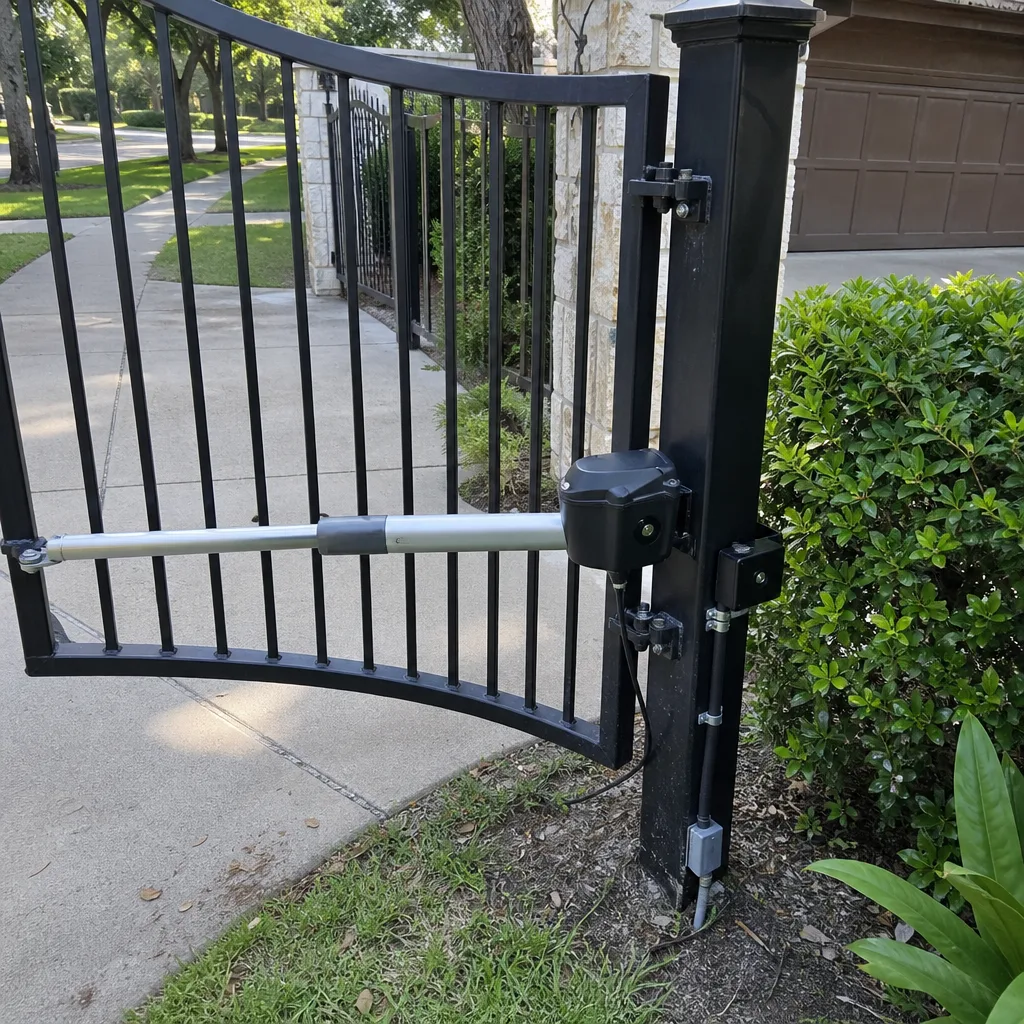 After
After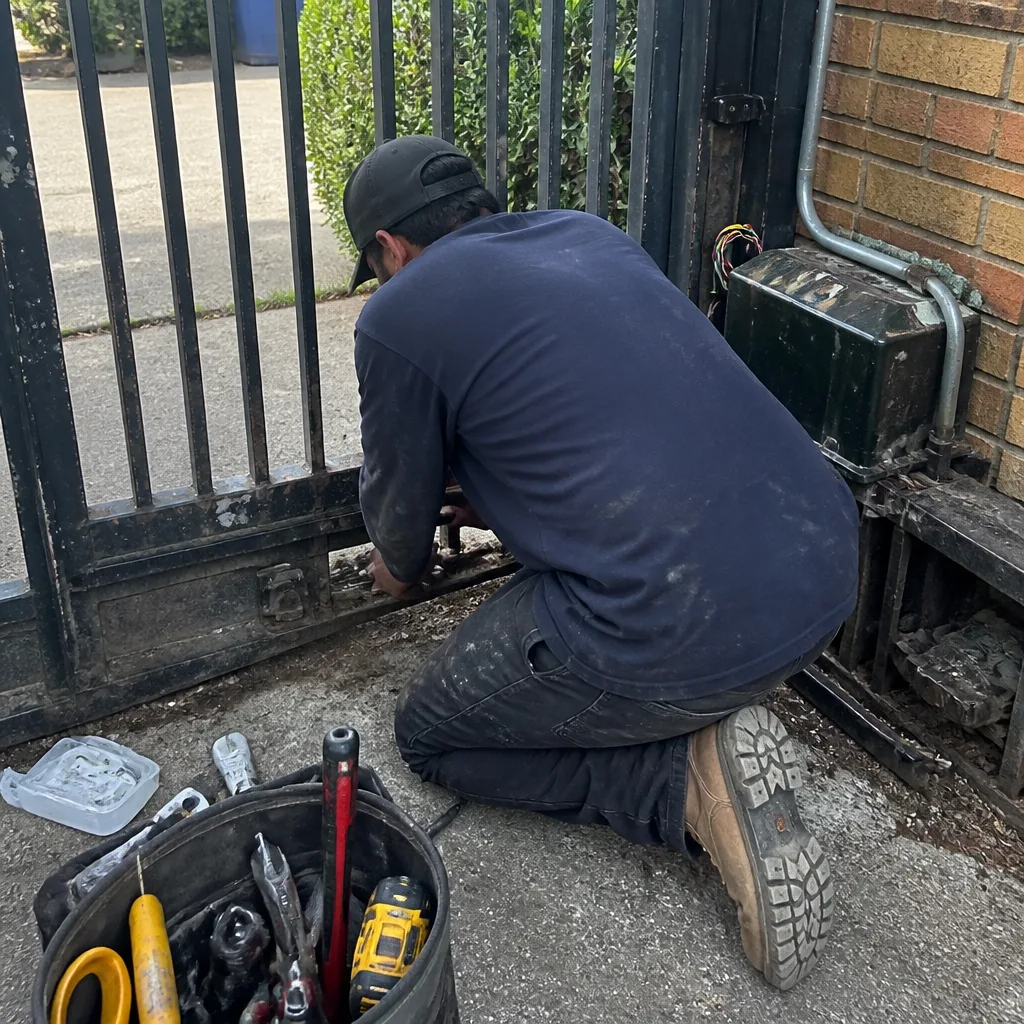 Before
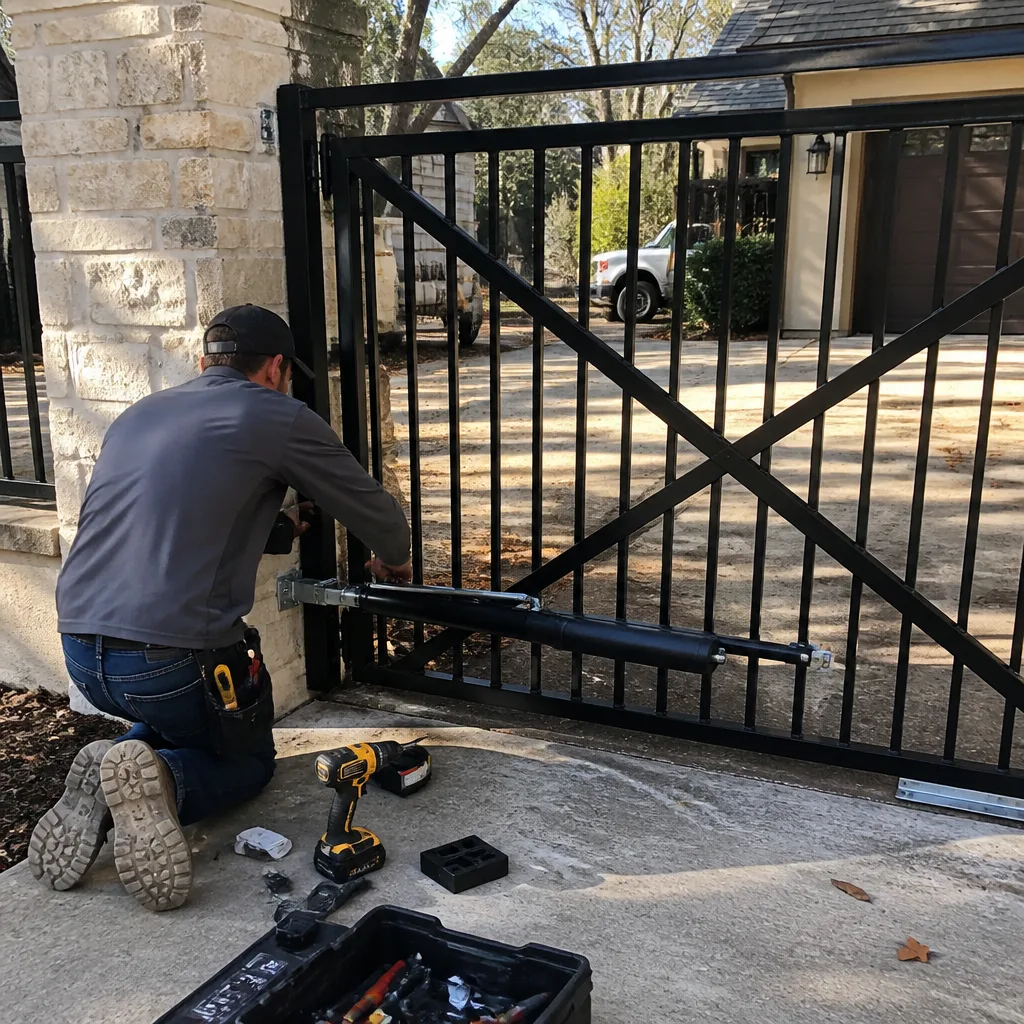 After
AfterBFT Access Control Installation: The Spring Owner’s Guide
A BFT access control installation in Spring typically runs between $450 and $1,300 installed, depending on whether you need a keypad, card reader, telephone entry unit, or a full keypad-plus-receiver retrofit on an existing BFT operator. We stock BFT-compatible access control components on our trucks and can usually have a technician at your door the same day you call. Most owners discover the problem the same way: the keypad stops accepting the code, the card reader beeps but the gate doesn’t move, or the telephone entry unit rings through to a dead line and nobody can get in.
Sometimes it’s the access control unit itself. Sometimes it’s the wiring between the unit and the BFT control board, and the access control was never the problem. That’s the thing about access control on gates: the symptom looks like a dead part, but the cause is often a corroded wire nut, a chewed low-voltage line, or a control board input that stopped reading the signal. We figure that out before we quote you a replacement part. That’s the whole point of writing the diagnosis down before anyone reaches for a tool.
Which BFT Models This Applies To
The BFT access control systems we install in Spring cover two main families: the standalone entry devices (keypads, proximity readers, and telephone entry units that wire into a BFT operator’s open command) and the integrated BFT control boards with built-in radio receiver modules. Standalone devices like the BFT Mitto keypad or a BFT-compatible proximity reader work with any BFT operator that has a dry-contact open input, which includes the Deimos, Phobos, Rigel, Aries, and Virgo series swing and slide gate operators.
Before you buy a replacement, check one thing: the voltage rating printed on the back of your existing keypad or reader, and the terminal strip label on your BFT control board. BFT boards output 24V DC for accessory power, but some older boards and some third-party keypads are 12V only. Wire a 12V keypad to a 24V output and you’ll cook the keypad in about a week. We’ve seen that exact failure twice in the Gleannloch Farms area. It’s one of those things that looks like a “bad part” but isn’t.
As for OEM versus aftermarket: BFT’s own keypads and readers are well built, but the aftermarket equivalents from nice manufacturers often match or exceed the OEM spec for less money, provided the voltage and the output format match. BFT uses a standard Wiegand output on most card readers, which makes aftermarket swap-outs straightforward. Keypads are simpler still: four wires, a relay output, and a code memory. If you already have the wiring in place, the swap is usually under an hour.
We’re an independent service provider, not affiliated with BFT. That means we stock parts that work with BFT equipment, not just parts with the BFT logo on them, and we’ll tell you honestly which one makes sense for your gate.
Signs Your BFT Access Control Installation Is Failing
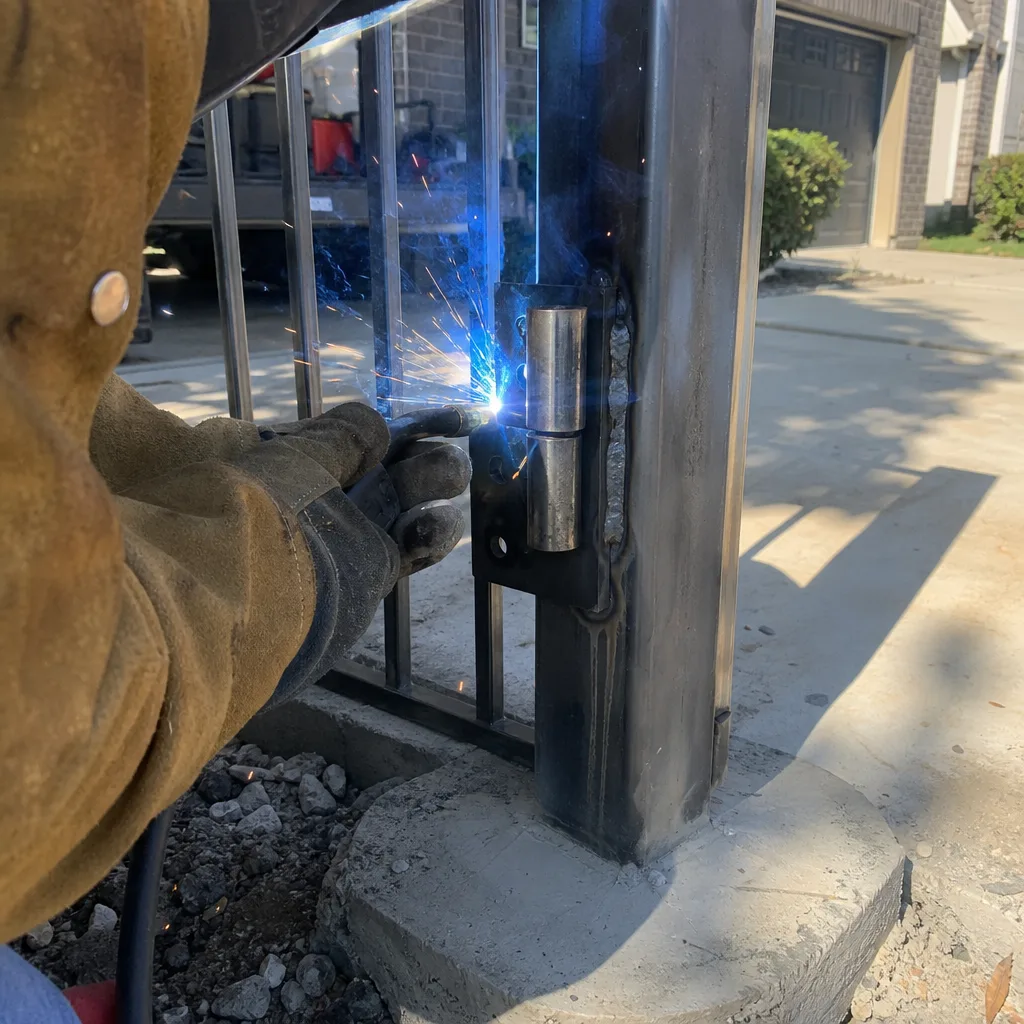
Access control failures are easier to diagnose than most gate problems because the failure mode is usually visible. Here’s what we see most often in Spring:
- Keypad accepts some codes but not others. The code memory is corrupted or a button on the keypad’s membrane is intermittently dead. Often the keypad still sends a signal, but the contact on one digit fails intermittently. We’ll test each button under load before condemning the keypad.
- Card reader beeps but the gate doesn’t open. The reader is reading the card fine and sending a Wiegand signal, but the BFT control board isn’t executing the open command. That’s usually a board input issue or a wiring fault between reader and board, not a failed reader.
- Telephone entry unit rings but callers hear silence or a busy signal. The unit lost its phone line connection, or the internal relay that triggers the gate open has failed. In Spring, phone-line entry units are also vulnerable to the same lightning strikes that take out gate boards in the summer storm season.
- Keypad lights up but nothing happens at the gate. The relay output on the keypad has failed, or the wire to the BFT board’s open input has come loose. We put a meter on the relay and check for continuity before replacing anything.
- Gate opens on its own, or the access control resets to factory codes. That’s almost always water intrusion in the keypad housing, or a failing memory chip. Humidity in the Houston area gets inside keypads through the weep holes and slowly destroys the internal board.
BeforeAfterReplacement Cost & What’s Included
Here’s the line-item pricing for BFT access control installation in Spring, based on what we typically install:
- Keypad replacement (standalone, wired to BFT board): $180-$340 installed, including the keypad, wiring verification, and code programming.
- Proximity card reader (Wiegand output, wired to BFT board): $250-$450 installed, including reader, mounting, and testing with your existing cards if they’re compatible.
- Telephone entry unit (full replacement, wired to BFT operator): $500-$1,100 installed, depending on whether you need a hardwired phone line, cellular, or VoIP configuration.
- Keypad plus radio receiver retrofit (old BFT with no receiver, now adding remote-plus-keypad): $550-$950 installed, including receiver, antenna, keypad, and programming.
- Wiring repair only (corroded splice, chewed low-voltage line, loose terminal): $95-$180, depending on the run length and access to the conduit.
The price you get from us is the price you pay. It’s written down and handed to you before any work starts, which is Haven Standard Clause 1: have it in writing. You’ll also get a photo record of every connection we touched, every setting we changed, and the part number of what we installed. That’s Clause 4: evidence on every job. If the part fails within the year, we replace it and make it right under the 365-Day Done Right Promise, no fee and no argument.
What drives the price range is mostly the wire run: if your existing low-voltage wire is in good condition, the labor drops substantially. If we have to pull a new wire from the house to the gate, that adds trenching or conduit time. We’ll tell you before we quote, not after.
DIY or Call Us?
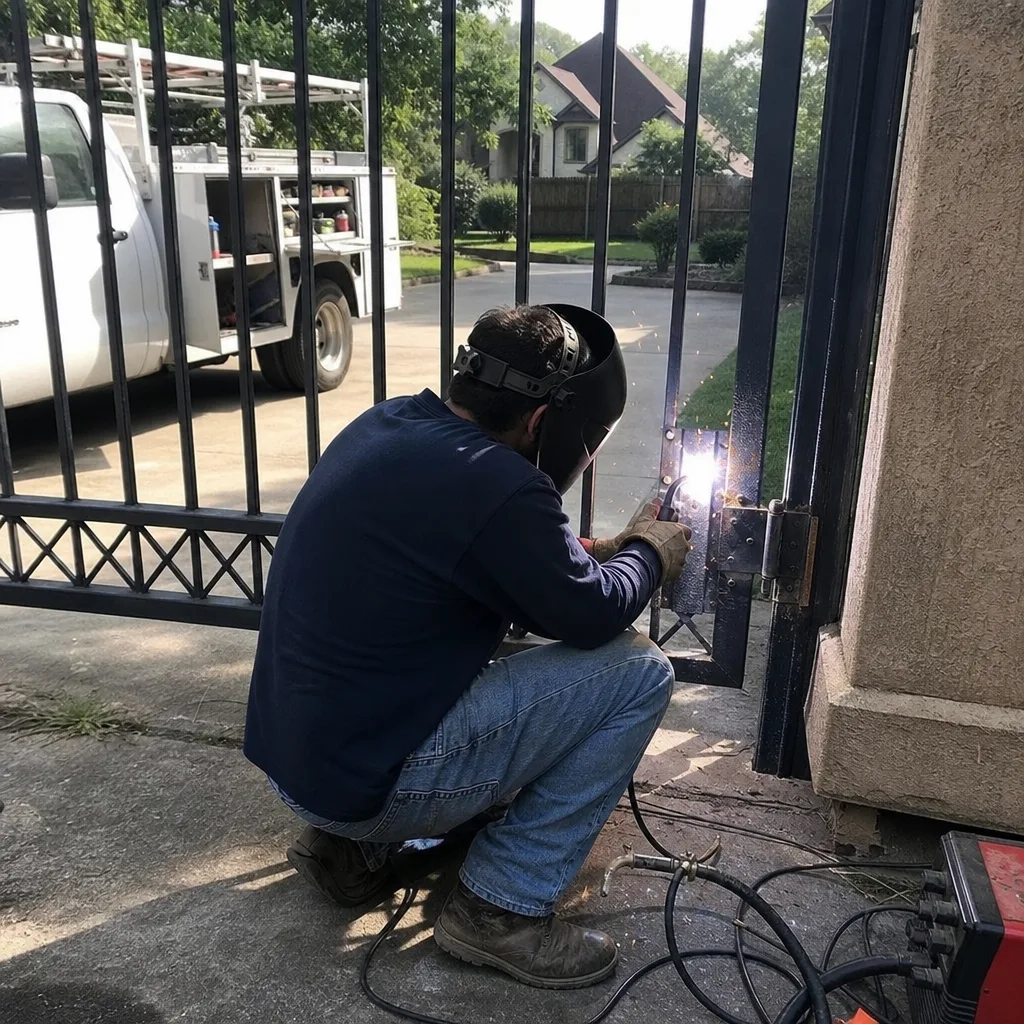
The access control itself is low voltage, 12 to 24 volts DC. You will not electrocute yourself replacing a keypad. The part that hurts people is the gate operator on the other side of the wire, which runs on 120V or 240V and has moving metal attached to it. If you’re comfortable with a multimeter and you understand relay logic, you can sometimes swap a keypad yourself. If you’re not, the honest advice is to stop before you open the BFT operator’s cover. That’s where the line voltage lives, and that’s where a wrong move puts you or an expensive control board at risk.
What you can safely check: the keypad’s display, the code buttons, and whether water is pooling inside the keypad housing. What you should not do: rewire a BFT control board, modify the open-command input, or install a keypad without a meter to verify voltage and polarity. We do this work every week in Spring, and we’ll document everything. Call us at (346) 488-1637 if you want a technician who leaves a written record.
FAQs
Most BFT keypads and readers last five to eight years in the Houston area, but the heat and humidity in Spring take their toll on the internal boards and the keypad membranes. The failure is usually moisture-related, not wear-related. If your keypad is mounted in direct afternoon sun with no shade, that number drops to about four to five years before the buttons start getting soft or the display fades.
Sometimes, but not often enough to promise it. The two repair candidates are corroded internal connections and failed individual buttons, but both require disassembling a sealed keypad housing, and the repair rarely lasts more than a few months in humid weather. For most homeowners, replacing the keypad with a new unit is the better use of money. We’ll tell you honestly if your keypad is repairable, and if it isn’t, we won’t charge you for a benchtop teardown to prove it.
Most keypad and card reader replacements in Spring take between 45 minutes and two hours once we’re on site. Telephone entry units take longer, usually two to four hours, because of the phone line or cellular configuration. If we have to pull new wire or trench a line, that adds time and we’ll put it in the written quote before we touch the gate. The part comes off the truck, not ordered and waited on.
Yes. We keep keypads, Wiegand proximity readers, receiver boards, antenna kits, and wiring components stocked for BFT systems, along with parts for LiftMaster, Mighty Mule, Ghost Controls, and the other brands we service. If your exact BFT model needs a part we don’t have on hand, we can usually have it the next business day, and the quote doesn’t change because of the wait.
If your BFT access control is down and you want the price in writing before anyone touches the gate, call us at (346) 488-1637. A live person answers, any hour, any day. Name what you found. Name what it costs. Name what you left behind. That’s how we run every job in Spring.
Written by Adrian Vance, Owner, Vance Gate Repair Spring at Vance Gate Repair Spring, serving Spring and nearby areas.