
Last updated September 20, 2026
Free on-site gate assessment - hinges, posts, and your LiftMaster or Nice gate operator checked before anything is quoted
The assessment is free and the quote is the invoice.

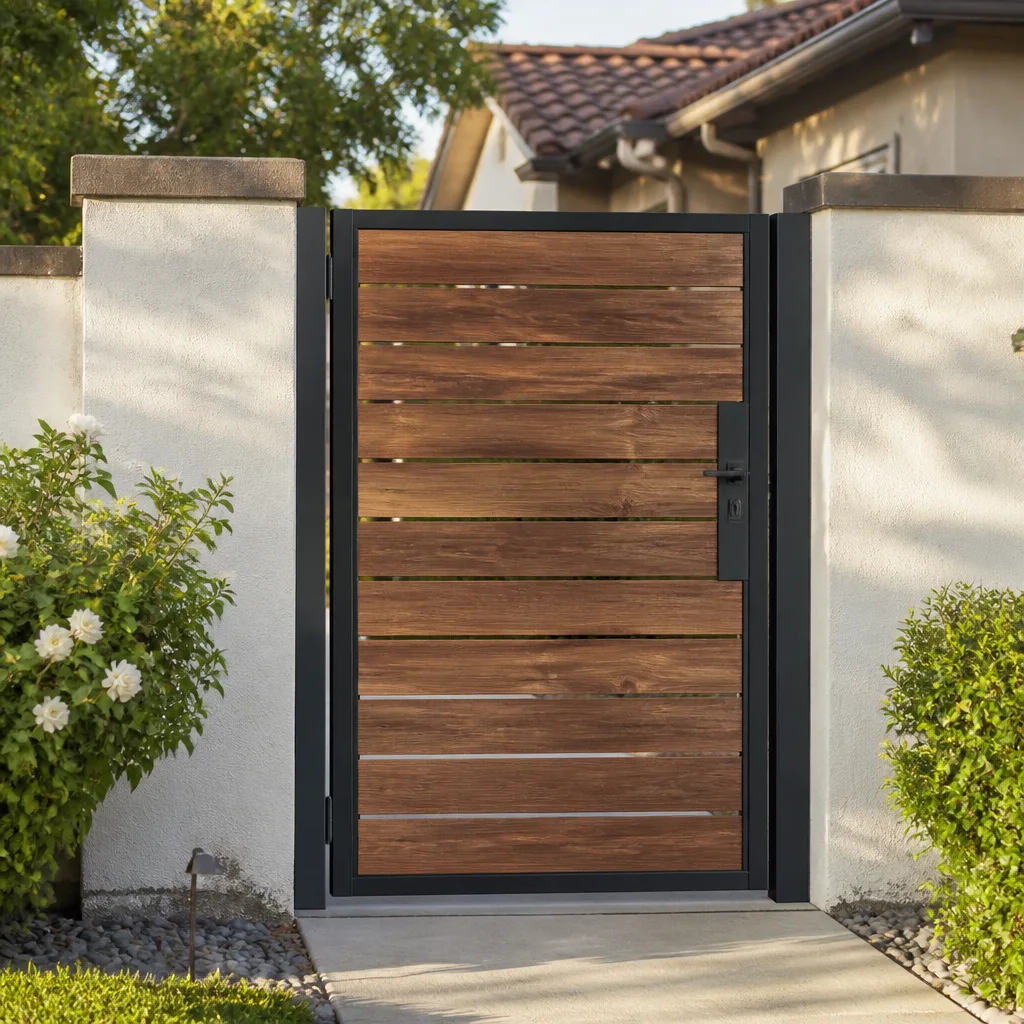

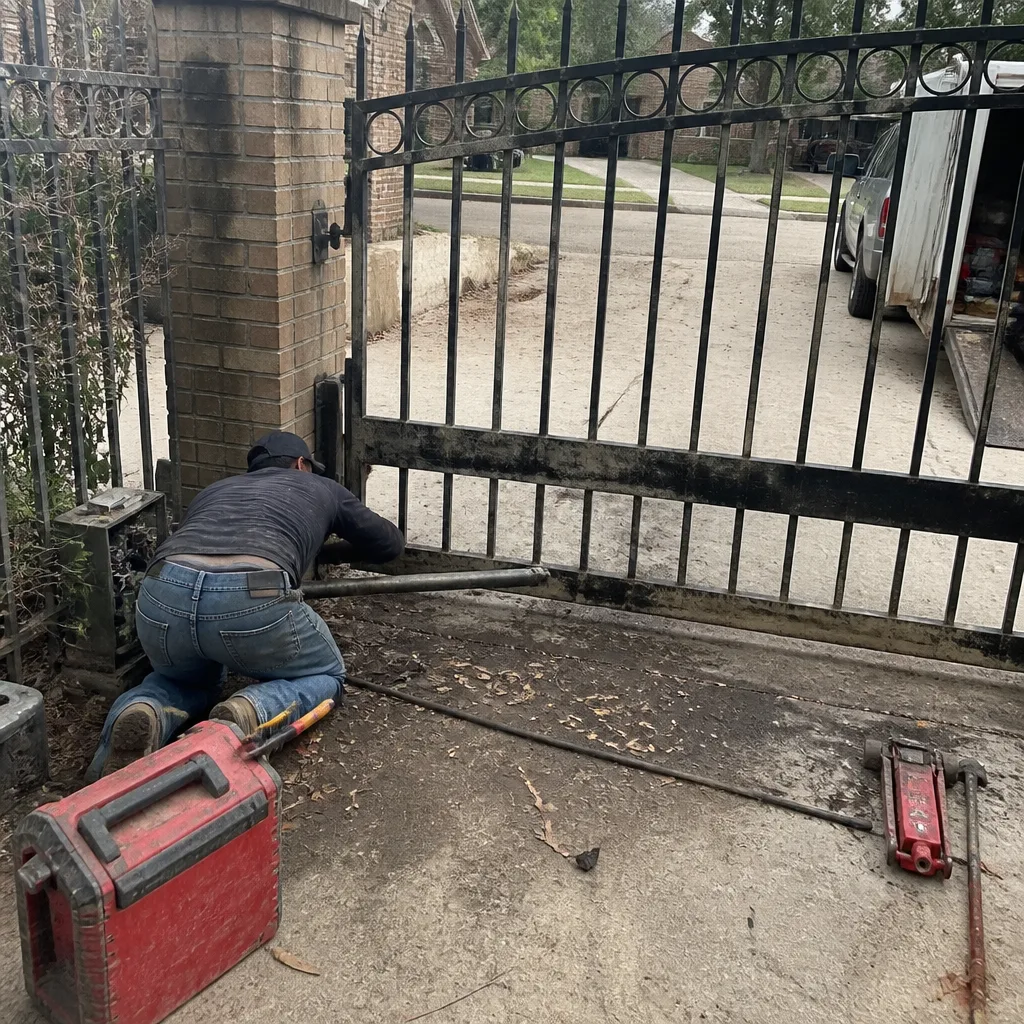 Before
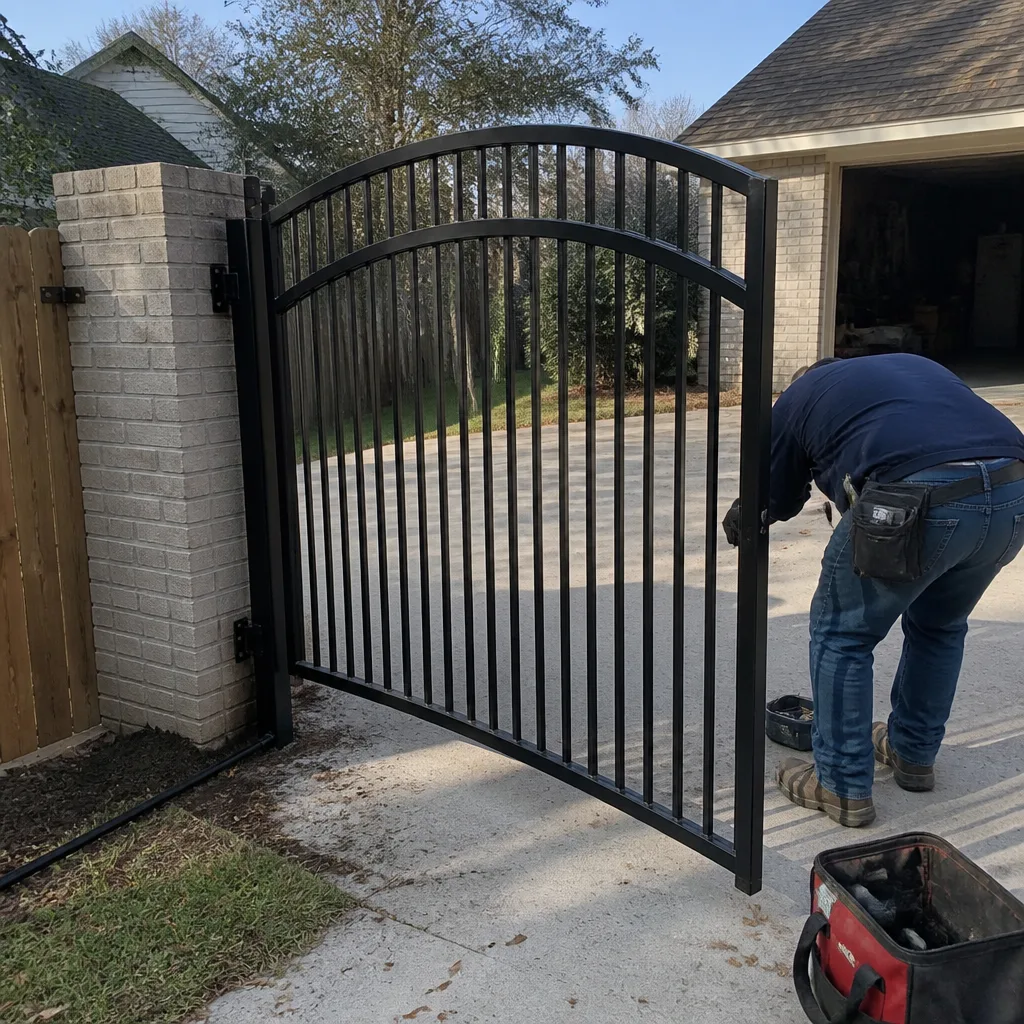 After
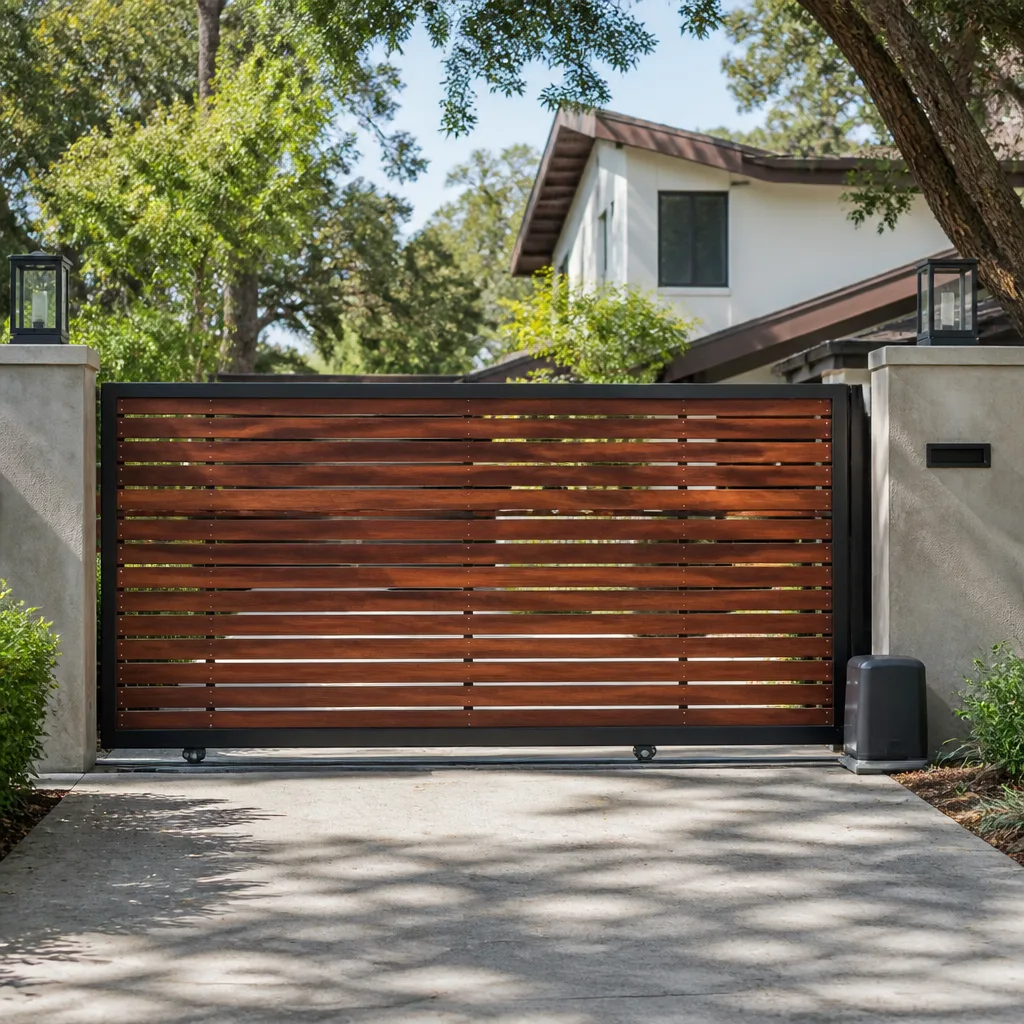
After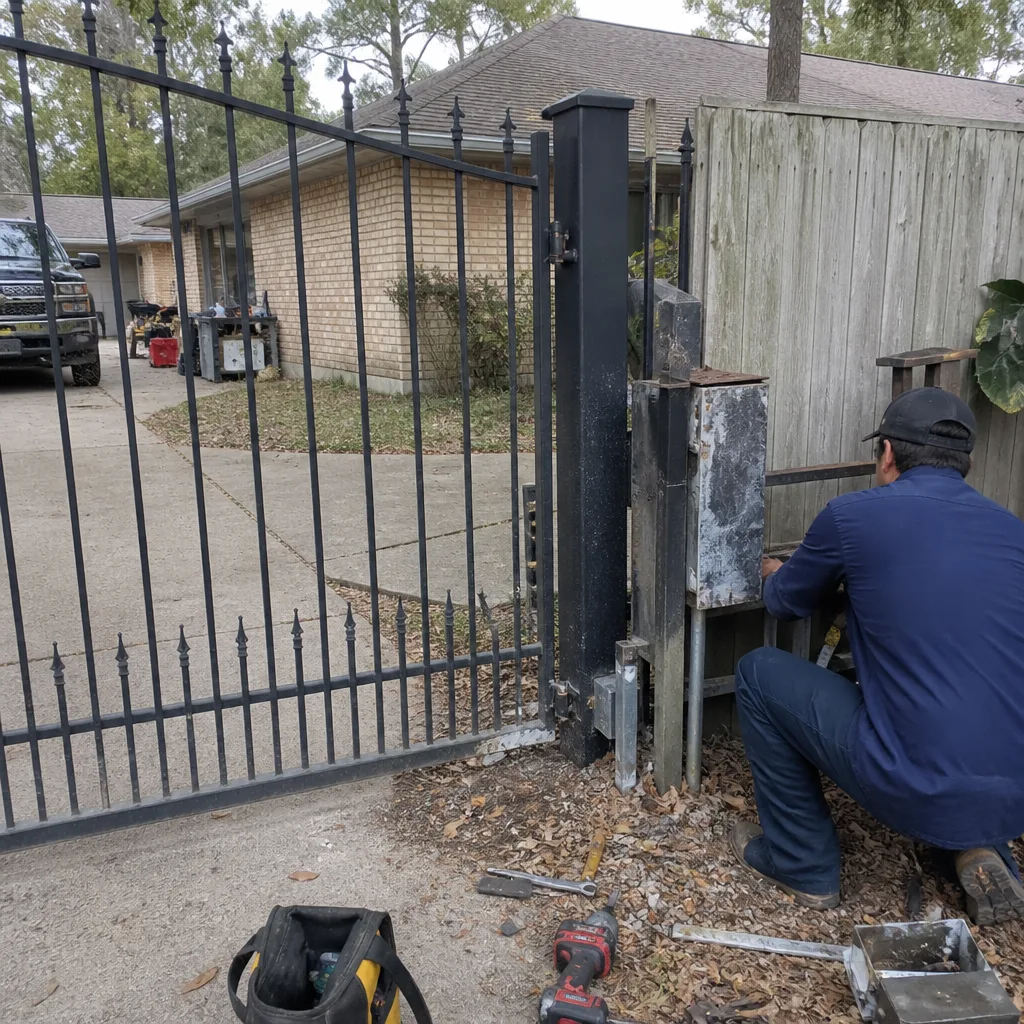 Before
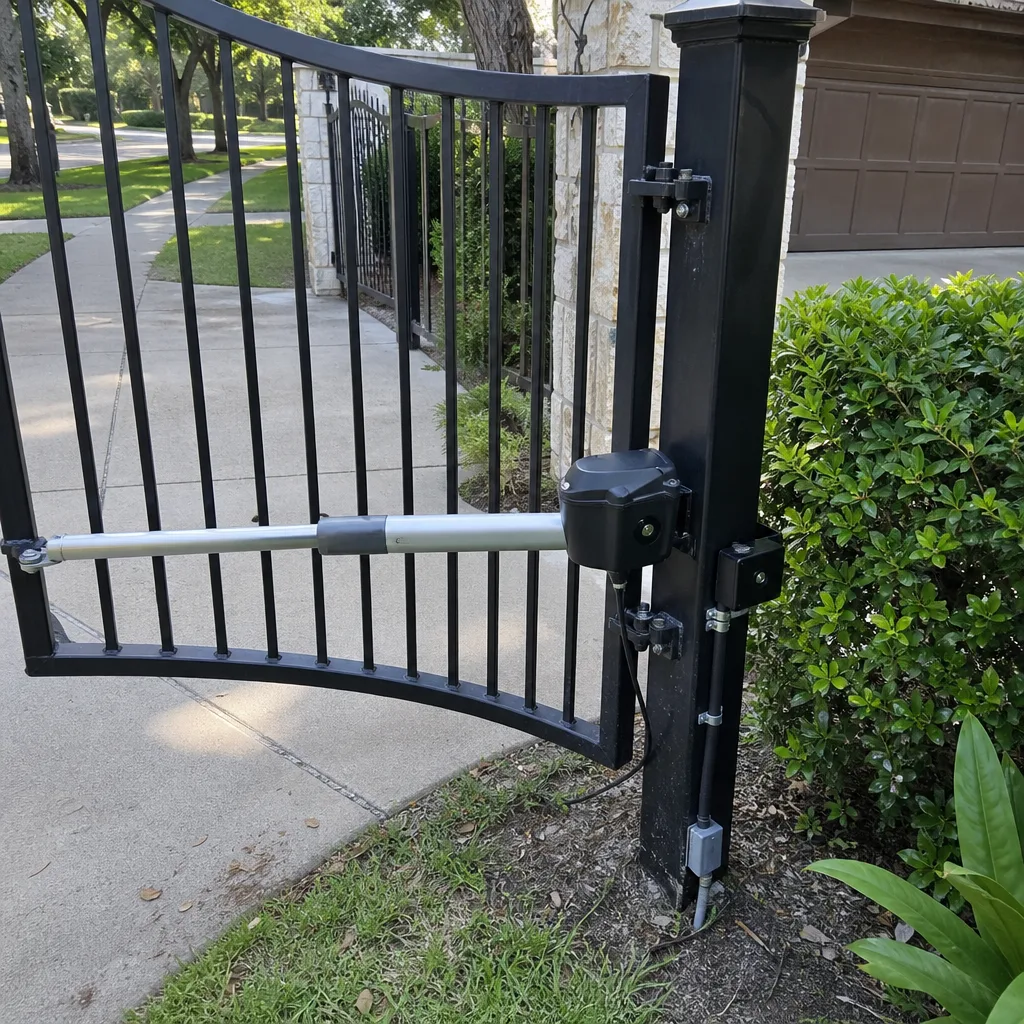 After
After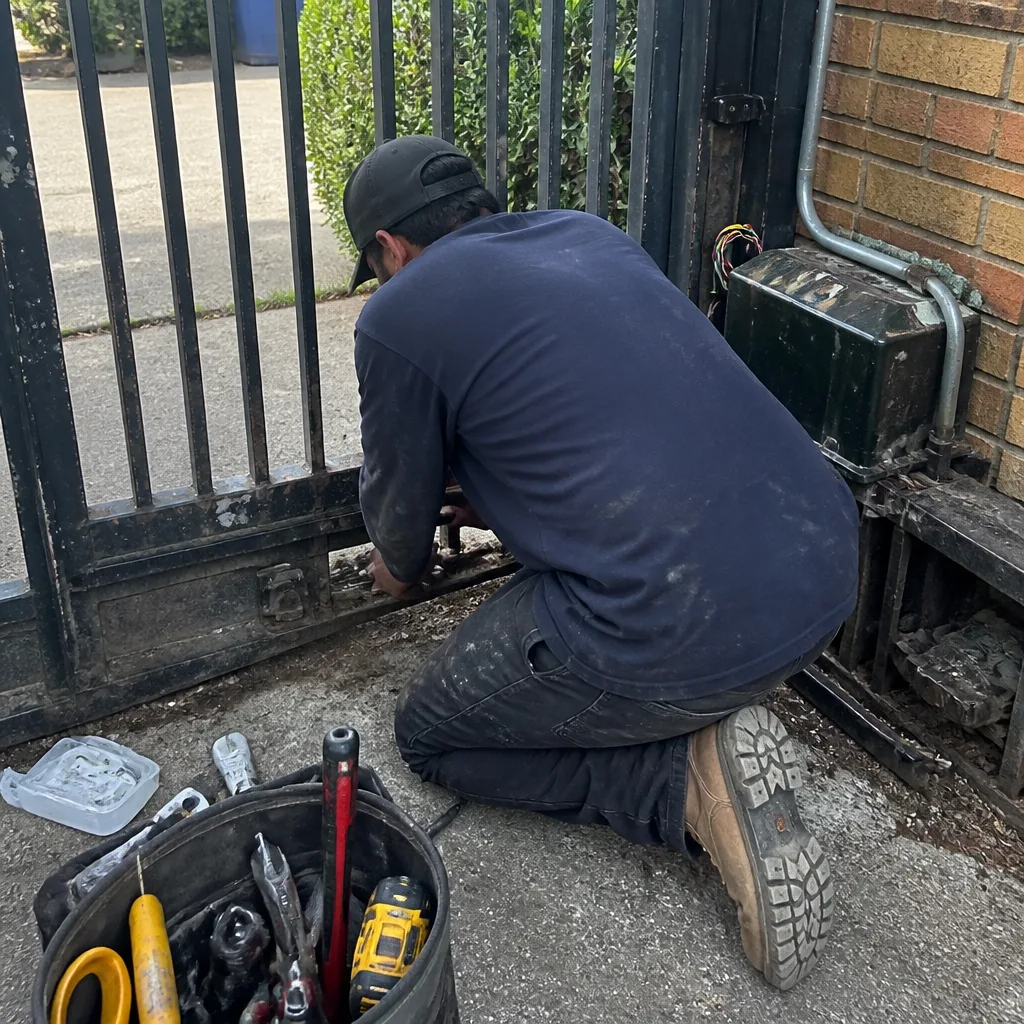 Before
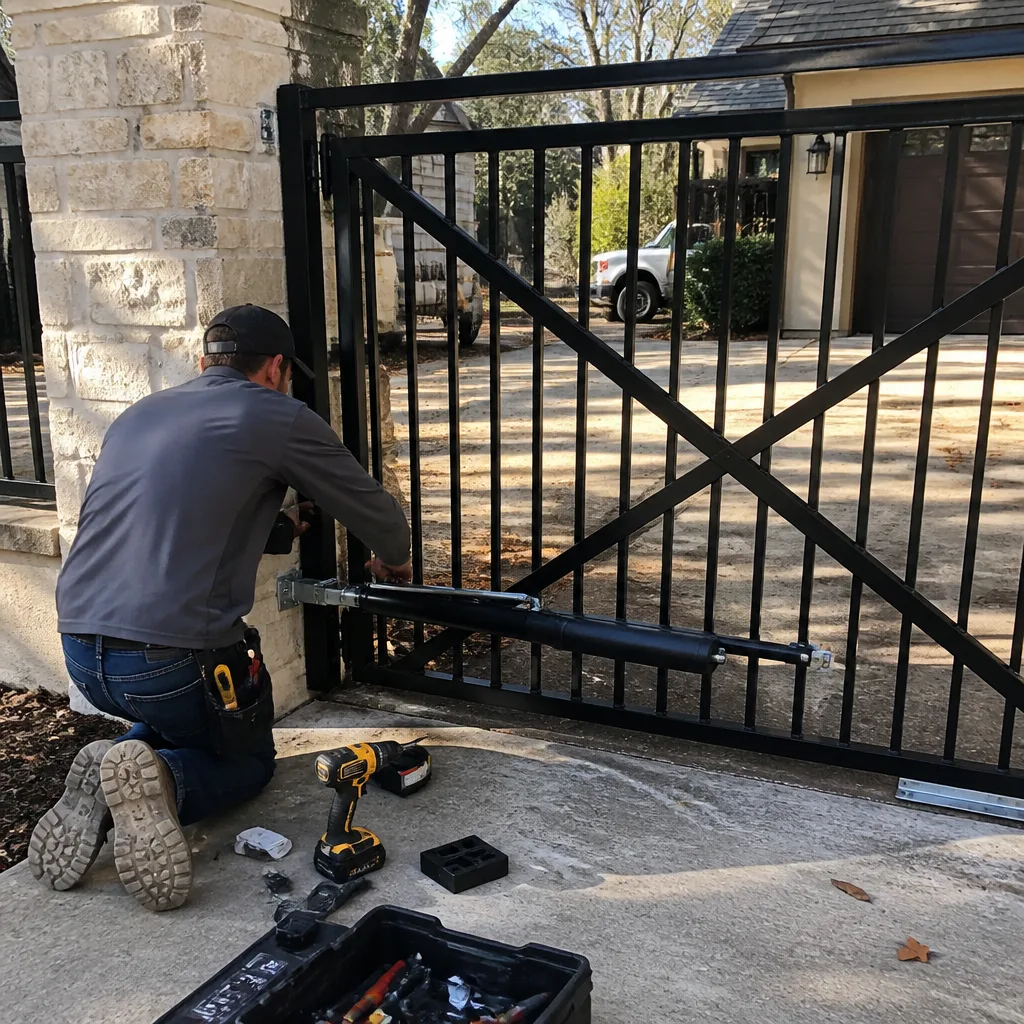 After
AfterThe Complete Guide to Gate Repair in Spring
The average Spring homeowner calls a second technician within 18 months of their first gate repair, not because the first repair failed, but because no one wrote down what was found the first time. The motor gets blamed. The bill gets paid. The notes exist only in someone’s head, and when the gate acts up again, the next technician starts from zero. This guide is built to end that cycle. You’ll learn how to identify whether your gate failure is mechanical, structural, or electrical before any money changes hands, what Spring’s clay soil does to gate posts over time, what a documented repair should leave behind, and what the five most common repairs actually cost in this market.
Quick Answer
Gate repair in Spring, TX typically costs between $185 and $850-see our Gate Repair Cost Breakdown: The Spring Homeowner’s Reference for 2026 for full details-depending on whether the problem is a misaligned sensor, a failed circuit board, a bent hinge, or a leaning post. Most mechanical and electrical repairs can be diagnosed in under an hour, and a properly documented repair gives you a written record that prevents paying twice if the gate fails again. The first step is identifying which of the three failure types you have, because the fix, the cost, and the urgency are completely different for each.
Table of Contents
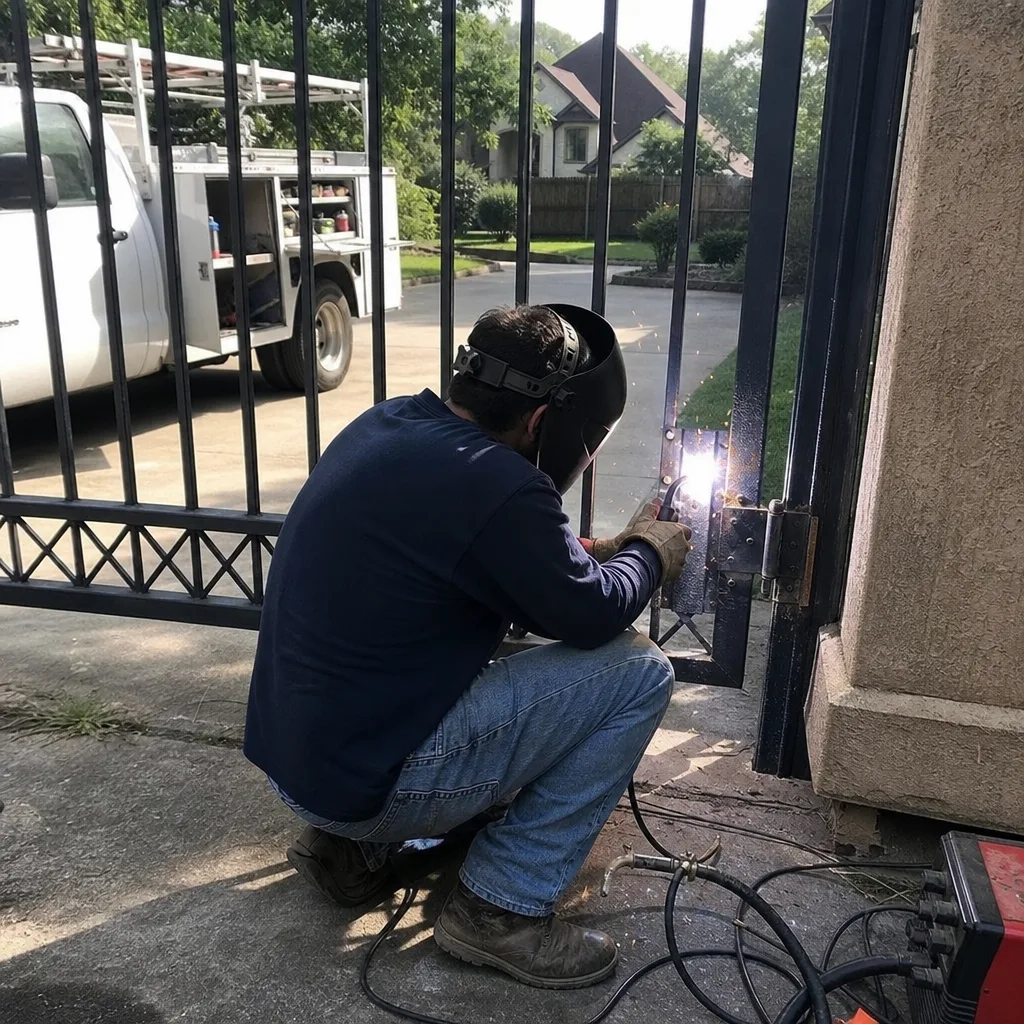
- The Three Failure Types: Mechanical, Structural, Electrical
- Why Spring’s Clay Soil Causes Post Lean That Looks Like a Motor Problem
- The Diagnostic Sequence: What to Check Before You Call Anyone
- What a Documented Repair Should Leave Behind
- Spring Gate Repair Cost Ranges: Five Common Repairs
- How to Use Documentation to Avoid Paying Twice
- Gate Automation Brands Common in Spring
- Common Mistakes to Avoid
BeforeAfterThe Three Failure Types: Mechanical, Structural, Electrical
Every gate failure in Spring falls into one of three categories, and the repair path for each is fundamentally different. A mechanical failure means something physical has worn, bent, or broken: a hinge pin, a chain, a drive arm, a roller. A structural failure means the gate’s foundation has moved: a post has leaned, a footing has sunk, the grade has shifted under the weight of the gate. An electrical failure means the control system has a fault: a circuit board, a limit switch, a photo-eye, a wiring connection. Calling a technician without knowing which category you’re in is how homeowners get sold a new motor when the real problem is a post that moved three degrees out of plumb.
Here’s how to distinguish them in under five minutes:
- Mechanical: The gate makes noise but moves unevenly, or moves fine but squeals, grinds, or catches at a specific point. The motor is working. Something physical is fighting it.
- Structural: The gate sags at the latch end, scrapes the ground on one side, or leaves a wider gap at the top than the bottom. The post may visibly lean. A level held against the post tells the truth in ten seconds.
- Electrical: The gate does nothing at all, or operates intermittently, or reverses for no visible reason. The problem is in the board, the sensors, the wiring, or the power supply.
In our experience, roughly a third of Spring gate failures that get reported as “motor problems” are actually structural. The post moved. The motor never failed. Understanding that distinction before you pick up the phone changes everything about what you’ll be quoted and whether the repair will hold.
Why Spring’s Clay Soil Causes Post Lean That Looks Like a Motor Problem
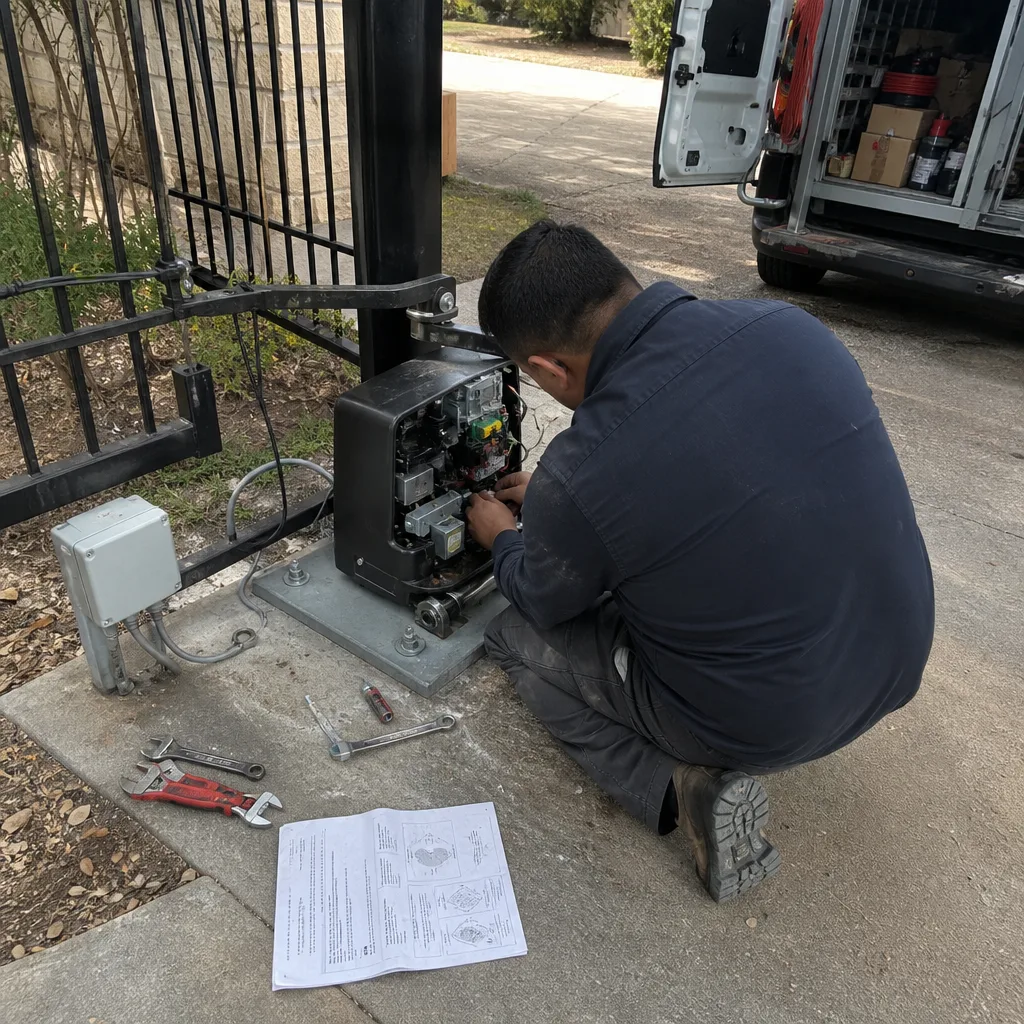
Spring sits on expansive clay soil, the kind that swells when wet and shrinks when dry. A gate post set in that soil is riding ground that moves seasonally, and over three to five years, that movement works the post out of vertical. The gate starts to sag. The latch no longer lines up. The motor, which was sized for a gate that swung freely on its hinges, is now pushing against a gate that drags on the ground or binds at the latch. The motor overworks, overheats, and eventually trips its thermal protection or burns out.
None of that is a motor problem. It’s a footing problem.
Here’s the test we run on nearly every Spring service call where the complaint is “the gate is getting slower” or “the motor sounds strained”:
- Hold a four-foot level against the hinge-side post, both faces. Note the bubble position.
- Measure the gap between the gate and the latch post at the top and bottom. If the difference exceeds a half inch, something has moved.
- Sight down the top rail of the gate from the hinge end. A straight gate reads as a continuous line. A sag reads as a visible bow.
- Check the ground clearance under the latch end. If the gate has been adjusted up once already and is scraping again, the post is moving, not the gate.
If the post is leaning more than two or three degrees, or if the footing has visibly cracked or sunk, the repair is structural. That means excavating around the footing, re-plumbing the post, and setting it in concrete at a depth appropriate for the gate’s weight and cycle count. It is not solved by adjusting the limit switches or replacing the motor. Skip the structural fix and the new motor will fail the same way, often within a year.
The Diagnostic Sequence: What to Check Before You Call Anyone
You’ll get a faster, cheaper, more accurate repair if you can tell the technician what you observed, and you’ll be better protected against being sold work you don’t need. Run through this sequence in order. It takes ten minutes and requires nothing more than your eyes, your ears, and a $9 level from the hardware store.
- Watch the gate through one full open-close cycle. Does it move at a consistent speed, or does it slow, stop, or reverse at the same point every time? A consistent failure point points to mechanical or sensor issues. A random failure pattern points to the board or wiring.
- Listen. A grinding noise is usually a hinge or roller. A hum with no movement is usually a capacitor, a seized motor, or a broken drive chain. Clicking from the control box is usually a relay or a board-level fault.
- Check the photo-eyes. These are the small infrared sensors mounted low on either side of the gate’s path. If one is misaligned, dirty, or has a leaf blocking the beam, the gate will refuse to close, or will reverse halfway. Wipe both lenses clean and make sure they face each other squarely.
- Inspect the hinges and the drive arm. Look for play. Grab the gate at the latch end and lift. Any movement at the hinge means a worn hinge pin or bracket.
- Check the post with a level. As covered above. If the post is out of plumb, everything else is secondary.
- Open the control box. Look for signs of corrosion on the board, burned or swollen components, ants (a surprisingly common cause of board failure in Spring), or loose wire connections at the terminal block. Do not touch anything inside if you’re not comfortable working around low-voltage DC and line-voltage AC wiring.
Write down what you find. Even a few notes, “gate reverses at the same spot, hinge post leans about two degrees, photo-eye on the right is caked with dirt,” will save the technician real diagnostic time and give you a baseline to compare against whatever you’re told the problem is.
What a Documented Repair Should Leave Behind
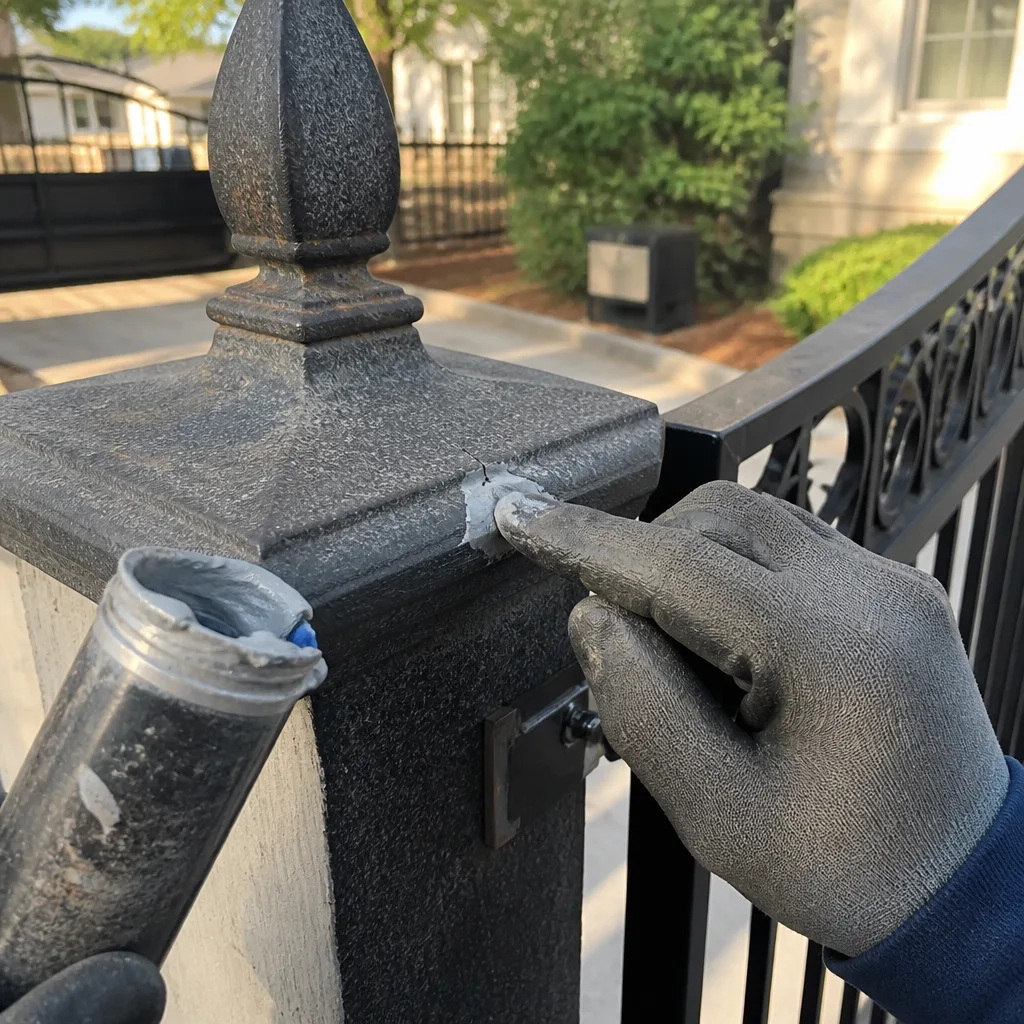
The difference between a gate repair you pay for once and a gate repair you pay for twice is documentation. A reliable gate repair in Spring should leave you with a written record, not a verbal summary from a technician who’s already backing out of the driveway. This is such a core part of how we work that we made it a formal standard. Under Clause 4 of our Haven Standard, every visit includes a documented photo record at no additional charge.
A properly documented repair includes:
- A written description of the complaint as the technician understood it on arrival.
- A written diagnosis, in plain language, of what was found: “limit switch set 12 degrees past full travel,” “hinge pin on lower hinge worn 3mm beyond spec,” “photo-eye misaligned by roughly two inches.”
- Limit-switch readings before and after adjustment, when the repair involves motor travel or force settings.
- Before and after photos of the physical repair: the corroded board, the bent hinge, the re-set post, the new sensor alignment.
- A wiring diagram or schematic reference when any electrical work was done, so a future technician can see what was changed and how.
- A parts list with part numbers, not “a new board” but “FAAC 790D control board, p/n 790220.”
- The flat price in writing, handed over before work starts. Under Clause 1 of the Haven Standard, the written price comes first. No surprise invoice at the end.
This documentation habit came from commercial access-control work, where a gate that fails in the middle of the night has consequences beyond inconvenience, and the next technician on site needs to know exactly what was done. We started applying it to residential gates in 2014, and it has saved Spring homeowners real money ever since.
Spring Gate Repair Cost Ranges: Five Common Repairs
The price you’re quoted for gate repair in Spring should fall within a predictable range. Here are the five repairs we see most often in the Spring market, with the cost ranges we consider fair and typical as of this writing. These are not binding quotes; they’re sanity-check numbers to compare against any verbal estimate you receive.
| Repair | What’s Involved | Typical Range |
|---|---|---|
| Photo-eye realignment or replacement | Adjusting sensor alignment, cleaning lenses, or replacing one sensor head | $185-$295 |
| Hinge replacement (residential swing gate) | Removing the gate, replacing worn hinge pins or brackets, re-hanging and leveling | $295-$485 |
| Control board replacement | Diagnosing the board fault, sourcing the correct replacement, installing and programming limits | $425-$850 depending on brand |
| Post re-set or re-footing | Excavating around the footing, re-plumbing the post, setting in concrete, re-hanging the gate | $650-$1,400 depending on gate weight and footing depth |
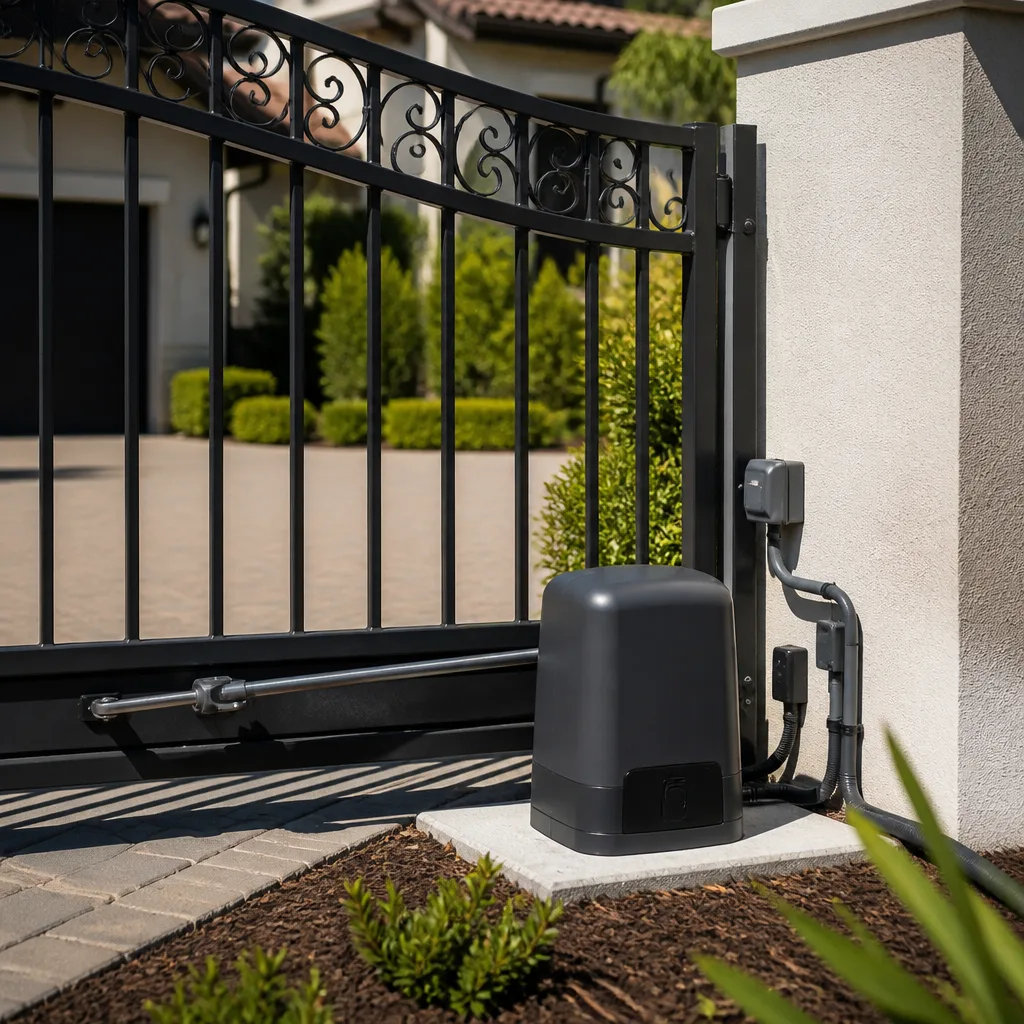
| Swing-gate motor replacement | Replacing the operator arm and motor, setting limits and force, wiring the replacement | $750-$1,400 depending on brand and whether the arm bracket is intact |
Most swing-gate motor replacements run between $750 and $1,400 in the Spring market, depending on the brand and whether the existing arm bracket survives. A Viking or Linear operator will price differently than a Ghost Controls or DoorKing unit, and labor varies with how much of the original mounting hardware can be reused. The price is quoted and agreed in writing before any work starts. That’s the standard the entire repair is built around.
If a verbal quote comes in dramatically below these ranges, ask what’s being left out. If it comes in dramatically above, ask to see the line items. Either way, get it in writing. For a more detailed breakdown of what drives gate repair costs, see our Gate Repair in Spring page.
How to Use Documentation to Avoid Paying Twice
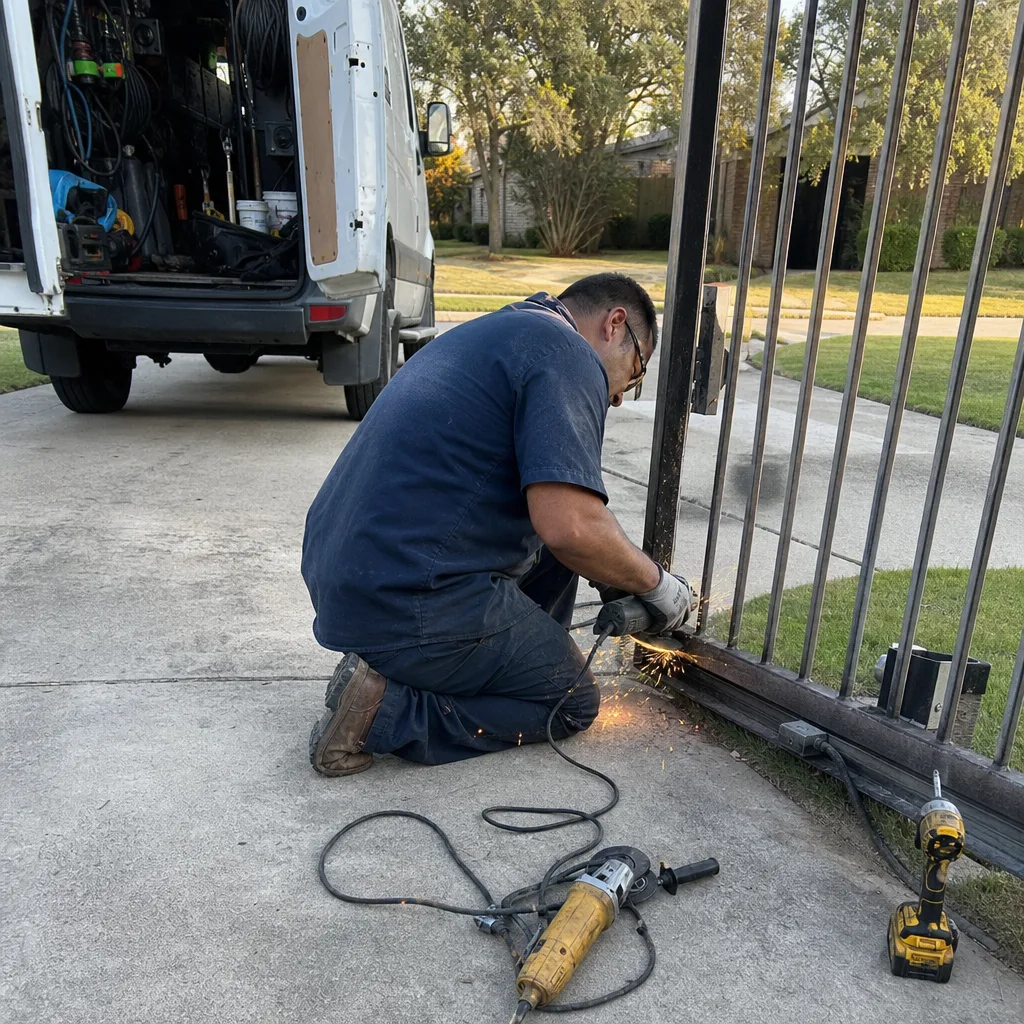
The documentation from your first repair is your best protection against paying for the same problem twice. Here’s how to use it when the gate fails again, or when a second opinion is solicited.
- Show the next technician the previous diagnosis. If the first repair documented a worn lower hinge and the gate is sagging again six months later, the problem may be the hinge bracket mounting, not the hinge itself. The technician starts from a known point, not zero.
- Show the photos. If the post was re-set and photographed, and it’s leaning again, the question becomes “was the footing sized correctly,” not “what happened to the post.” The photo tells the truth.
- Share the limit-switch readings. If the first technician set the travel limits to specific numbers and the gate is now over-traveling, something changed: a slipped cam, a worn gear, a moved limit plate. The reading narrows the search.
- Keep the parts list. If the board was replaced with a specific part number, the next technician can check whether that board has a known failure pattern or a wiring incompatibility, rather than re-diagnosing the entire system.
We offer a free second opinion on any written estimate from another company. Bring the paperwork and we’ll review it at no cost. If another company’s documentation is thin, verbal, or nonexistent, that itself is information worth having before you pay for the second repair.
Gate Automation Brands Common in Spring
Spring driveways carry a mix of gate automation brands, and the repair path differs meaningfully between them. A Linear swing arm and a Viking operator share the same basic function but not the same board logic, not the same limit-setting procedure, and not the same parts availability. A tech who only knows one brand will often tell you the other brand “isn’t worth fixing” and steer you toward a replacement you don’t need.
We service the gate motor that’s already on the property. That includes Linear, Viking, Ghost Controls, and DoorKing, among the nine major brands we work on regularly. The question we answer first is not “what should we sell you” but “what failed on the unit you have.” A Ghost Controls board fault often resolves with a board replacement and a limit re-set, not a full operator swap. A DoorKing swing arm with a worn gear can frequently be re-geared rather than replaced. The documentation habit applies here too: part numbers, board revisions, and wire-connection photos get filed with the job record so the next visit starts from a known position.
If you’re weighing repair against replacement on an older motor, or if you’re not sure what brand is on the gate at all, see our Gate Motor & Opener in Spring page for a plain-language breakdown.
Common Mistakes to Avoid
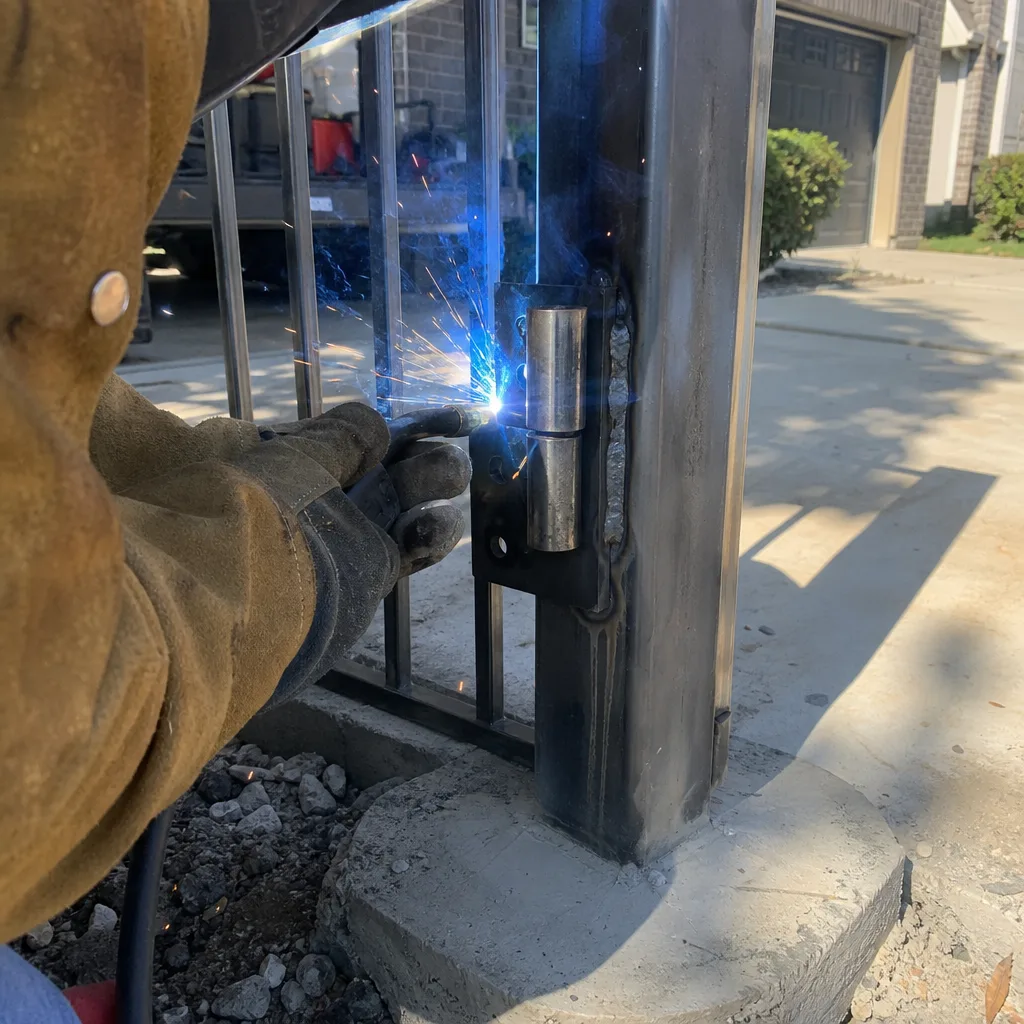
- Believing the motor is always the problem. In Spring’s clay soil, post lean masquerades as motor failure constantly. Replacing a motor without fixing the post means paying for the same repair again in 12 to 18 months.
- Accepting a verbal quote with no paperwork. If the price is not written down before work starts, you have no agreement. The written price is the entire point. Insist on it.
- Letting the technician leave without a photo record. Photos of the repair are evidence. If the gate fails again, and there are no photos, the next technician is guessing.
- Ignoring the photo-eyes. In our experience, more “broken” gates in Spring are fixed by cleaning and realigning a photo-eye than by replacing a single electrical component. Start with the free fix.
- Skipping the post check. Ten minutes with a level can tell you whether you’re looking at a $300 hinge repair or a $1,000 structural re-set. Do not skip it.
- Choosing a technician based on price alone. A gate repair quote that’s 40% below the market range quoted above is either leaving something out or planning to find it once the gate is apart. The documentation standard matters more than the headline number.
When to Call a Professional
Call a professional when the gate fails in a way that involves high-tension springs, heavy steel panels, or line-voltage electrical wiring. A gate that has come off its track carries enough weight to cause serious injury. A swing gate under spring tension can move without warning. A control box with line voltage inside is not a place for trial-and-error. If the gate is binding under motor power, disconnect the operator and secure the gate in place before anyone works near it.
If you’ve run through the diagnostic sequence and still can’t identify the failure category, or if the post is visibly out of plumb, or if the control board shows burned components, the repair is past the handyman stage. Vance Gate Repair Spring offers free estimates in Spring, call (346) 488-1637. The estimate is written, the price is set before work starts, and the photo record comes with the job.
Frequently Asked Questions
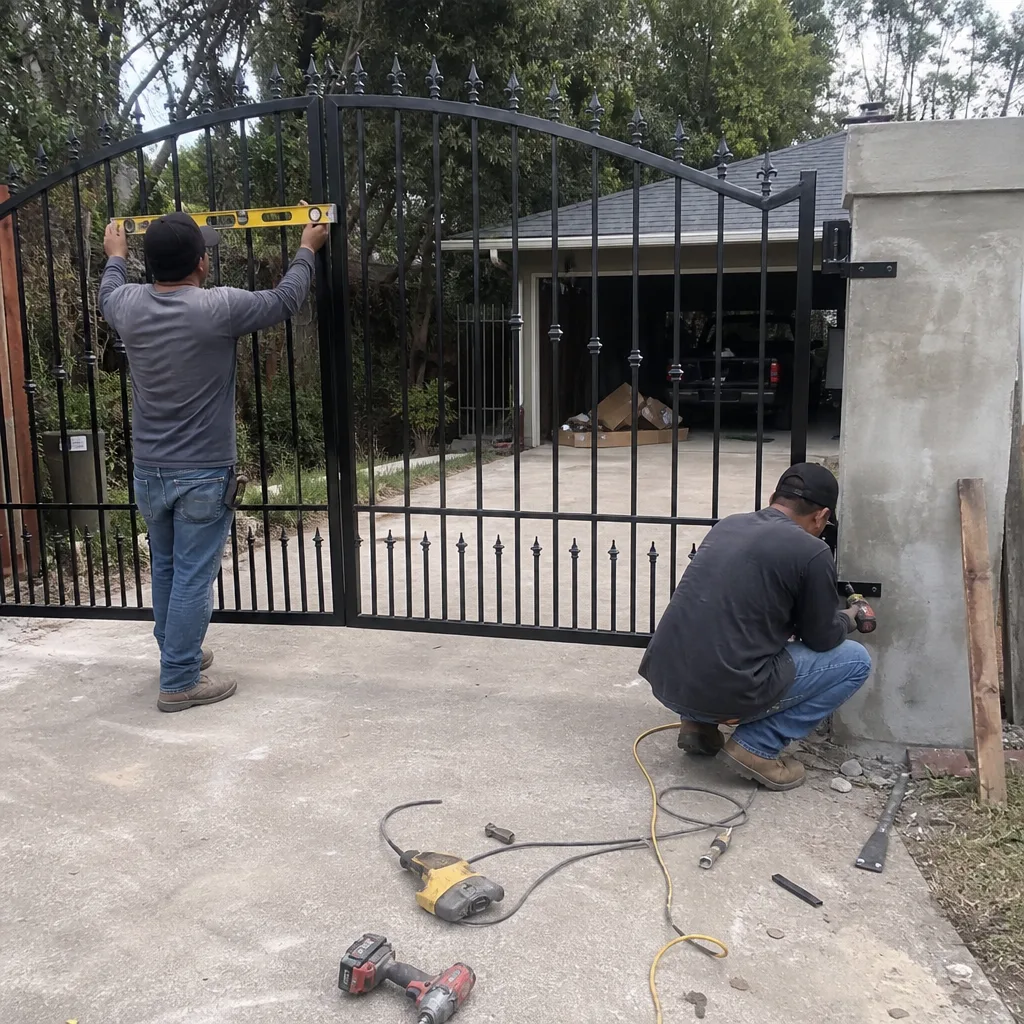
Most gate repairs in Spring fall between $185 and $850 depending on the failure type. A photo-eye realignment runs $185 to $295, a hinge replacement $295 to $485, a control board $425 to $850, and a post re-set $650 to $1,400. The exact price is quoted and agreed in writing before any work starts, so there’s no surprise invoice at the end. Call (346) 488-1637 for a free estimate on your specific gate.
A live person answers our phone 24 hours a day, seven days a week, and we dispatch for emergency gate failures in Spring as quickly as scheduling allows. Emergency response times vary by the day’s call volume, but you will always reach a person, not a voicemail loop. Call (346) 488-1637 and we’ll tell you straight what the schedule looks like.
A full gate installation includes the gate itself, the posts and footings, the hinges or rollers, the motor and operator, the safety photo-eyes, the wiring run, and the programming of limits and force settings. The price is written and handed over before any work begins, and every visit includes a photo record of what was installed and how it was set. For a complete breakdown, see our Gate Installation in Spring page.
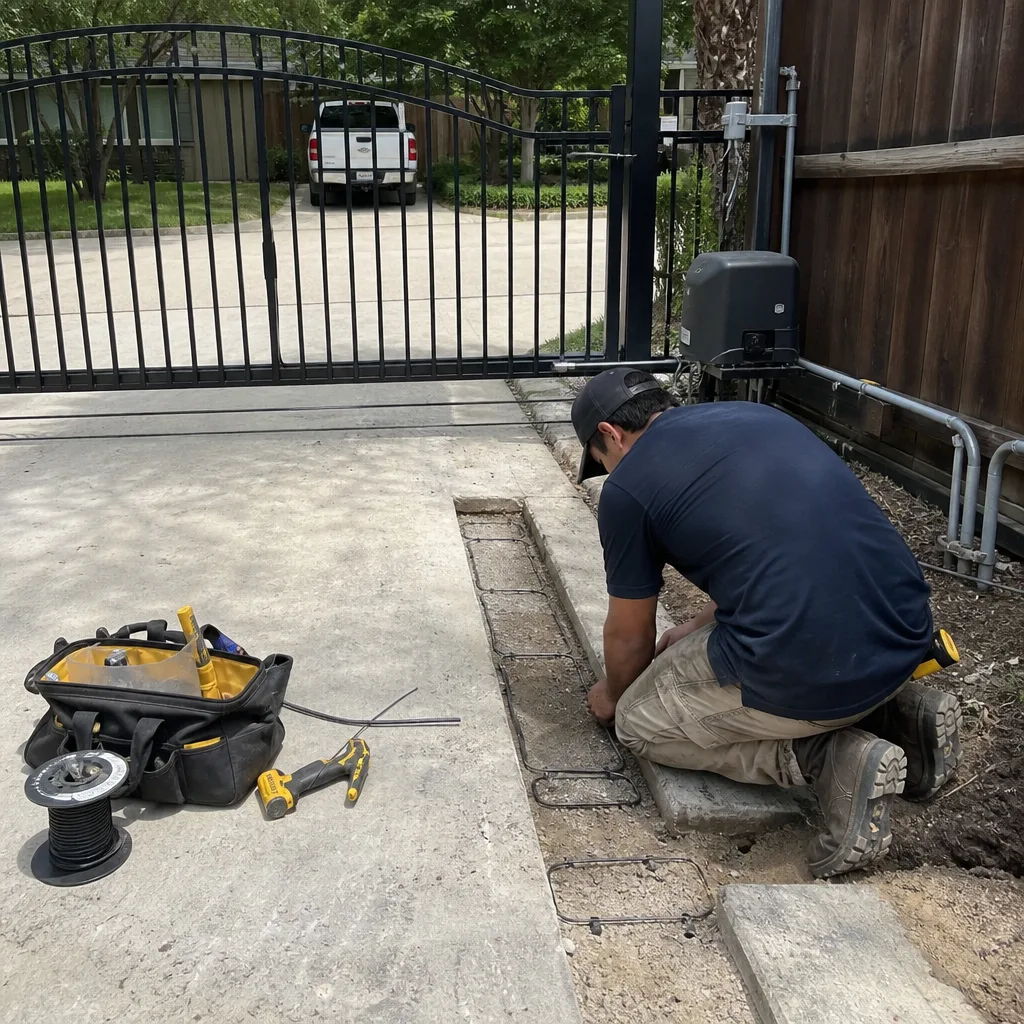
Yes. The power run from the house or service panel to the gate operator, and the installation and alignment of safety photo-eyes and edge sensors, are standard parts of our gate repair and installation work in Spring. The wiring is documented with a diagram and photographed before the trench is closed, so future work never starts from scratch.
Intermittent gate operation in Spring is almost always electrical: a corroded board connection, a loose terminal, a failing relay, or a photo-eye that shifts out of alignment as the post moves through the seasons in the clay soil. Document the failure pattern, note whether weather or time of day correlates with the problem, and a technician can usually isolate the fault quickly. We file every finding in the job record so the next visit, if one is ever needed, starts from a known point.
Hold a level against the post. If it reads out of plumb by more than a degree or two, the post has moved and the motor is likely being overworked as a result. If the post is plumb and the gate moves freely by hand when disconnected from the operator, the post is fine and the problem is in the motor, the board, or the wiring. Ten minutes with a level saves you from paying for a motor replacement you don’t need.
The Bottom Line
Gate repair in Spring is a three-part diagnostic question: is the failure mechanical, structural, or electrical? Most homeowners can answer that question in under ten minutes with a level, a visual inspection, and a few notes. The fix, the cost, and the urgency then become predictable. The repair itself should always come with a written price before work starts and a documented record when the technician leaves. That record is the difference between a gate repair you pay for once and a gate problem you pay to rediscover. If you’re in Spring and your gate is failing, start with the diagnostic sequence, explore more guides & resources, then call a professional who writes it all down.
For more on gate problems and repairs across the Spring area, start at the Vance Gate Repair Spring home page.
Written by Adrian Vance, Owner at Vance Gate Repair Spring, serving Spring since 2014.