

Last updated September 20, 2026
Free on-site gate assessment - hinges, posts, and your LiftMaster or Nice gate operator checked before anything is quoted
The assessment is free and the quote is the invoice.
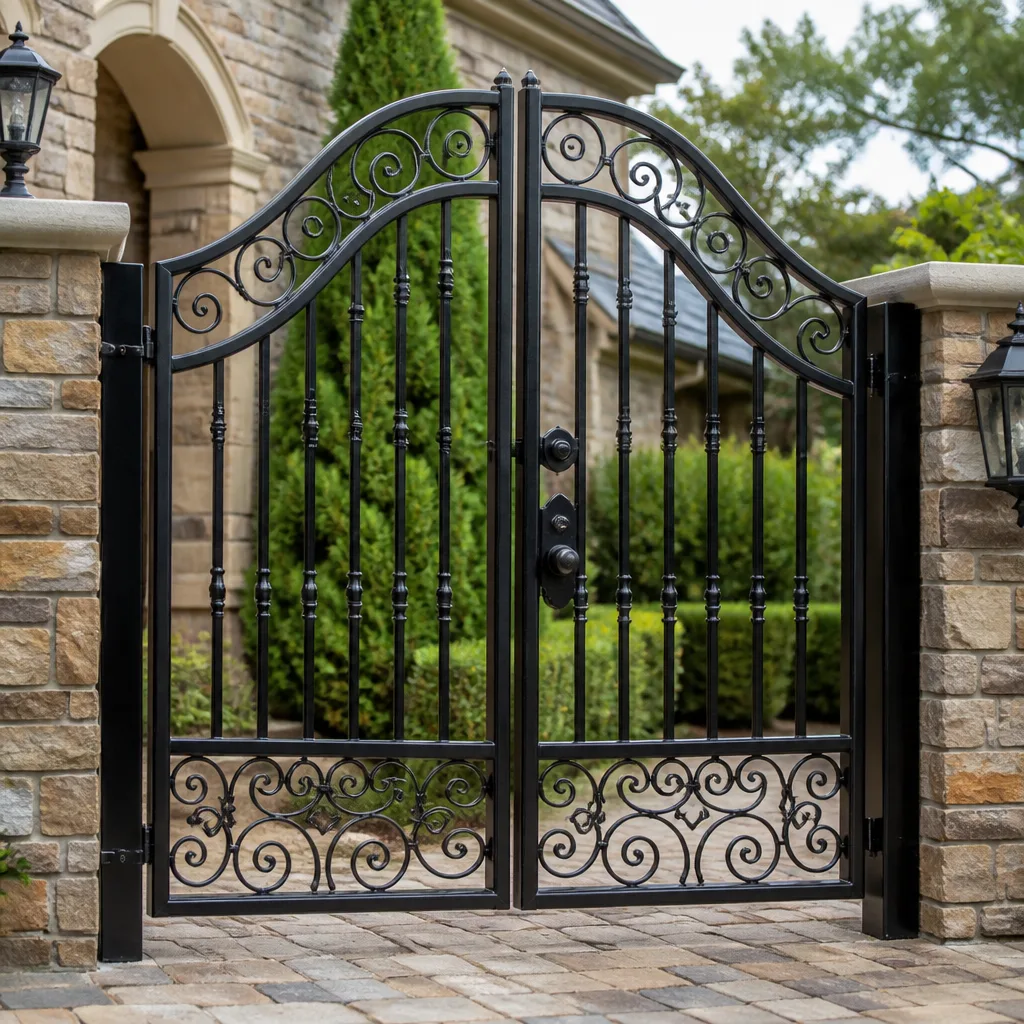
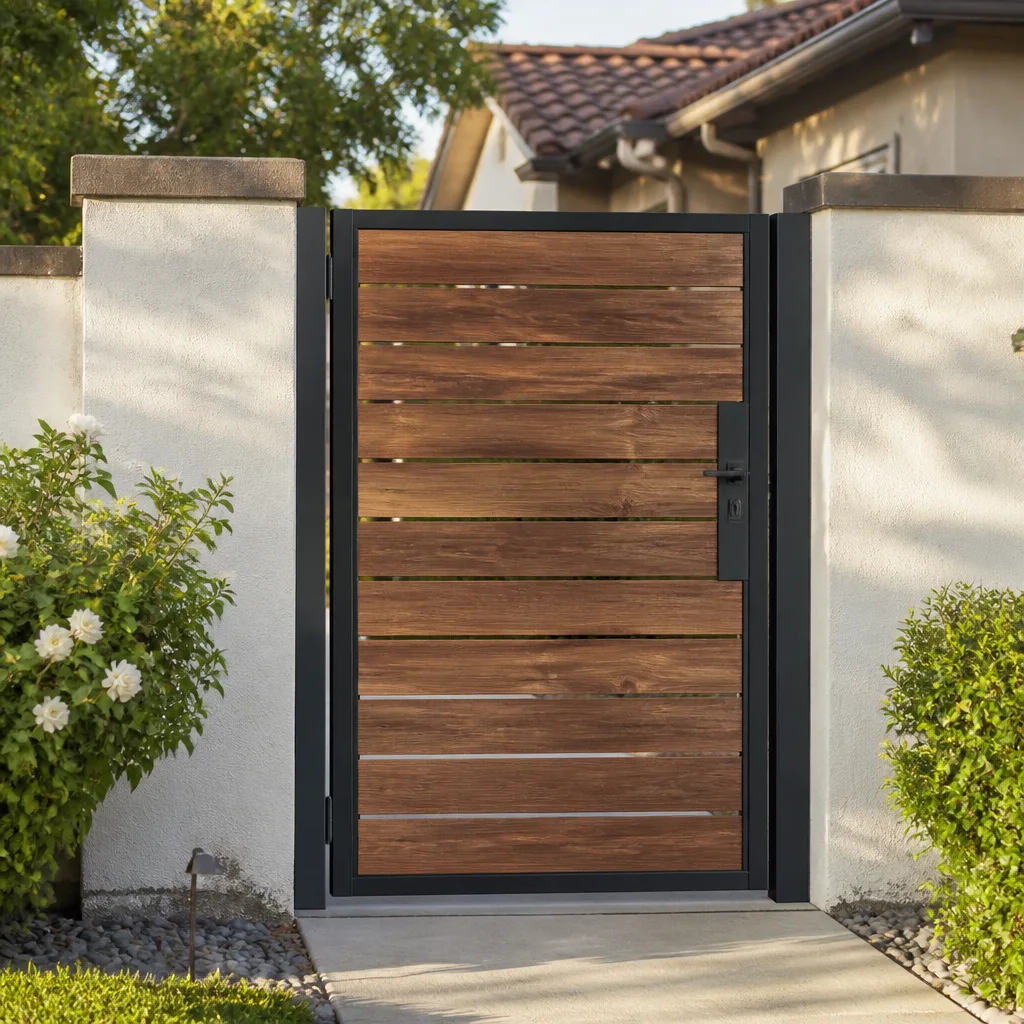
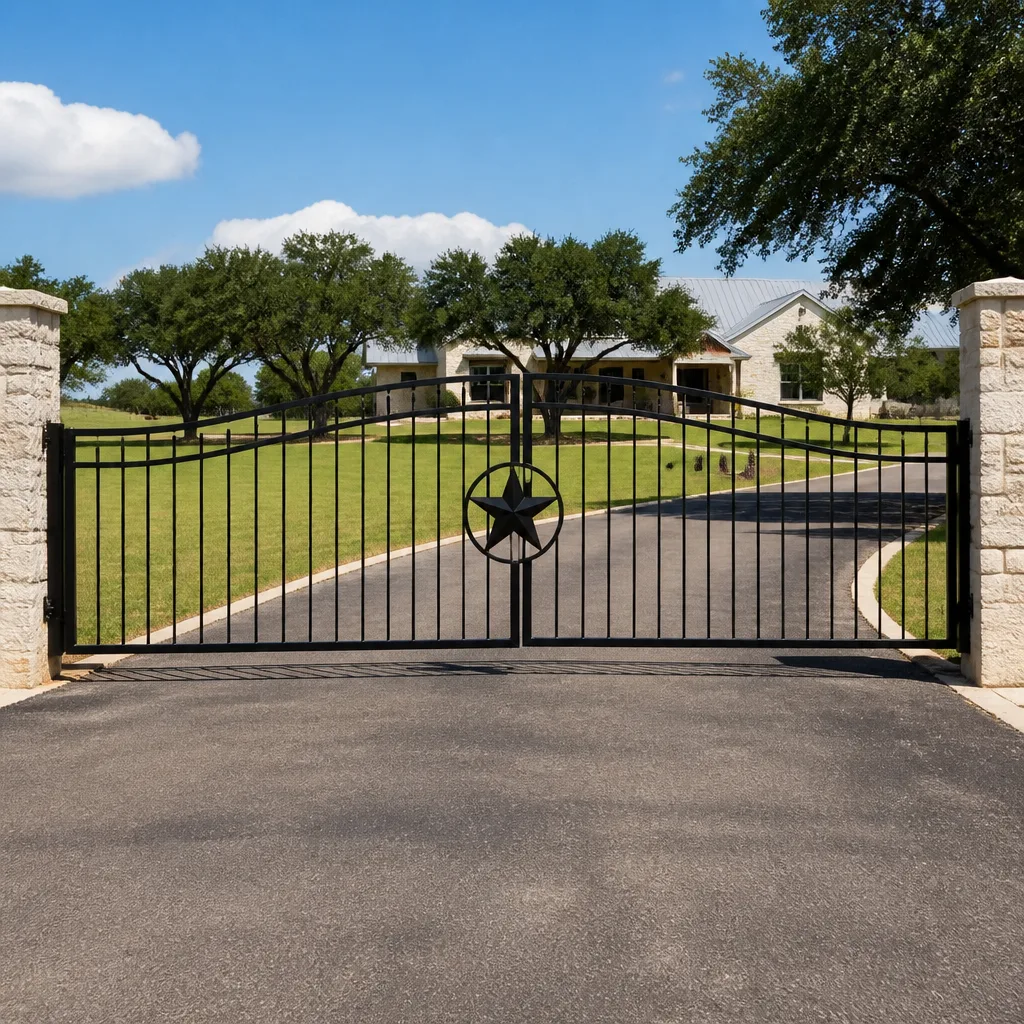
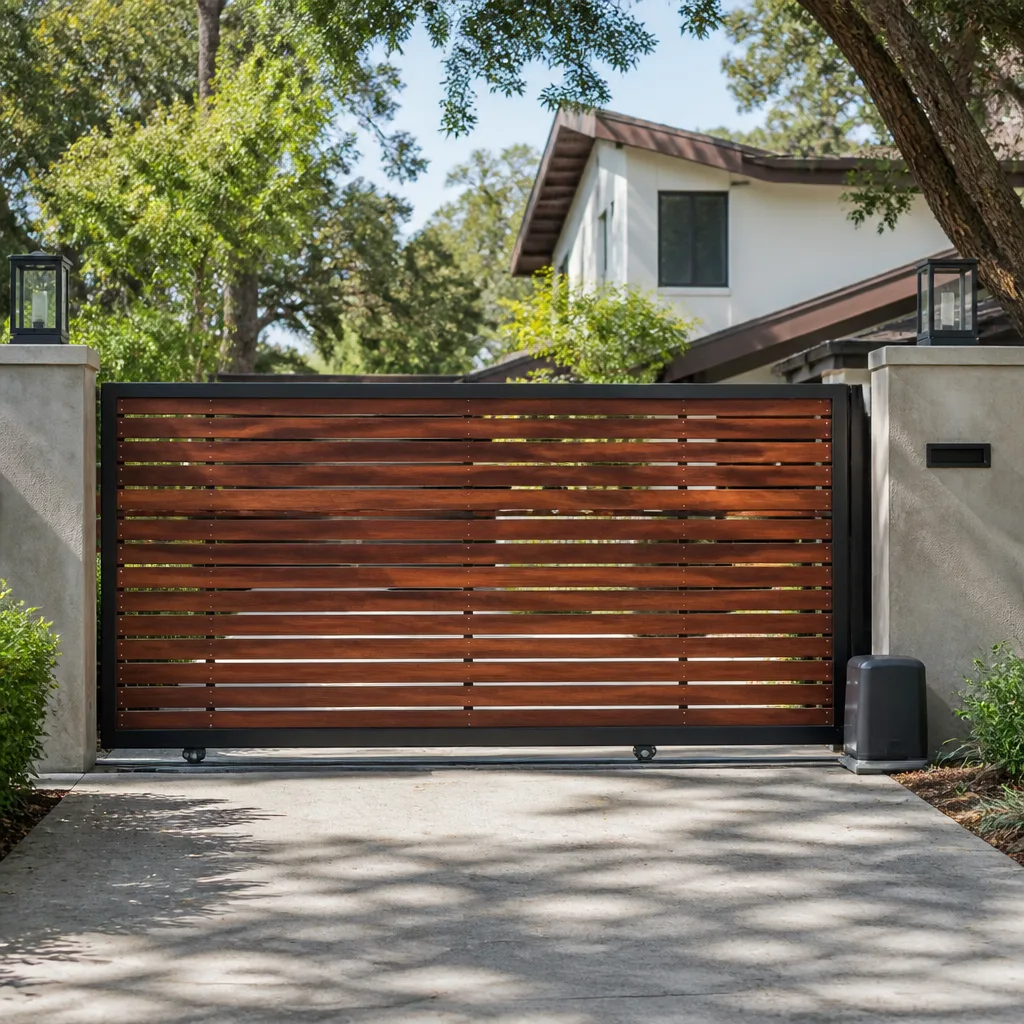
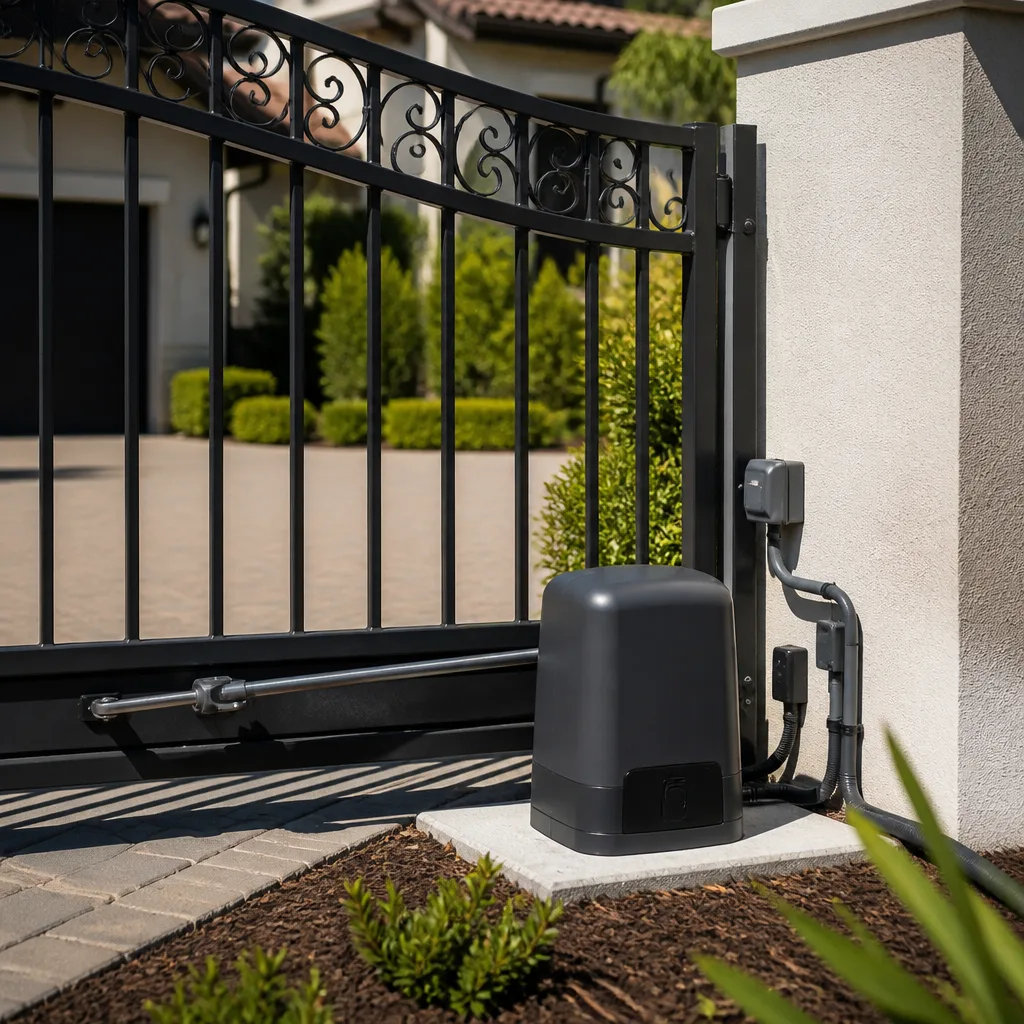
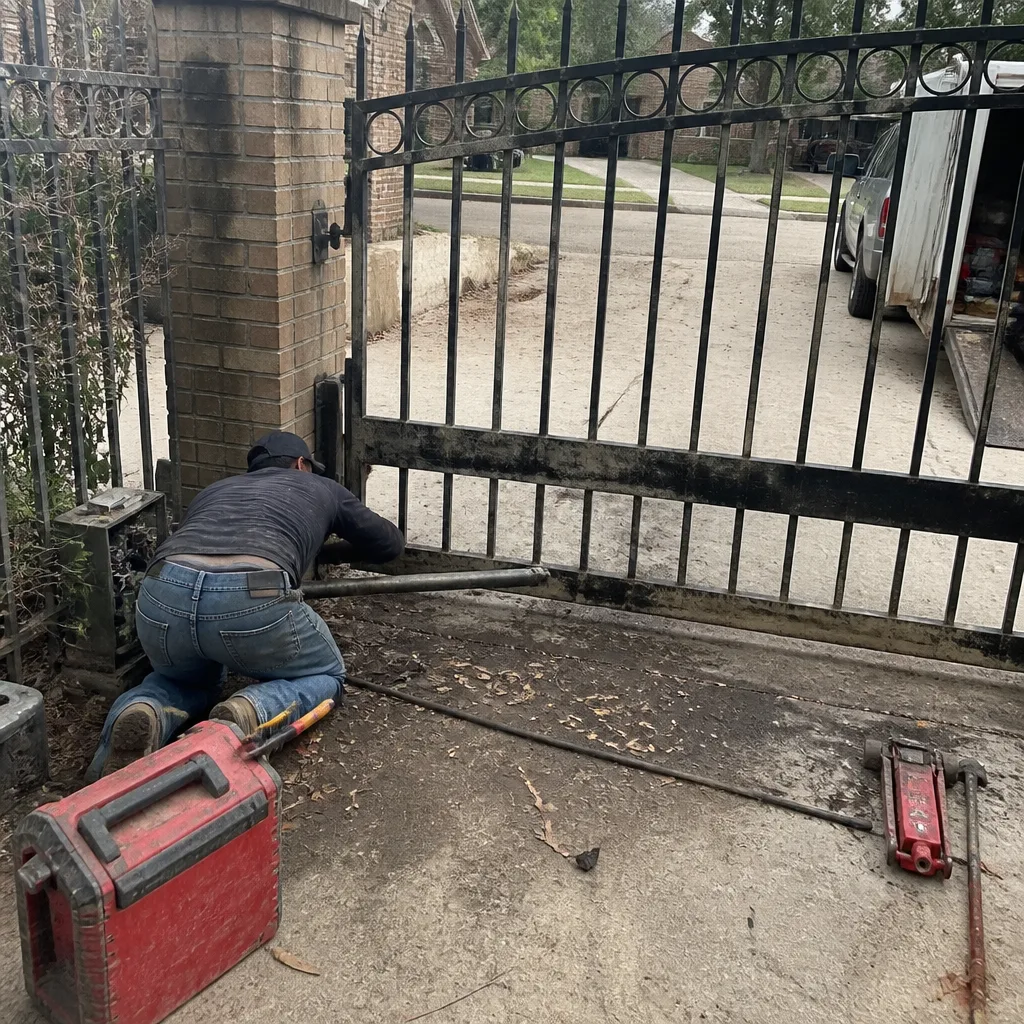 Before
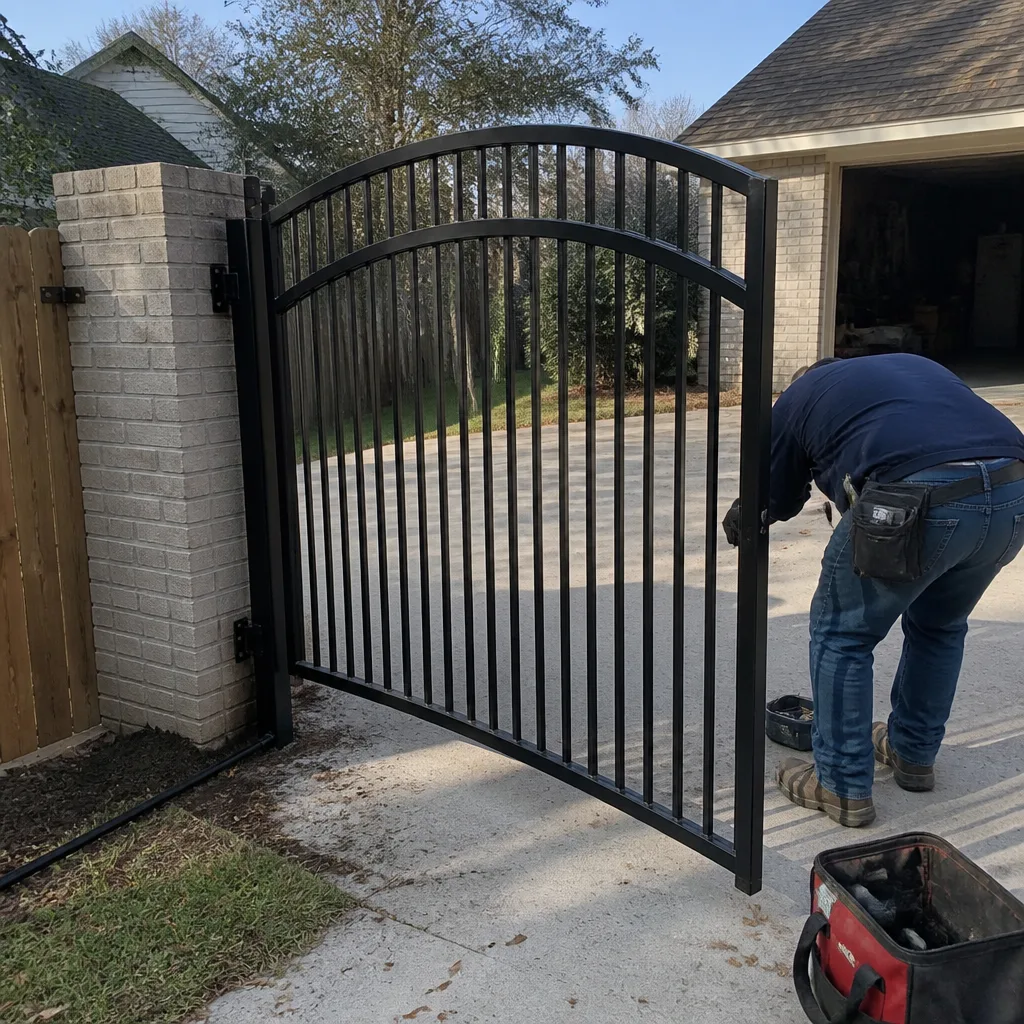 After
After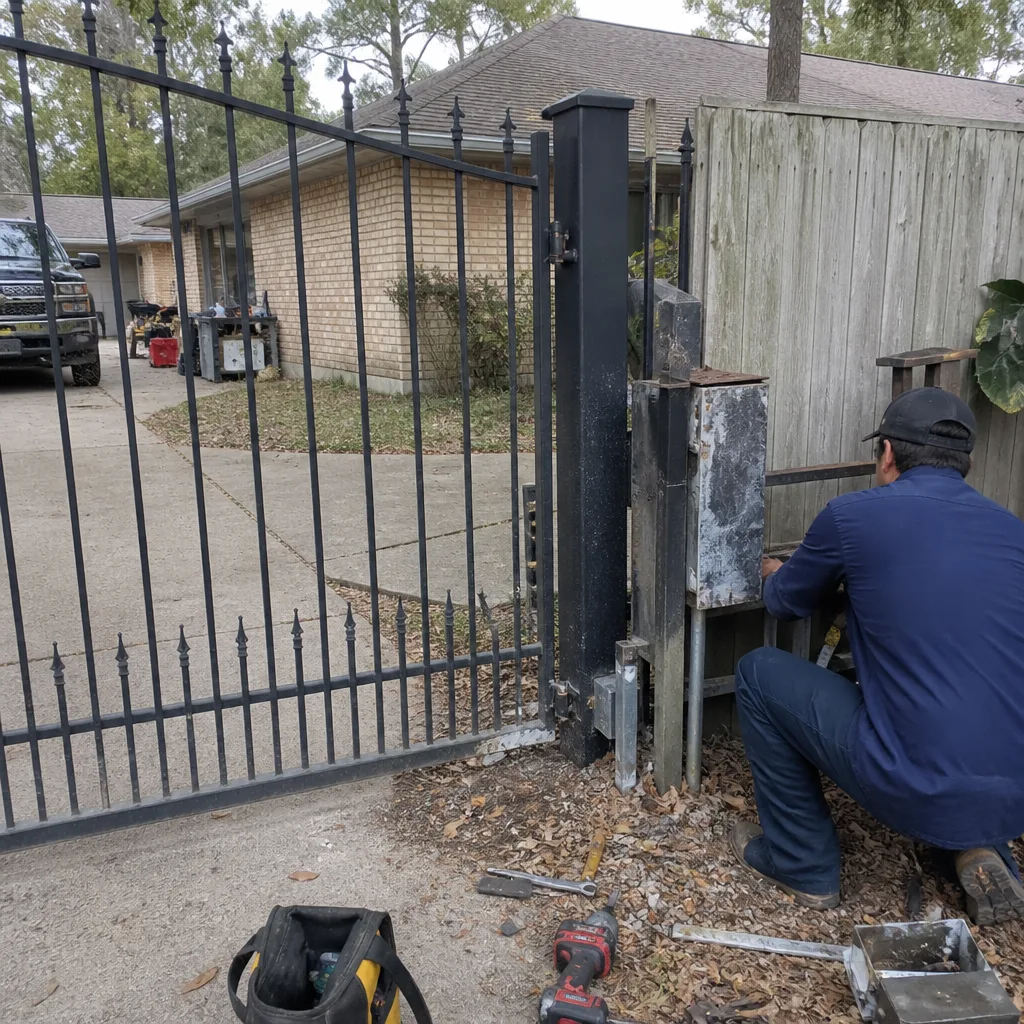 Before
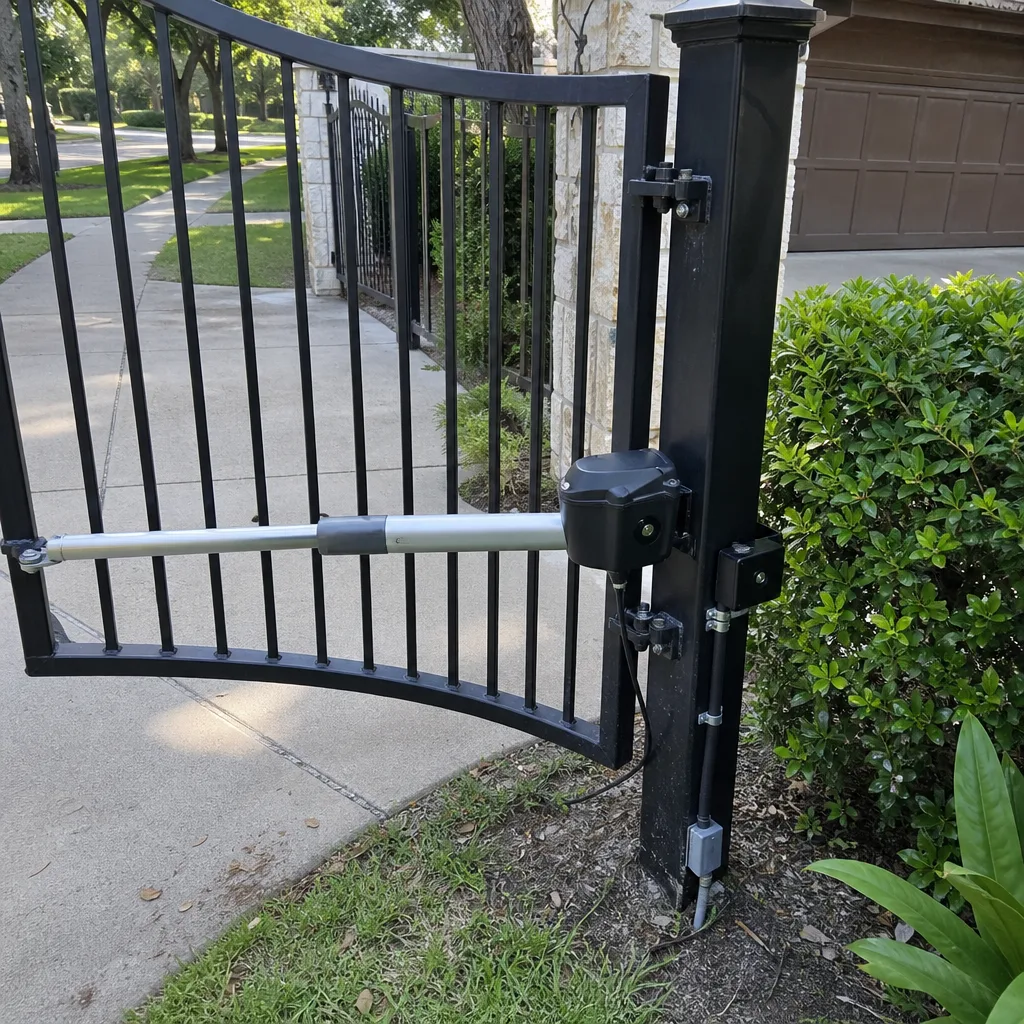 After
After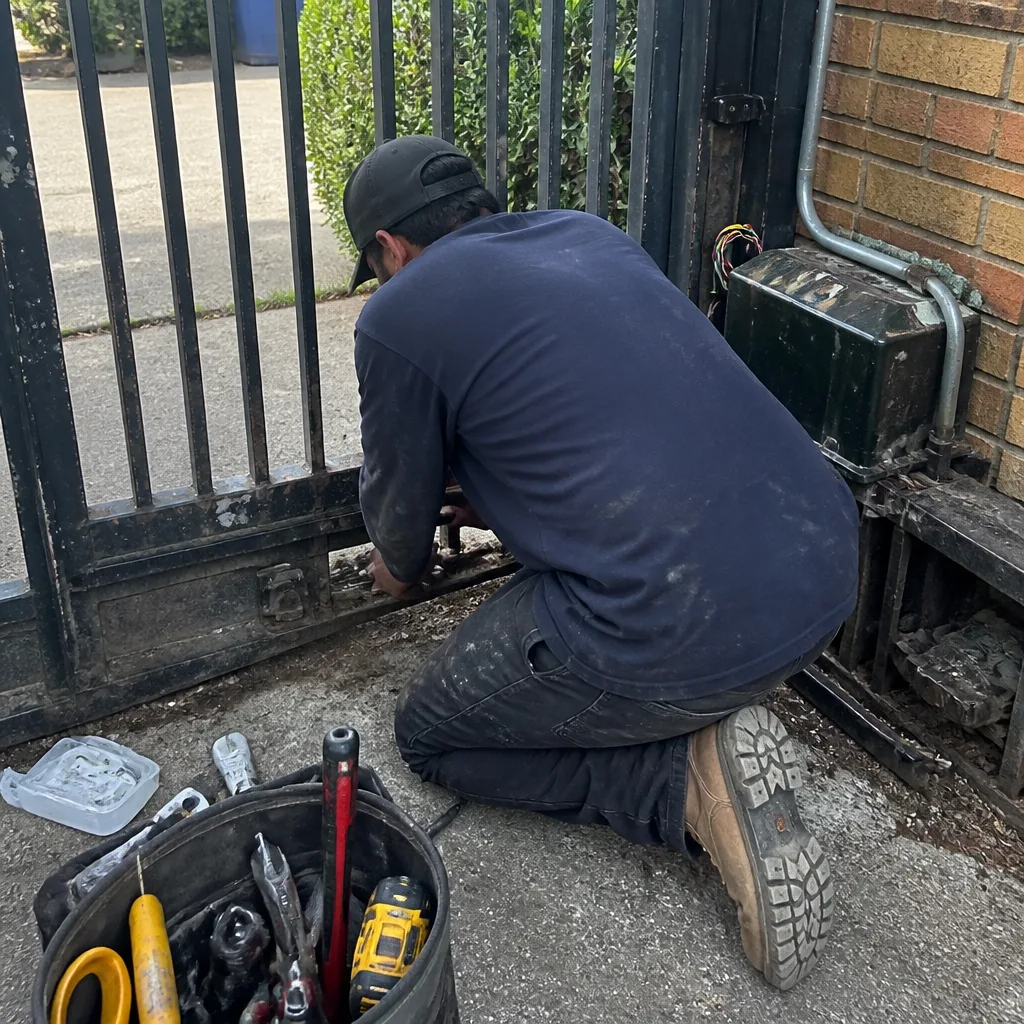 Before
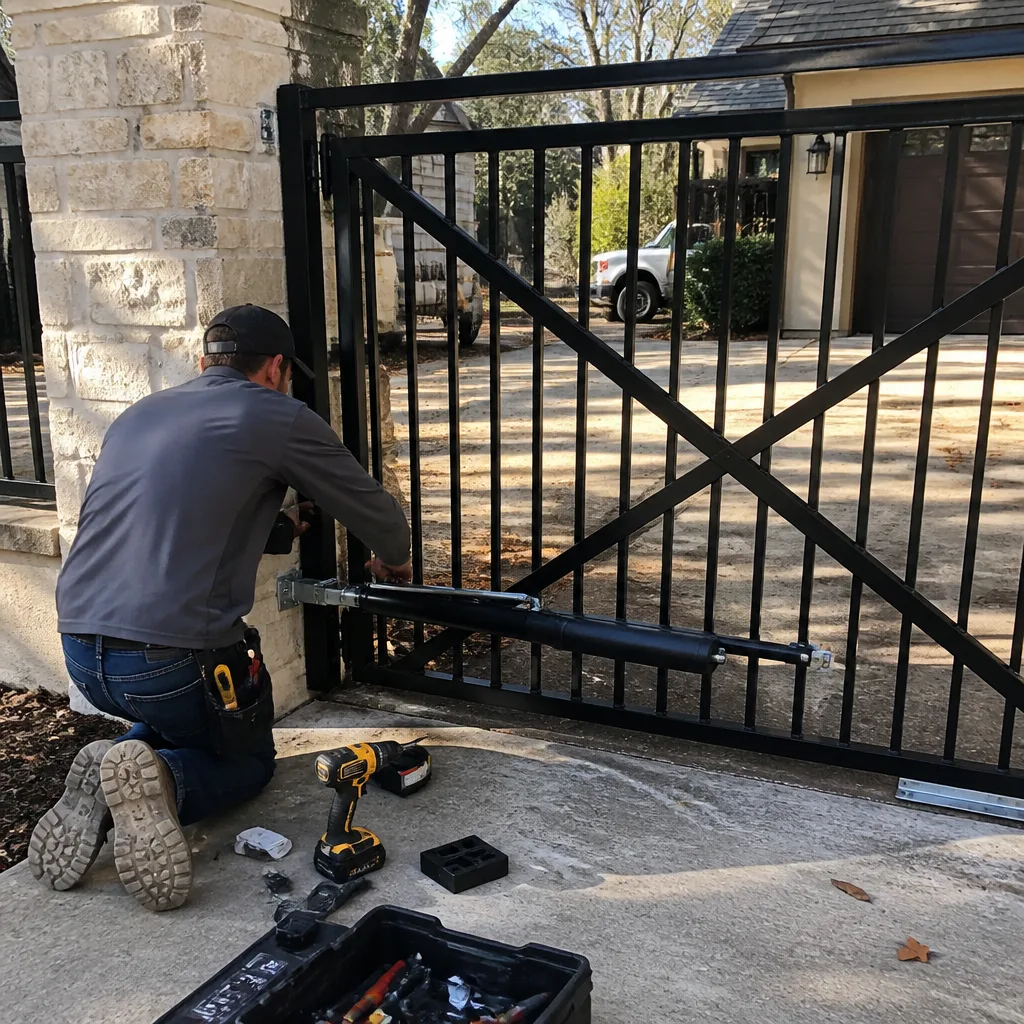 After
AfterGate Repair Cost Breakdown: The Spring Homeowner’s Reference for 2026
The most expensive gate repair outcome in Spring isn’t a failed motor board or a snapped hinge. It’s the second service call. When a contractor fixes a gate without documenting what they found or what they changed, the next technician has to re-diagnose the problem from scratch. That second diagnosis typically costs 40 to 60 percent of the original repair fee before a single tool gets picked up. This guide breaks down the actual component and labor costs behind the five most common our Gate Repair services in Spring, so when you get a quote, you can see whether it’s grounded in real market pricing or built on guesswork.
Quick Answer
Gate repair in Spring, TX typically costs between $180 and $1,400 depending on the repair. Hinge replacements run $190 to $480, motor board swaps run $350 to $900, limit-switch adjustments run $140 to $260, post re-setting runs $400 to $1,100, and photo-eye alignment runs $120 to $220. Every price below separates parts from labor so you can compare quotes line by line.
Table of Contents
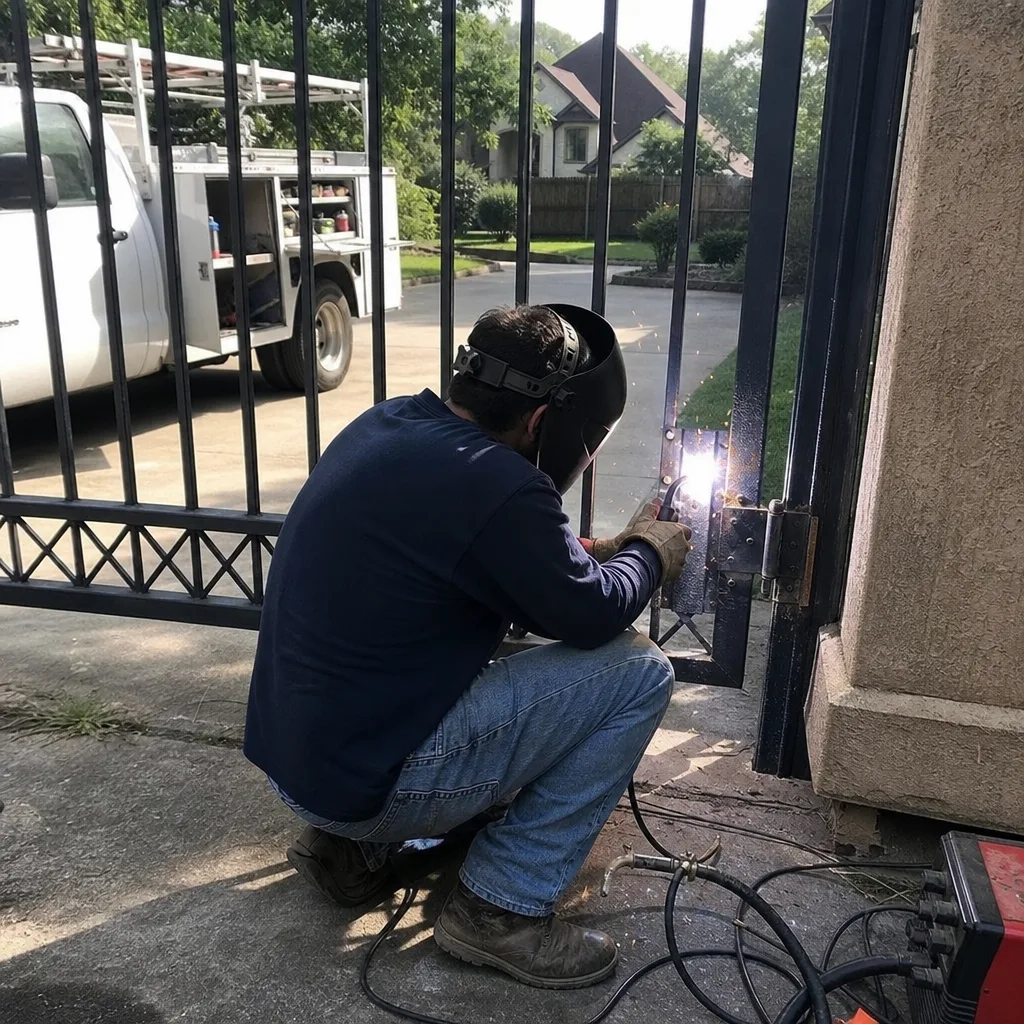
- Hinge Replacement: Parts and Labor, Line by Line
- Motor Board Swap: What It Actually Costs in Spring
- Limit-Switch Adjustment: The Cheapest Fix Nobody Quotes
- Post Re-Setting: When the Ground Moves More Than the Gate
- Photo-Eye Alignment and Replacement
- What Legitimate Parts Markup Looks Like Versus Price Gouging
- Repairing a 10-Year-Old Operator Versus Replacing It: The Break-Even Math
- How Spring’s Location Affects Parts Availability and Emergency Rates
- What a Written Quote Must Contain to Be Enforceable
- Common Mistakes to Avoid
- When to Call a Professional
- Frequently Asked Questions
- The Bottom Line
BeforeAfterHinge Replacement: Parts and Labor, Line by Line
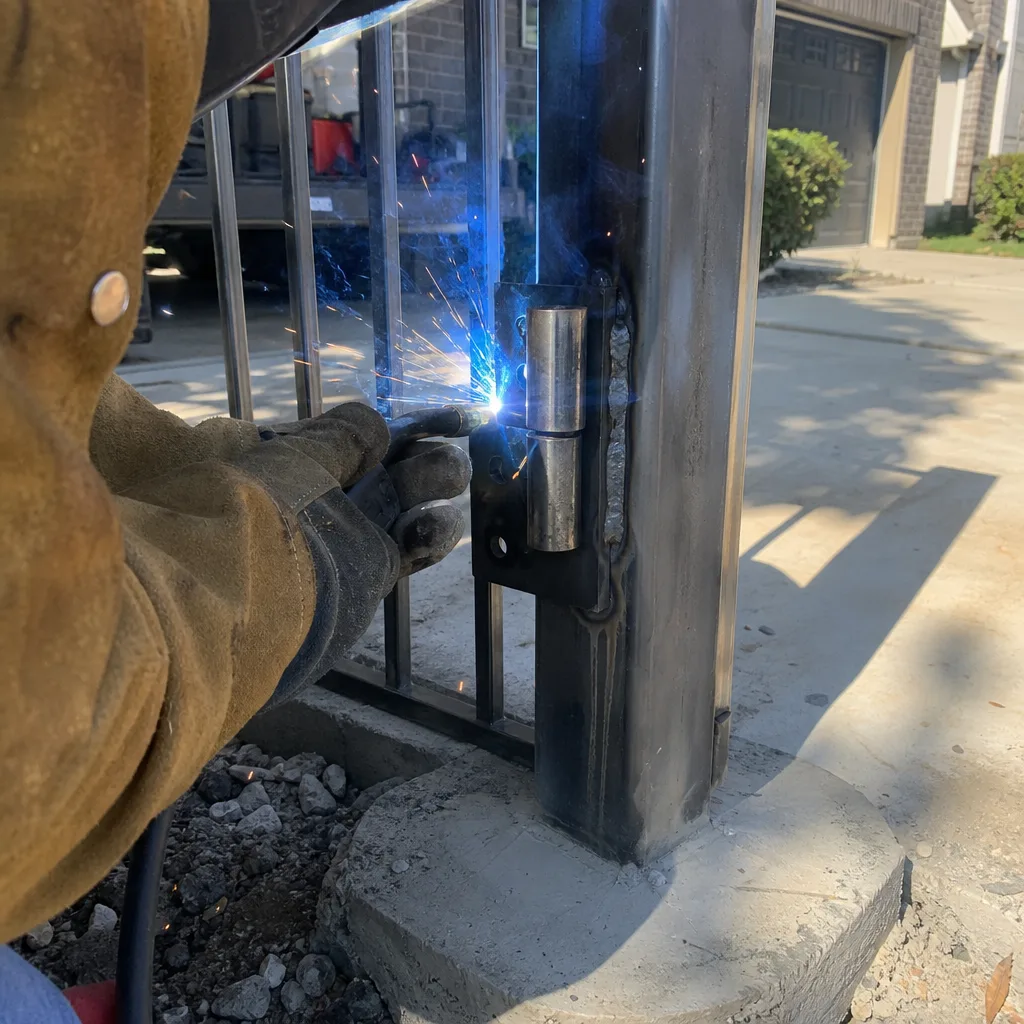
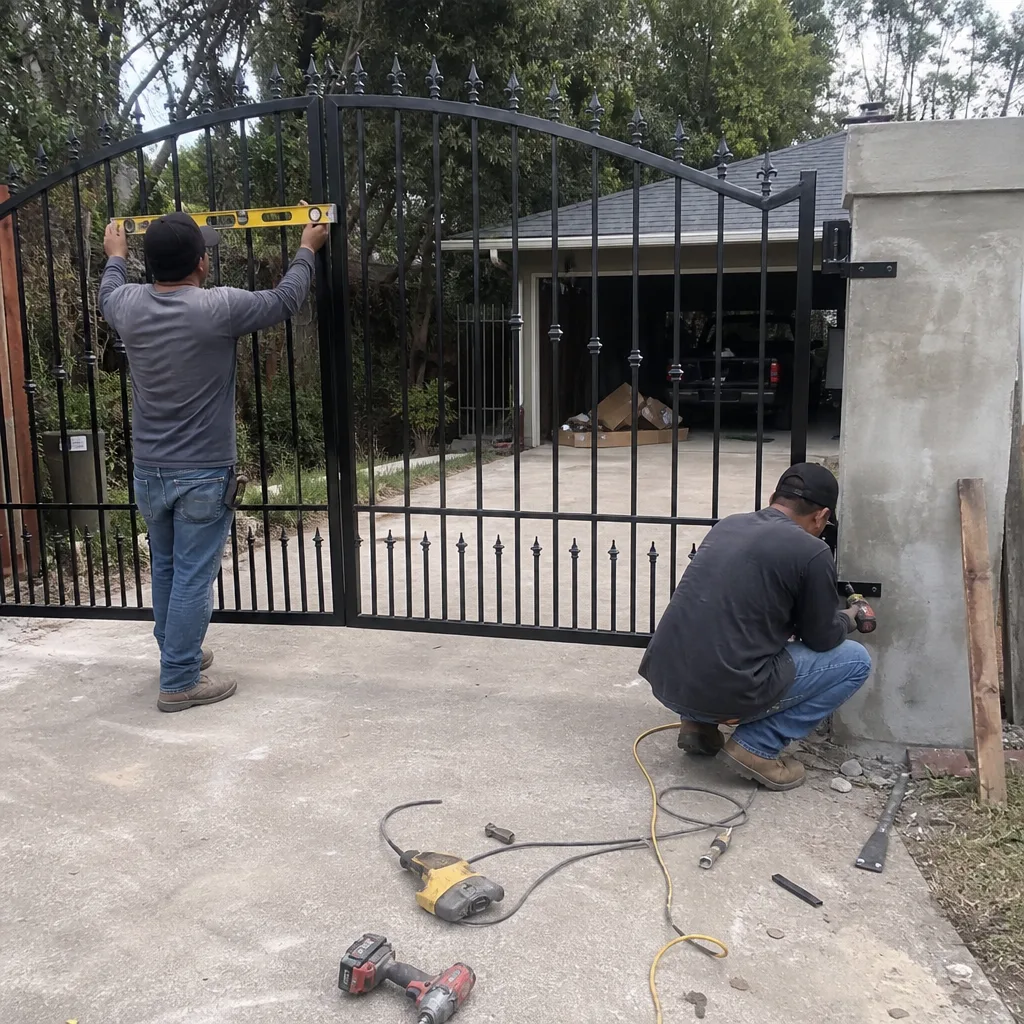
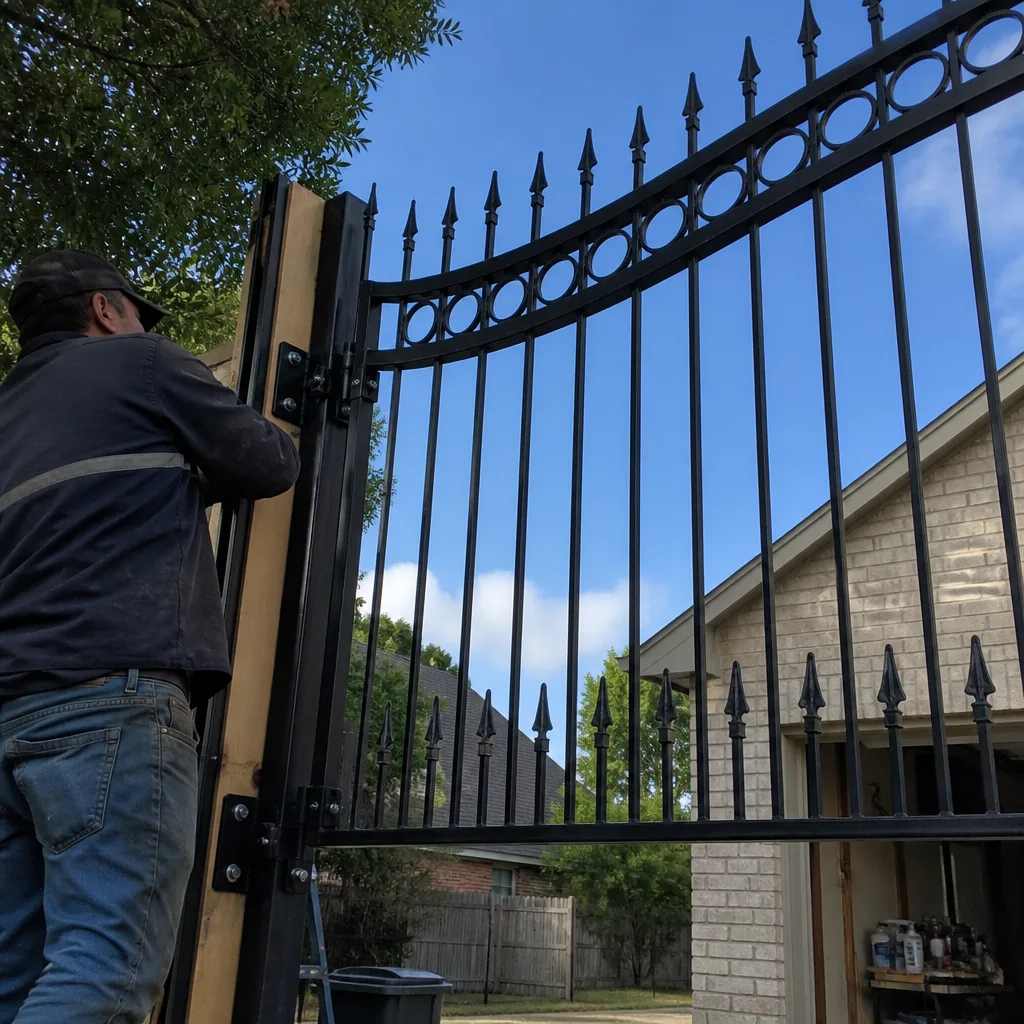
Hinge failure is the most common gate repair in Spring, and the reason is straightforward: the soil here doesn’t sit still. For seasonal upkeep tips, see our Gate Repair Maintenance Checklist for Spring Homeowners. The expansive clay that underlies much of the Spring area heaves during wet-dry cycles, and every millimeters of post movement transfers stress directly to the hinge hardware. When a hinge binds, the gate drags at the latch or the motor strains against the added resistance.
A typical hinge replacement on a residential single-swing gate breaks down like this:
- Standard steel weld-on hinge: $25 to $60 each
- Heavy-duty ball-bearing hinge: $70 to $140 each
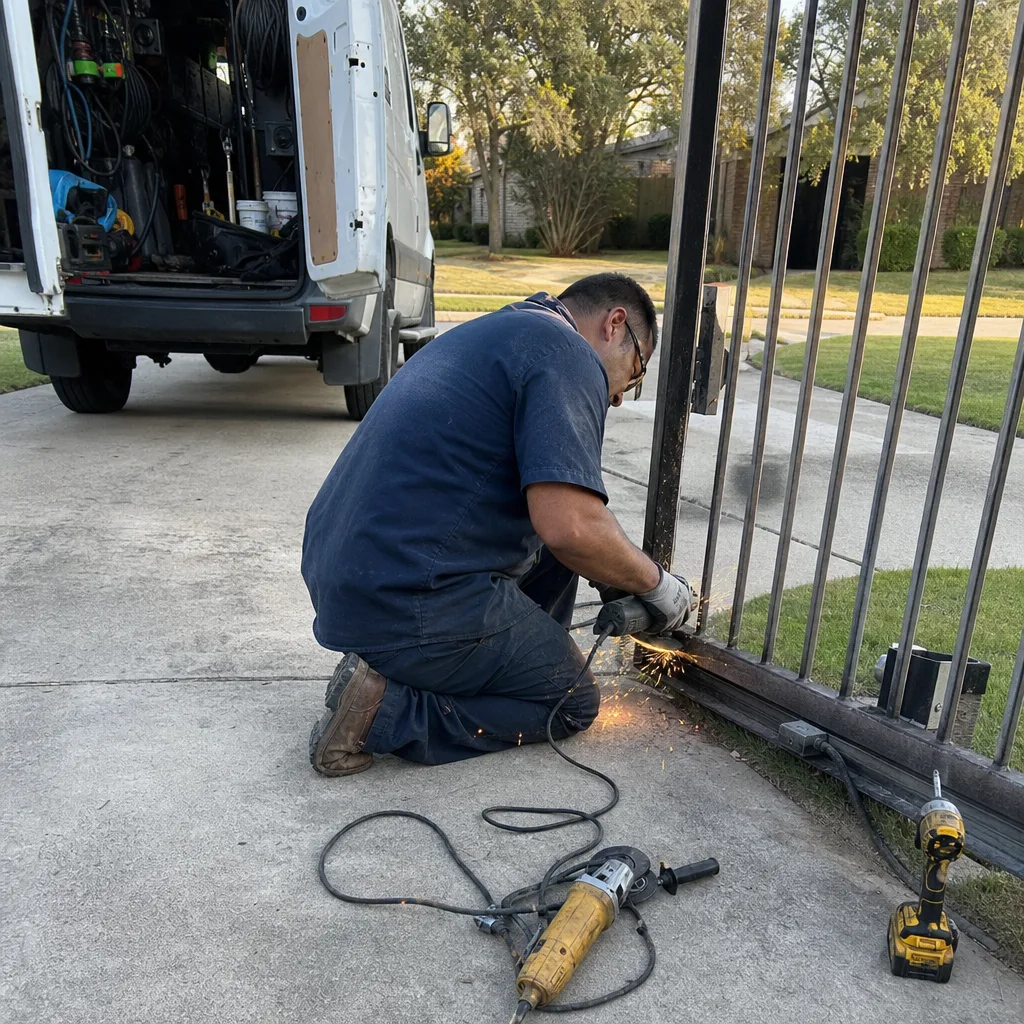
- Labor (including cutting old hardware, aligning, welding, grinding): $120 to $280
- Total range: $190 to $480 for a single gate, depending on hinge type and weld clean-up time
We replace hinges on gates that were originally built with hardware that was undersized for the gate’s weight. A 12-foot steel gate swinging on two small strap hinges will eventually tear the welds. When we quote this job, we look at the gate’s actual weight and the number of hinges, not just the bid to match what was there before.
One Spring-specific note: if your gate sits on piers drilled below the clay line, hinge replacement is usually straightforward. If the posts are set in shallow concrete, the hinge job often exposes post movement, which adds to the final cost. We flag that before quoting.
Motor Board Swap: What It Actually Costs in Spring
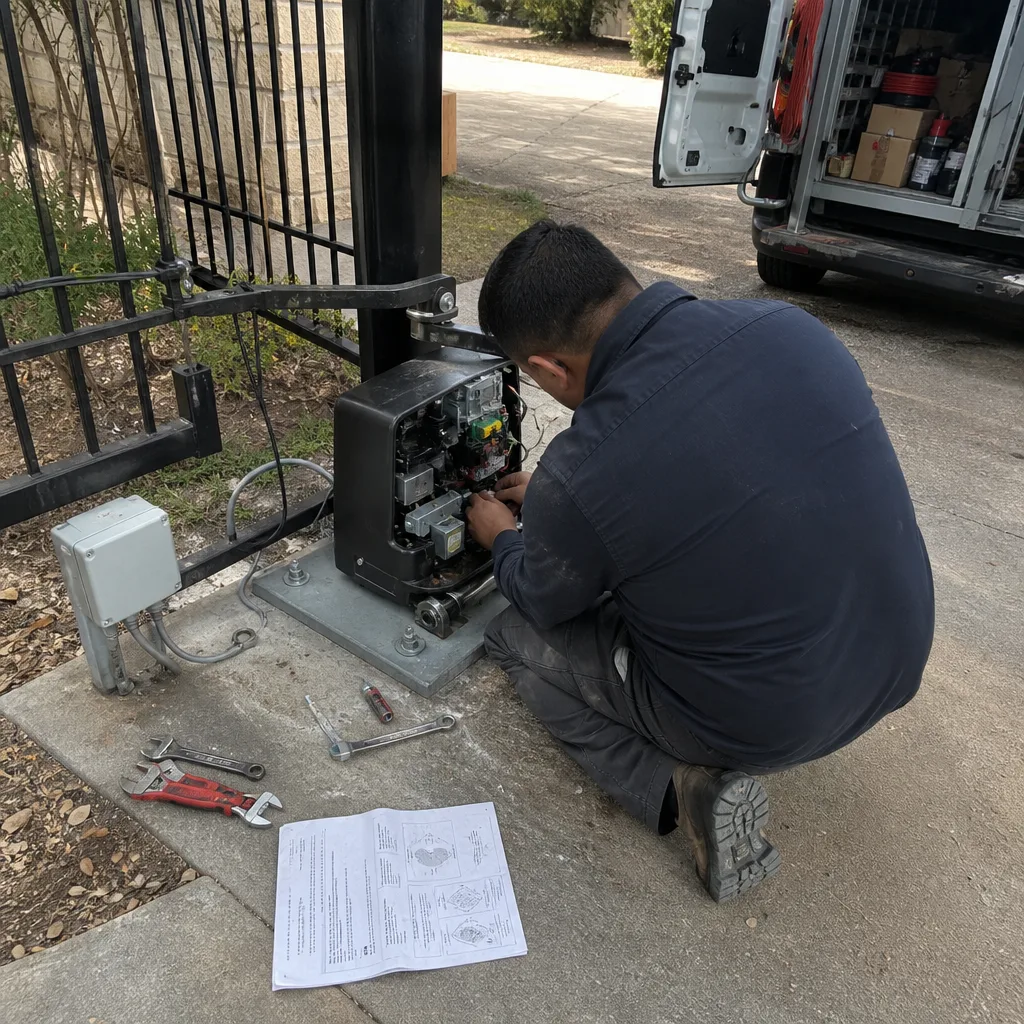
A motor board, or control board, is the printed circuit assembly inside the operator that reads inputs from the keypad, remote receiver, limit switches, and safety edges, then tells the motor what to do. When a board fails, the gate either won’t respond at all or behaves erratically, opening partway and stopping, or reversing for no reason.
Board replacement costs depend heavily on the automation brand installed on your property:
- Generic aftermarket board: $90 to $180
- OEM board (LiftMaster, DoorKing, Elite, FAAC, BFT, Linear, Viking, Ghost Controls, Mighty Mule): $180 to $520
- Labor (removal, installation, DIP-switch or potentiometer reconfiguration, limit re-set): $160 to $350
- Total range: $350 to $900, with OEM boards on the higher end
The labor cost on a board swap is not just plugging in a part. The technician has to re-establish limit positions, re-learn remote codes, verify safety-edge inputs, and test the full cycle under load. We photograph the old board’s wiring before disconnecting anything and re-check every terminal against the diagram. That record goes in your job file and in the photo log you receive.
In our experience, roughly one board in four that gets quoted as failed has a different underlying problem, often a loose terminal or a shorted actuator wire. That’s why Gate Motor & Opener in Spring work always starts with a bench test diagnostic before we recommend board replacement.
Limit-Switch Adjustment: The Cheapest Fix Nobody Quotes
A limit switch (or limit sensor) tells the operator where the gate stops in both the open and closed positions. When it drifts out of adjustment, the gate may stop short, run past the post, sit against the stop with the motor still humming, or reverse at random.
This repair costs $140 to $260 and often takes less than an hour. The parts cost is essentially zero: it’s a mechanical or magnetic switch that gets repositioned. The charge is for diagnosis and calibration.
Here’s what the job looks like in practice, step by step:
- Technician disconnects the operator from power and manually cycles the gate to check for binding or physical obstruction.
- The limit switch position is checked against the gate’s actual travel. On a magnetic limit system, the magnet’s distance from the reed switch is measured with a feeler gauge.
- The switch is repositioned, the gate is cycled under power, and the stop positions are verified at both ends.
- The technician photographs the new limit position and records the measurement in the job file.
We see limit-switch drift on gates that get heavy daily use, gates hit by wind, and gates where the original installation set the stops too tight against the post. The fix is simple, but the diagnosis is where experience matters. Misdiagnosing a limit issue as a board issue is one of the most common unnecessary replacement quotes in the trade.
Post Re-Setting: When the Ground Moves More Than the Gate
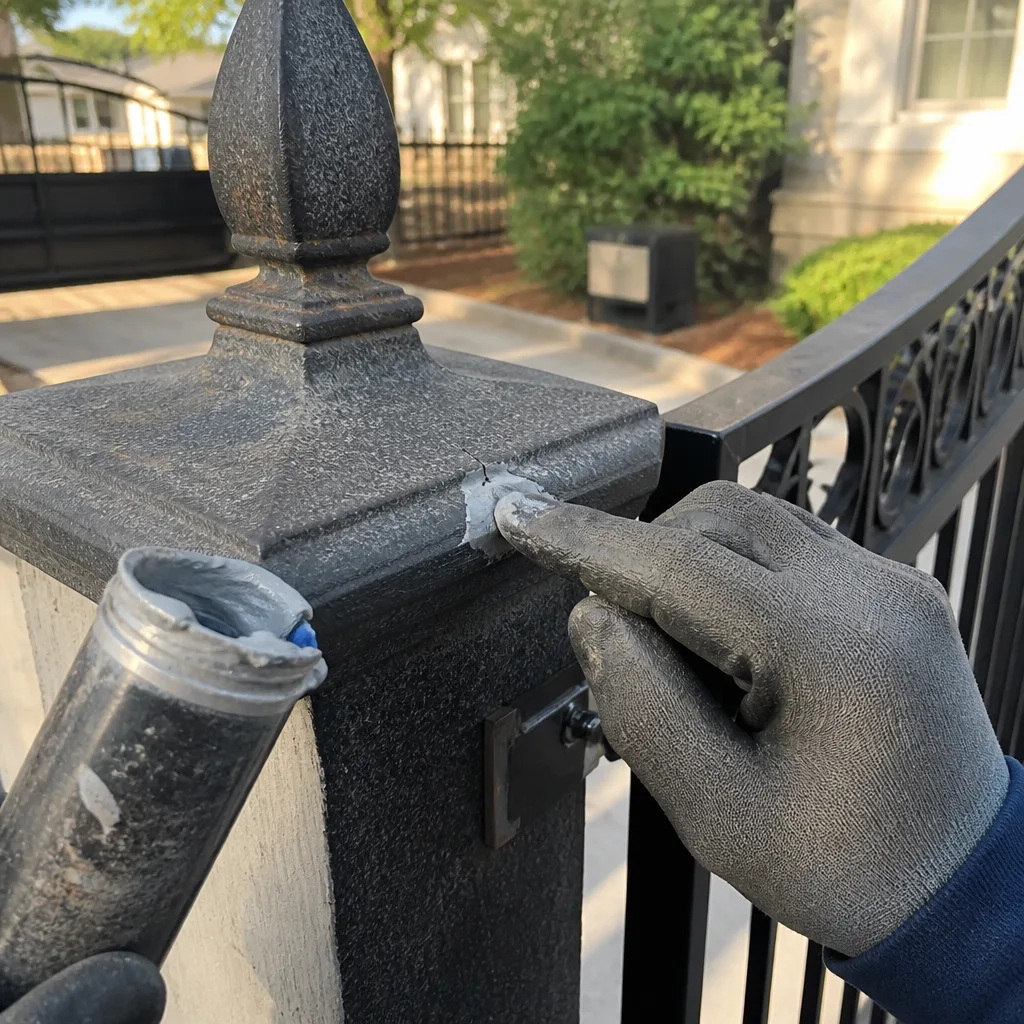
Post re-setting is the repair that separates Spring residents from homeowners in less active soil regions. Before starting major work, check Gate Repair Permits, Codes & Inspections in TX: What You Need to Know. The same clay expansion that causes foundation movement across Harris County also shoves gate posts out of plumb. A post that leans even two degrees changes the hinge geometry, binds the latch, and throws a perfectly calibrated operator out of adjustment.
Re-setting a post means cutting the gate free, removing the post from its old footing, excavating to the correct depth (below the clay line in most of Spring, which means 30 to 40 inches depending on the neighborhood), setting the post in fresh concrete, and re-hanging the gate after the concrete cures.
Cost breakdown:
- Excavation and old footing removal: $80 to $180
- Post (if replacement is required): $90 to $220 for steel, depending on gauge and length
- Concrete and anchors: $30 to $80
- Labor (cutting, setting, plumbing the post, re-hanging the gate, re-aligning the operator): $200 to $620
- Total range: $400 to $1,100
The wider range on this job comes down to whether the post is salvageable and whether the operator needs re-alignment after the gate is re-hung. We recommend waiting 48 to 72 hours for concrete to reach working strength before cycling the gate under power. A technician who re-hangs the gate and re-connects the operator the same day is not doing you any favors.
Photo-Eye Alignment and Replacement
The photo-eye (also called a photo sensor or safety beam) is the infrared transmitter and receiver pair mounted on either side of the gate opening. When the beam is broken, the gate refuses to close or reverses if it’s already closing. The purpose is to stop the gate from striking a person, vehicle, or animal in the path.
Misalignment is the most common fault. The fix is adjustment, and it’s the least expensive repair in this guide:
- Photo-eye realignment: $120 to $180, usually no parts required
- Photo-eye replacement (faulty transmitter or receiver): $40 to $90 for the part, $100 to $170 labor
- Total range: $120 to $260
Spring’s rains and heat combine to cause a specific failure mode: moisture gets past the photo-eye’s housing seal, oxidizes the terminals, and corrodes the connection. If the eye is new but the gate still refuses to close, the problem is usually the wiring run back to the board, not the eye itself. A good diagnostic technician checks resistance on the wire before replacing any component.
One more thing worth stating clearly: never bypass a photo-eye. The beam exists to stop the gate from hitting someone. Removing it or jumping the terminals creates a genuine safety hazard, especially if children use the driveway.
What Legitimate Parts Markup Looks Like Versus Price Gouging
Every gate contractor marks up parts. The mark-up covers the time spent sourcing the part, the cost of carrying common inventory, and the risk of a part failing under warranty and requiring a second trip. That’s legitimate.
What you should question is a mark-up that exceeds 40 to 60 percent over the distributor price on a major component like a control board or an operator arm, and mark-ups over 100 percent on common items like hinges and photo-eyes. Here’s a practical test: ask the contractor to show the distributor invoice or the part number so you can verify the retail price. A contractor who refuses is not quoting you a bad price, but they’re denying you the information you need to judge whether the price is fair.
At Vance Gate Repair Spring home, the written quote separates parts and labor. You see the part number, the parts total, the labor total, and the final price. If we need a bolt, a grommet, or a connector, it’s on the line item. You shouldn’t have to ask for that level of detail.
For most repairs, the parts mark-up range in the Spring market looks like this:
- Small hardware (hinges, brackets, sensors): 30 to 50 percent over distributor cost
- Control boards and motors: 20 to 40 percent over distributor cost
- Wire, conduit, and connectors: 10 to 25 percent over distributor cost
Number ranges, not guarantees. But if a quote shows a 200 percent mark-up on a $200 board, that’s not a service charge. That’s someone betting you won’t check.
Repairing a 10-Year-Old Operator Versus Replacing It: The Break-Even Math
The decision to repair or replace an operator comes down to arithmetic, not brand loyalty. You should replace when the cost to repair exceeds approximately 50 percent of the cost of a new installed operator, or when the operator has failed multiple times in the past two years.
A new residential slide or swing gate operator installed in Spring typically runs $1,200 to $2,800, depending on the brand and the amount of concrete work involved. If your current operator is 10 years old and needs a $700 board replacement, that’s 25 to 55 percent of a new unit’s cost. The repair is rational if the motor and gearbox are still sound. It’s not rational if the gearbox is already worn and will fail within the year.
Here’s the break-even calculation we walk through with Spring homeowners:
- Take the quote for the immediate repair. Write it down.
- Take the quote for a new installed operator. Write it down separately.
- Divide the repair cost by the replacement cost.
- If the result is under 0.5, and the operator has not failed in the past 24 months, repair is usually the rational choice.
- If the result is over 0.5, or the operator has required more than two service calls in two years, replacement is usually the rational choice.
- Add the cost of expected future repairs over the next three years. If that forecast pushes total repair spending past 70 percent of replacement cost, replace now.
We work on nine major automation brands, including LiftMaster, DoorKing, Elite, and Mighty Mule, so the recommendation doesn’t depend on which brand is already on the property. The math determines the answer. Not the sales incentive.
How Spring’s Location Affects Parts Availability and Emergency Rates
Spring sits on the north side of Houston, roughly 25 to 35 minutes from the major automation distributors located in the central Houston industrial corridors. That distance matters when a gate fails open and can’t be secured, or fails closed and blocks the driveway.
During normal business hours, same-day parts availability in Spring is good. Most OEM boards and motors for the common brands are stocked locally. A technician can pick up a DoorKing or LiftMaster board and have it installed the same day.
After hours, the picture changes. The distributors close, and the part has to come from a technician’s truck stock or from a supplier that holds emergency inventory. For that reason, emergency rates in Spring are legitimate, but they should be capped and disclosed before the technician rolls out. Here’s the range we see in the market:
- Standard dispatch, business hours: part of the normal labor rate, no premium
- After-hours dispatch fee (before 10 pm): $60 to $120
- Overnight emergency dispatch (10 pm to 6 am): $100 to $200
- Weekend dispatch: $50 to $100 premium on the hourly rate
None of these numbers should be a surprise at the end of the job. The dispatch premium should be stated when you call and confirmed in the written quote before work starts. That’s the whole point of Gate Repair in Spring work done under a written scope.
What a Written Quote Must Contain to Be Enforceable
A gate repair quote is not a receipt. It’s the document that defines what work will be done, what parts will be used, and what happens if the scope changes. If the final invoice exceeds the written quote and you never agreed to a change order, you have a legitimate dispute.
Here’s what a defensible written quote contains, in order of importance:
- Scope language: a sentence or two that says exactly what is being repaired and what the goal is (“replace left hinge pair and re-align operator on existing swing gate”). Vague language like “gate service” is not a scope.
- Parts specification: the brand, model, or part number of each component being installed. “Replacement board” doesn’t tell you anything. “DoorKing 8053-010 circuit board” does.
- Line-item pricing: parts and labor separated, with quantities.
- Change-order terms: language that says any work beyond the described scope requires written approval before it’s performed.
- Warranty terms: how long the repair is covered and what is included.
- Date, company name, technician name, and signature.
The Haven Standard governs every job we perform. Clause 1 requires a written price before work starts. Clause 4 requires a documented photo record on every visit. If a contractor can’t produce a piece of paper with the scope and price on it, call someone else.
Common Mistakes to Avoid
- Accepting a verbal quote. A number spoken over the phone is not a quote. It’s a guess with no enforceable scope behind it. If there’s nothing in writing, there’s nothing to dispute against when the invoice arrives higher.
- Replacing the operator because the remote stopped working. A dead remote or a failed receiver card is a $50 to $150 fix. Replacing the whole operator for a remote problem is the most common unnecessary replacement in the trade, and Spring homeowners fall for it every month.
- Bypassing the photo-eye instead of aligning it. Jumping the safety beam removes the gate’s primary entrapment protection. It’s a shortcut, not a repair.
- Greasing the hinges instead of replacing them. When a hinge is worn past its bearing tolerance, grease makes it quiet for a week and then the bind returns. By then the motor has been straining under increased resistance, which shortens its life.
- Not asking for the part number. You don’t need to understand what a “BFT Libra control board” is to benefit from having the part number written on the quote. It lets you verify the part exists and see what it costs from a distributor.
- Ignoring post lean until the gate scrapes. By the time a gate drags on the ground, the post movement is usually severe and the repair is larger than a simple re-set would have been six months earlier.
- Paying full price for a second diagnosis of the same problem. If a gate was repaired and failed again within weeks, the follow-up should not be a fresh service call at full rate. That’s what the original contractor’s warranty is for, and that’s exactly why you get the repair in writing.
When to Call a Professional
Call a gate professional when the gate fails closed and blocks vehicles, when the gate fails open and can’t be secured, when a motor makes grinding or chattering noises under load, when the gate reverses unpredictably, when a post leans visibly, or when any safety component like a photo-eye fails to respond. These are not situations where a YouTube search or more guides & resources fix the problem. A gate under power holds enough stored energy in its springs, chains, and gearboxes to cause serious injury when mishandled. Gate motors, high-tension springs, and heavy steel leaves are the components we treat with the most caution on every job. If you’re unsure whether a component is under tension, leave it alone and call someone who works with these systems daily. Vance Gate Repair Spring offers free estimates in Spring - call (346) 488-1637.
Frequently Asked Questions
Gate repair in Spring TX costs $180 to $1,400 depending on the repair. Hinge replacement runs $190 to $480, motor board replacement runs $350 to $900, limit-switch adjustment runs $140 to $260, post re-setting runs $400 to $1,100, and photo-eye alignment or replacement runs $120 to $260. These are line-item ranges with parts and labor separated, not flat-fee guesses. Call (346) 488-1637 for an exact quote on your specific gate.
Most repairs in Spring can be completed the same day when parts are in stock locally, which they typically are for common brands like LiftMaster, DoorKing, Elite, and Mighty Mule. After-hours parts availability is tighter, but many light repairs such as limit-switch adjustments and photo-eye alignment require no parts at all and can be done immediately. Call (346) 488-1637 and a live person will tell you what’s possible today.
A full gate installation includes the gate leaf or leaves, the posts and footings, the hinges or track hardware, the operator and arms, the control board, safety edges or photo-eyes, the keypad or remote receiver, and the electrical run from the panel to the operator. A written Gate Installation in Spring quote should break out every component so you know what’s included before work starts.
Yes, the electrical run from the panel to the operator and the safety edge installation are part of standard gate installation and repair work. A proper install includes conduit, wire sized for the operator’s draw, a disconnecting means at the operator, and UL-listed safety edges wired to the board’s entrapment inputs. Every job we do includes a documented photo record of these details.
A motor board replacement in Spring costs $350 to $900, with the board itself running $90 to $520 depending on whether it’s aftermarket or OEM, and labor running $160 to $350 for removal, configuration, and re-calibration. The exact cost depends on your operator’s brand and age. Call (346) 488-1637 for a written line-item quote.
The difference comes down to cost ratio. If the repair is under 50 percent of the cost of a new installed operator and the unit hasn’t failed repeatedly, repair is usually the rational choice. If the repair is over half the cost of replacement, or the operator has failed twice in two years, replacement becomes the financially sound decision. We service nine major brands, so the answer depends on the math, not on which brand is on your driveway.
The Bottom Line
Gate repair pricing in Spring doesn’t have to be a black box. The five most common repairs, hinge replacement, motor board swap, limit-switch adjustment, post re-setting, and photo-eye alignment, have predictable parts and labor ranges, and any contractor who can’t show you those ranges in writing is not giving you a quote. You’re entitled to a written scope, a written price, line-item pricing, and a documented record when the job is done. If a gate company won’t put the numbers on paper before touching your gate, walk away. If they will, you have a basis for comparison and a document to hold them to when the work is finished.
Written by Adrian Vance, Owner at Vance Gate Repair Spring, serving Spring since 2014.