
Last updated September 20, 2026
Free on-site gate assessment - hinges, posts, and your LiftMaster or Nice gate operator checked before anything is quoted
The assessment is free and the quote is the invoice.

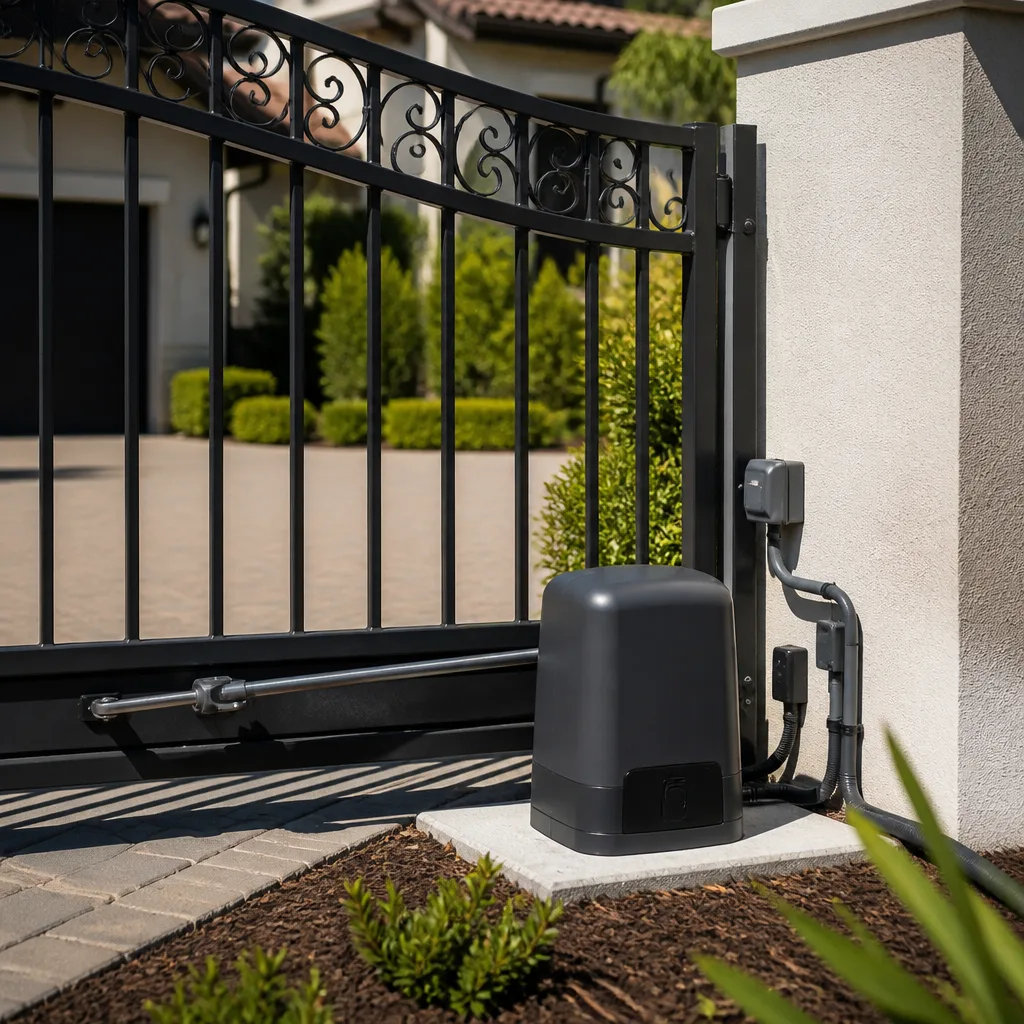
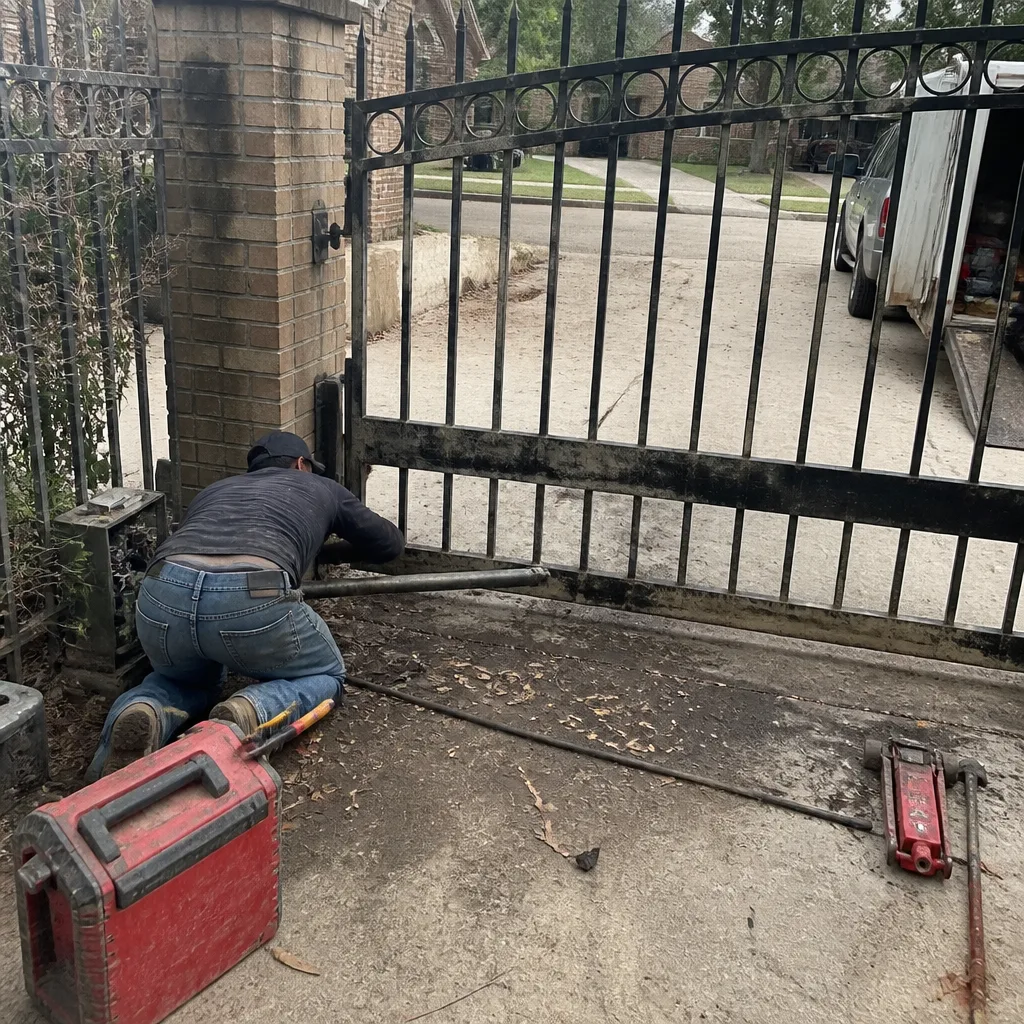 Before
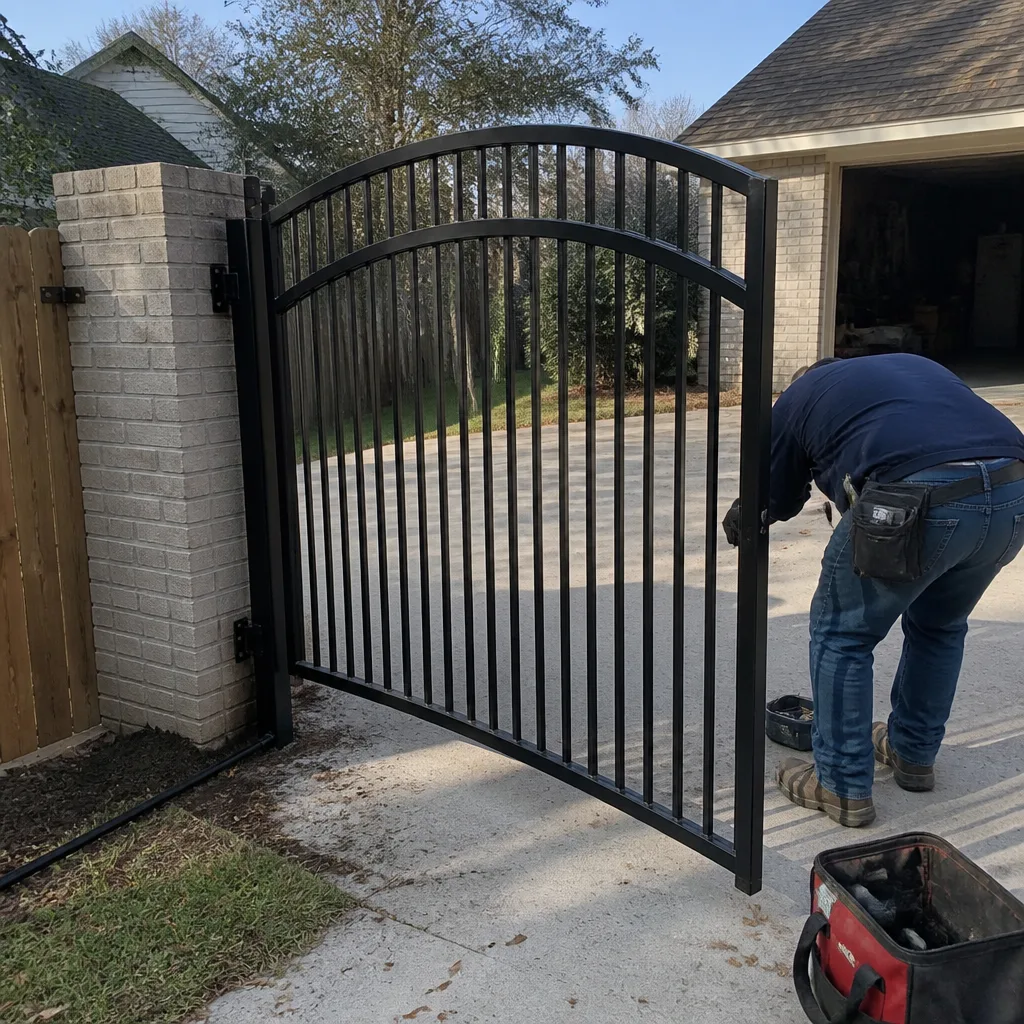 After
After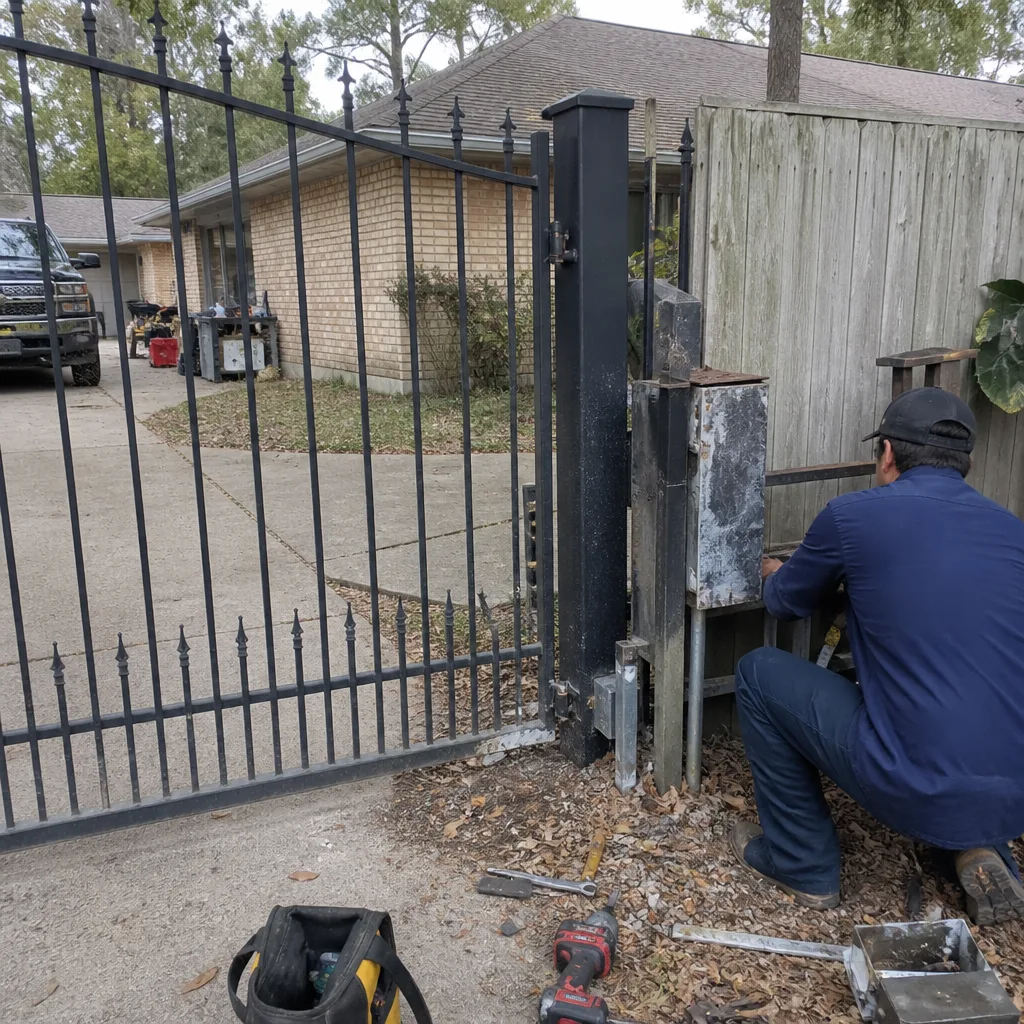 Before
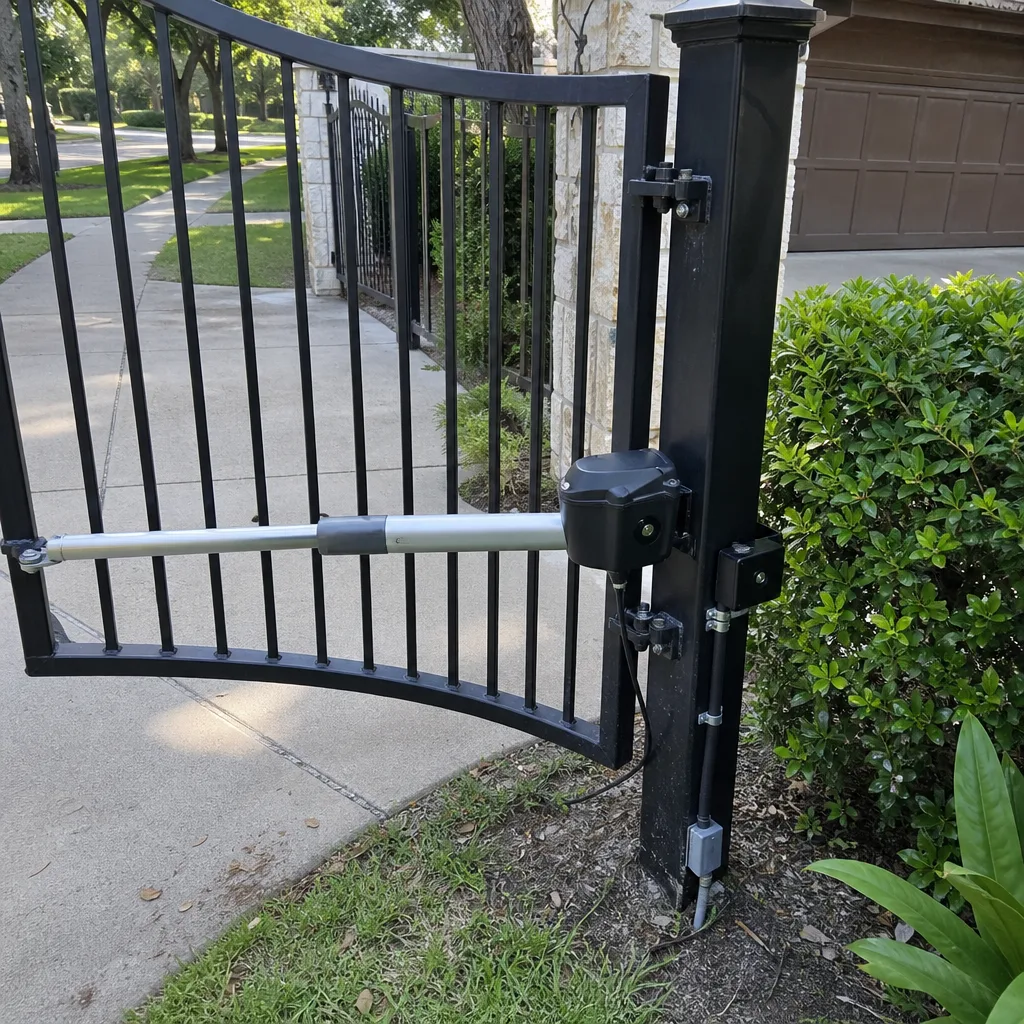 After
After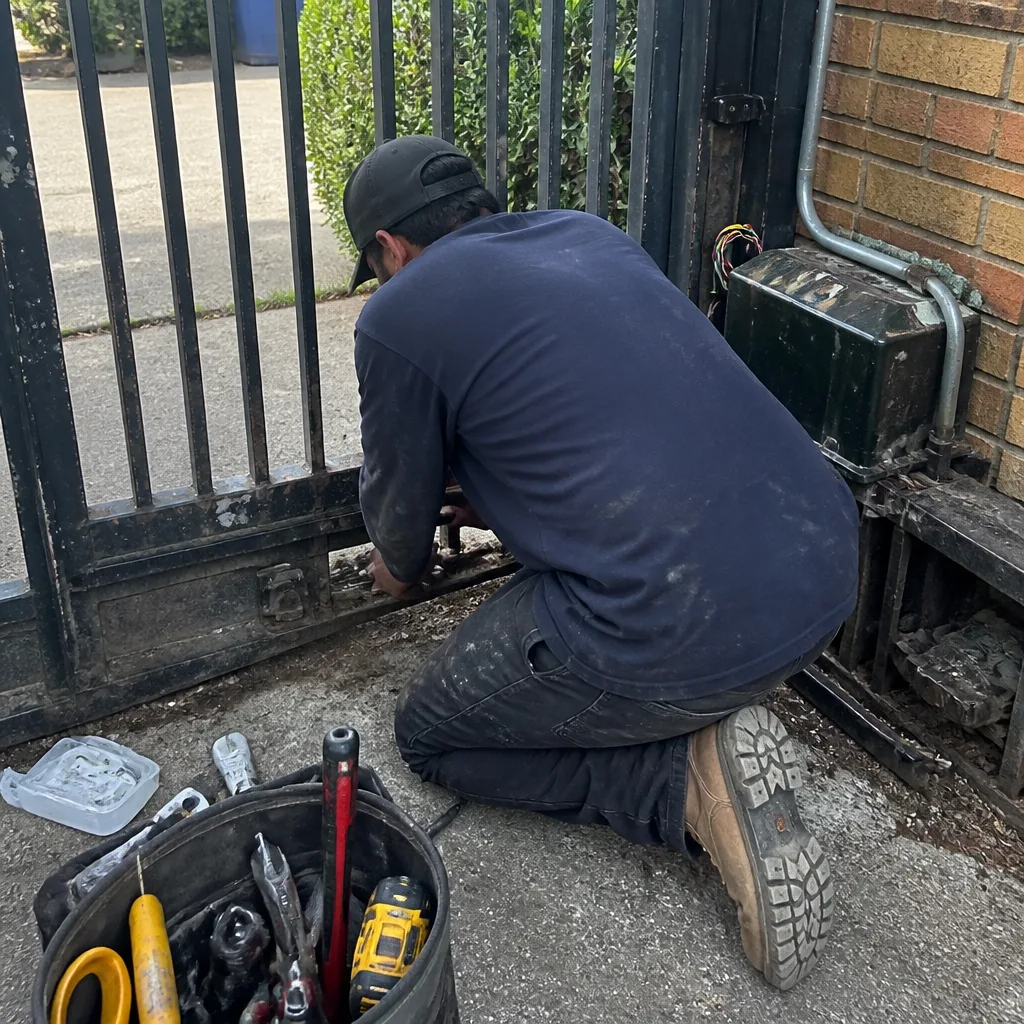 Before
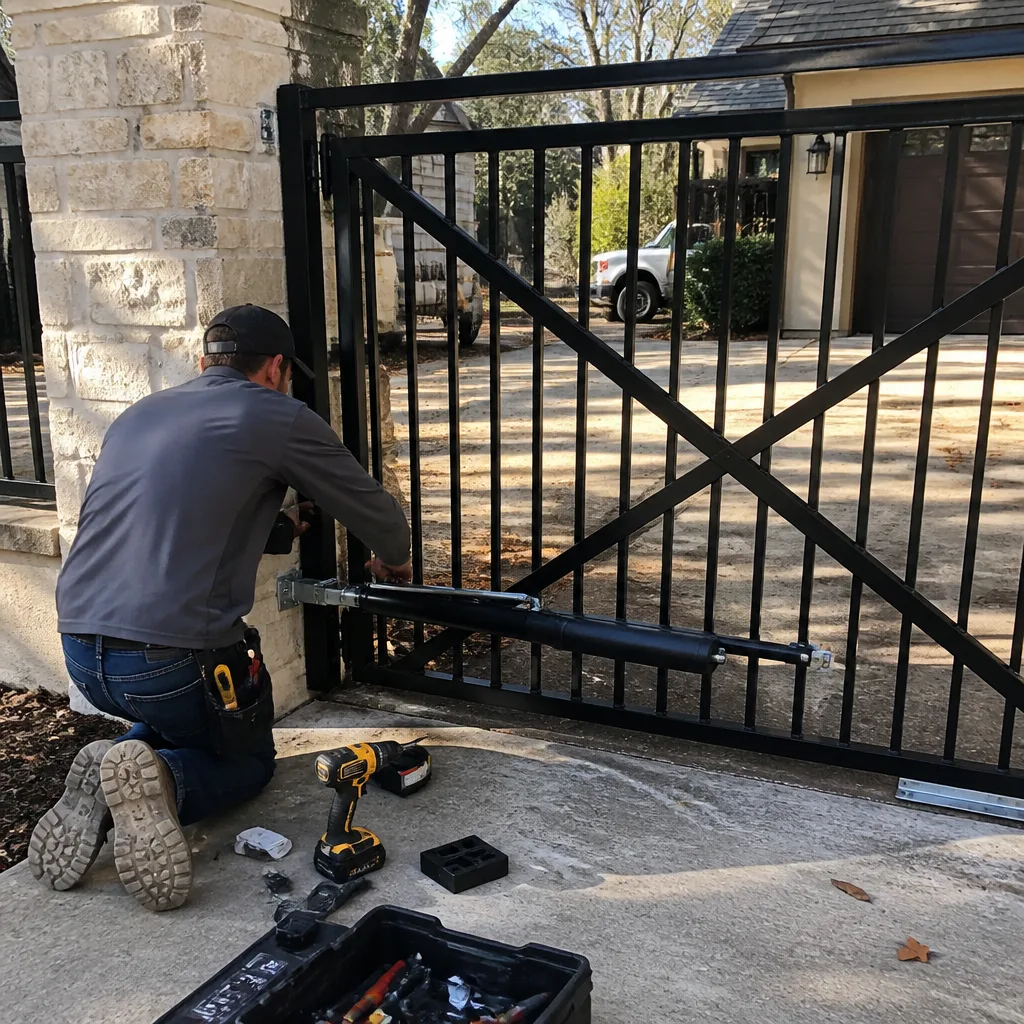 After
AfterGate Repair Permits, Codes & Inspections in TX: What You Need to Know
Here’s a fact most Spring homeowners learn the hard way: a gate can pass City of Houston inspection and still be a violation in the eyes of a Spring MUD or HOA. The two systems don’t talk to each other. A homeowner who installs a new automated driveway gate without checking deed restrictions can be ordered to remove it, pay for the removal, and restore the approach to its original condition, even when every municipal box was checked. This guide explains exactly when gate work in Spring, TX requires a permit, when it doesn’t, what UL 325 demands of any motorized gate regardless of permit status, and how to document pre-existing conditions so a future inspection doesn’t flag your property for work you never did.
Quick Answer
Most residential gate repairs in Spring, TX (hinges, wheels, limit switches, chain adjustment, panel re-hanging) require no permit in unincorporated Harris County or City of Houston jurisdiction. A permit is generally triggered when the work legally becomes replacement or new construction, meaning new footings, a new gate frame, relocation of the gate, or adding a motor to a gate that was previously manual. The second approval layer, HOA or MUD deed restrictions, operates independently of the city or county and frequently imposes stricter rules on gate height, material, setback, and automation than any municipal code does.
Table of Contents
- When “Repair” Becomes “Replacement” in Texas
- HOA & Deed Restrictions in Spring: The Approval That Bites Hardest
- UL 325 & Motorized Gates: Safety Standards That Apply Anyway
- The Permit Process: City of Houston, Unincorporated Harris County, and Spring MUDs
- Documenting Pre-Existing Conditions Before Repair
- Inspection Steps for a New Automated Gate in Spring
- Common Mistakes to Avoid
- When to Call a Professional
- Frequently Asked Questions
- The Bottom Line
BeforeAfterWhen “Repair” Becomes “Replacement” in Texas
The line between repair and replacement is not philosophical. It’s a legal classification that determines whether you need a permit, and in Harris County, it’s defined by the scope of physical change to the structure. Replacing a hinge, a wheel, a chain, a limit switch, or a circuit board is repair work. No permit. Pouring new concrete footings, setting new posts, rebuilding the gate frame from scratch, relocating the gate, or installing a gate where none existed before is replacement or new construction. That requires a building permit.
Here’s the Harris County rule of thumb we tell every Spring homeowner: if the work changes the structure’s footprint, its attachment points to the ground, or its mechanical classification, you’re in permit territory. If the work returns an existing structure to its previous condition, you’re in repair territory.
Specific examples that trigger a permit in Spring:
- Setting new posts or new footings for an existing gate line
- Replacing the entire gate frame rather than re-skinning the panels
- Relocating the gate to a different point on the property line
- Adding an automated operator to a gate that was previously opened by hand
- Widening the gate opening or changing the swing direction
- Building a new gate where there was previously only a fence gap or driveway
Specific examples that do NOT trigger a permit:
- Replacing a LiftMaster or FAAC circuit board with a like-for-like part
- Adjusting limit switches, pulleys, chains, or belt tension
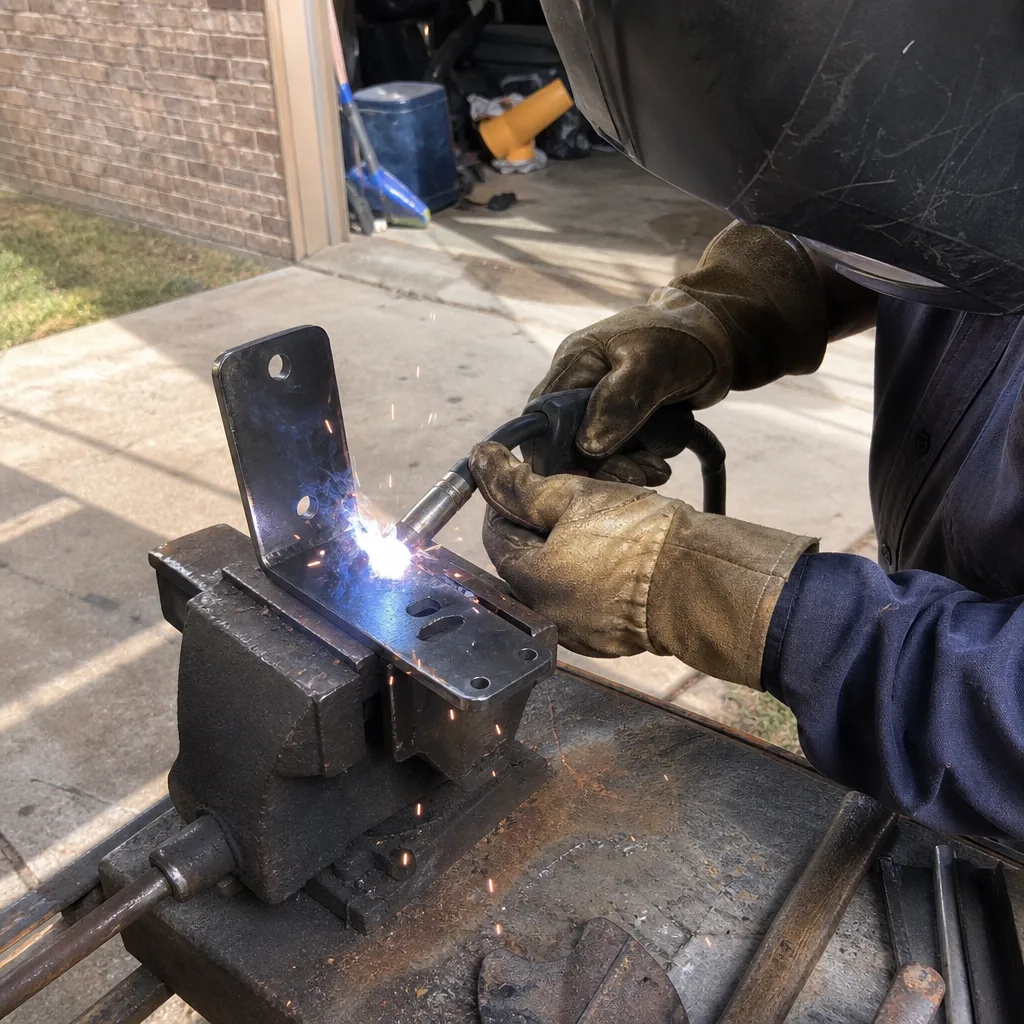
- Welding a broken picket back onto the frame
- Replacing wheels, rollers, hinges, or track
- Re-hanging a sagging gate panel on the existing posts
- Replacing a photo-eye or edge sensor
In practice, about 90% of the gate calls we run in Spring are permit-exempt gate repair warning signs that homeowners should watch for. The 10% that require permits are almost always new installations, full replacements, or automation added to a manual gate. If you’re unsure which category your job falls into, the words structural and mechanical classification are the two tests. Change either and you need the paperwork.
HOA & Deed Restrictions in Spring: The Approval That Bites Hardest
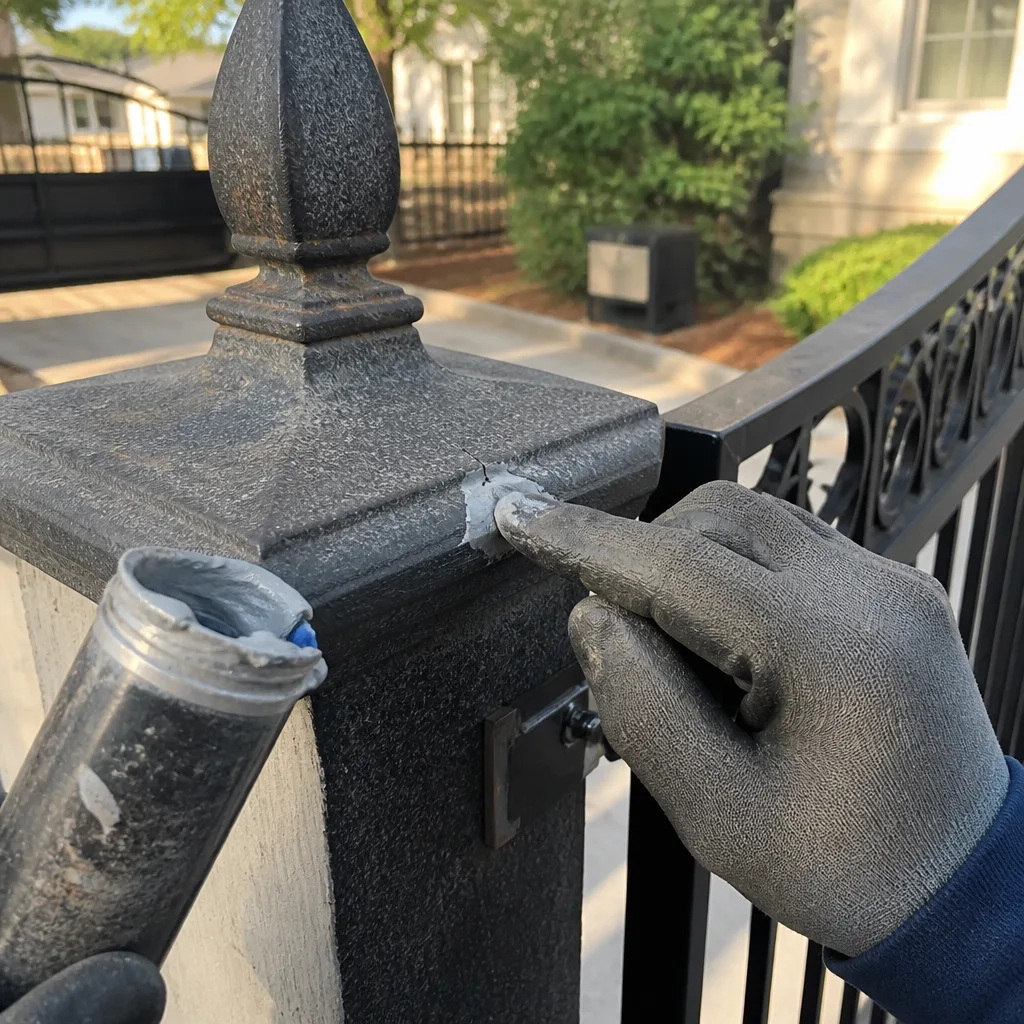
If you live in a deed-restricted community in Spring, your HOA has more power over your gate than the City of Houston does. Deed restrictions are private contracts recorded at the county level. They bind every owner in the subdivision, they survive the sale of the home, and they can be enforced even when the HOA has been dormant for years. Gate height, gate material, gate color, gate setback, and whether a gate is even allowed at all are all fair game for deed restriction language.
We regularly work in Spring neighborhoods where the HOA caps gate height at six feet. Municipal code may allow eight. The HOA wins. We’ve also worked in subdivisions where driveway gates are prohibited entirely, and the homeowner found out only after a neighbor complained.
What a Spring HOA can restrict that the city cannot:
- Gate height, often capped at six feet even where the city allows eight
- Gate material (wrought iron, steel, aluminum, wood, or no wood at all)
- Gate color or finish
- Setback from the curb or street
- Automation at all, regardless of permit status
- Lighting on gate posts
- Keypads, intercom panels, or access-control hardware visible from the street
Before you spend a dollar on gate installation in Spring, pull your subdivision’s deed restrictions. You can get them from the Harris County Clerk’s office, from your title company, or from the HOA management company if the board has one. Read the gate language yourself. Don’t call the HOA and ask for permission. Read the document. Many Spring HOAs will tell you “we don’t care” on the phone and then enforce the written covenants once a neighbor files a complaint. The paper is what binds.
UL 325 & Motorized Gates: Safety Standards That Apply Anyway
Here’s the part most Spring homeowners never hear about until something goes wrong: UL 325, the federal safety standard for automated gates, applies to every motorized gate in Texas, whether or not a permit was pulled, whether or not the gate is new, and whether or not an HOA ever approved it. The moment a gate has a motor on it, UL 325 governs how that motor can operate.
UL 325 mandates entrapment protection. Specifically, any automated gate must have at least two independent means of preventing the gate from crushing or trapping a person. Those are, in practice: a photo-eye (the infrared beam across the gate path), an edge sensor on the closing edge of the gate itself, a reverse-on-contact feature built into the operator logic, or a pressure-sensing circuit. The standard also requires audible and visual warning when the gate is moving.
The requirement has teeth in Texas because of liability. If a gate injures someone, the property owner’s legal exposure is measured against UL 325 compliance, not against whether a permit was ever issued. A permit can expire or never exist, and the injury lawsuit still resolves against the owner if the gate lacked the mandated entrapment protection.
What UL 325 means for a Spring homeowner in plain terms:
- Every automated gate needs at least two entrapment protections, and they must be independent of one another
- A photo-eye alone is not enough; the standard expects a second layer on the gate edge or in the operator logic
- Warning signage or audible signals are required when the gate operates automatically
- The standard applies to new gates and to operators retrofitted onto existing manual gates
- Compliance is not checked at the time of sale, at county tax appraisal, or at most HOA inspections; it becomes visible only after an accident
This is why we photograph the entrapment protection on every gate motor and opener job in Spring. Documentation is the only durable proof that the safety systems were present and functional on the day the work was done. If a claim arises two years later, the photo record is what stands between the homeowner and a he-said-she-said.
The Permit Process: City of Houston, Unincorporated Harris County, and Spring MUDs
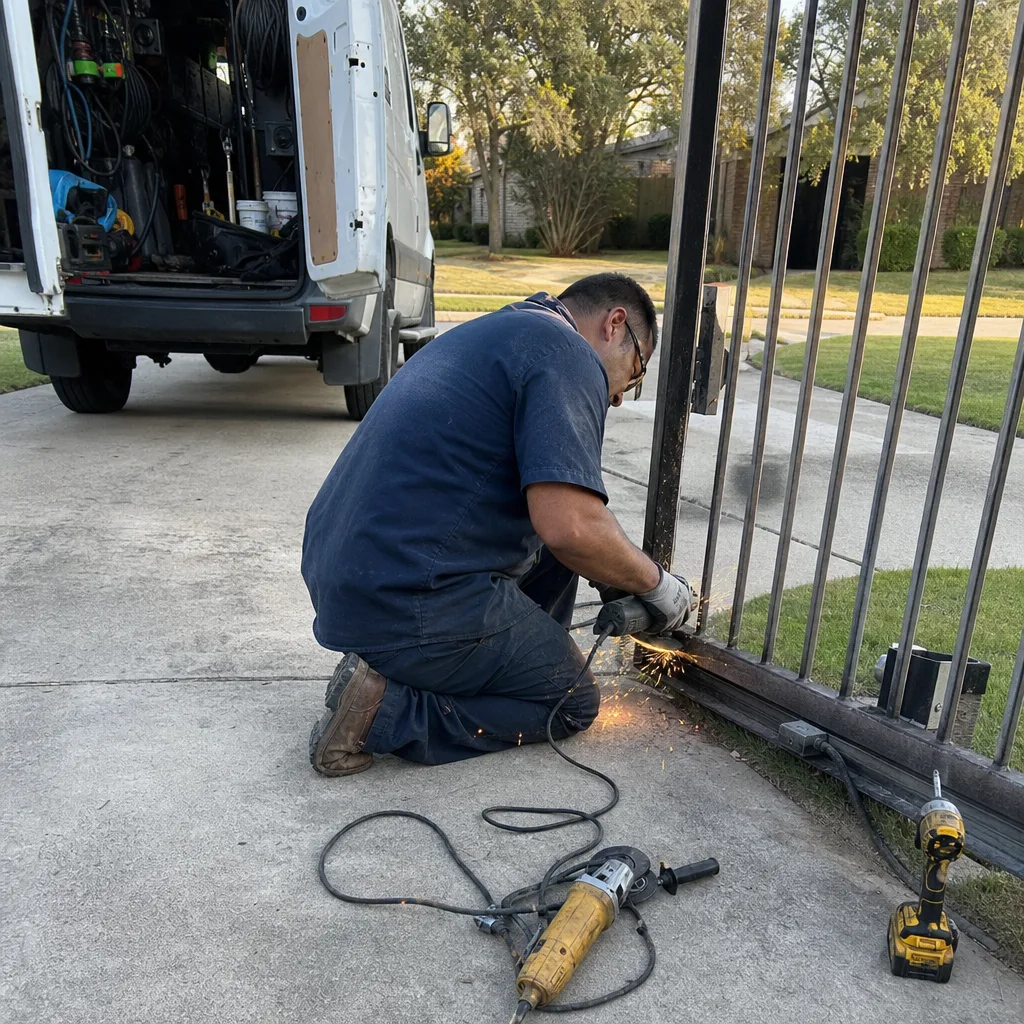
Spring, TX is split across multiple jurisdictions. The southern portion falls within City of Houston limits. The northern and western portions sit in unincorporated Harris County or within Montgomery County. Large residential sections are governed by MUD districts (Municipal Utility Districts), which layer their own requirements on top of county rules. This patchwork means two neighbors on the same street can theoretically answer to different permit authorities, and the answer to “do I need a permit” changes block by block.
Here’s the step-by-step for a new automated gate in unincorporated Harris County:
- Confirm jurisdiction with the Harris County Appraisal District or your tax bill; “Spring, TX” on your mailing address does not establish jurisdiction
- Check for MUD overlays. Many Spring subdivisions have a MUD that regulates stormwater, driveway approaches, and fence or gate setbacks
- Submit a building permit application to Harris County Permits (or the MUD, if the MUD asserts gate/fence authority)
- Include a site plan showing gate location, setbacks, and the driveway approach; most Harris County reviewers want the gate drawn to scale on the survey
- Pay the permit fee; Harris County uses a schedule based on project valuation
- Complete the work and schedule the inspection. The county inspector will check setbacks, footings (before concrete pour if the county requires a footing inspection), and the gate operator’s safety features
- Keep the signed inspection record and the permit with your closing documents; both are part of the property record at resale
City of Houston follows a similar sequence through the Houston Permitting Center. The key difference: Houston Code Enforcement is more likely to act on a complaint from a neighbor about an unpermitted gate, and Houston code is explicit about driveway gate setbacks from the street. A gate that swings outward over a public right-of-way or a sidewalk is a Houston code violation even with a permit, because the swing arc crosses public property.
One practical note from our Spring work: when a gate opens out toward the street, we tell the homeowner to verify the right-of-way line before committing to the design. A gate that looks fine on the survey can still violate code if it swings over a sidewalk easement. That’s a finding, not a feeling. We’ve measured it on three separate Spring job sites in the last two years.
Documenting Pre-Existing Conditions Before Repair
There’s a scenario we see in Spring at least once a month: a homeowner calls for a repair, we do the work, and six months later the HOA or a code inspector flags the gate for something unrelated, something that existed before our truck ever arrived. The homeowner says “but that was always like that.” The inspector asks for proof. The proof doesn’t exist.
That scenario is preventable with documentation. Before any gate repair work starts, photograph the gate from at least four angles: the full face, the hinge side, the latch side, and the ground contact points. Photograph the operator arm, the limit switches, the chain or belt, and the electrical connection. Write down what you see. A pre-existing crack in the concrete footer, a lean on the post, a missing picket, a torn photo-eye cover: document it.
Why this matters in Spring specifically: Harris County and many Spring MUD districts run periodic code sweeps, and HOA architectural committees sometimes review gate conditions during annual property inspections. If a non-compliant condition existed before your repair, and you can show a dated photo of it, the violation is pre-existing and typically not your obligation to cure at the repair visit. Without the photo, the inspector’s default assumption is that the condition arose during your work, or that you touched it and failed to fix it.
Our standard practice at Vance Gate Repair, as detailed in our guide to hiring a gate repair contractor, is a photo log on every visit. What was found, what was set, what was installed. Every adjustment gets a picture. Every part number gets written down. The homeowner gets the file and we keep a copy in the job record. That’s the Haven Standard: written price before work starts, documented evidence when the technician leaves. If a future inspection asks questions, the answers are in the file.
Inspection Steps for a New Automated Gate in Spring
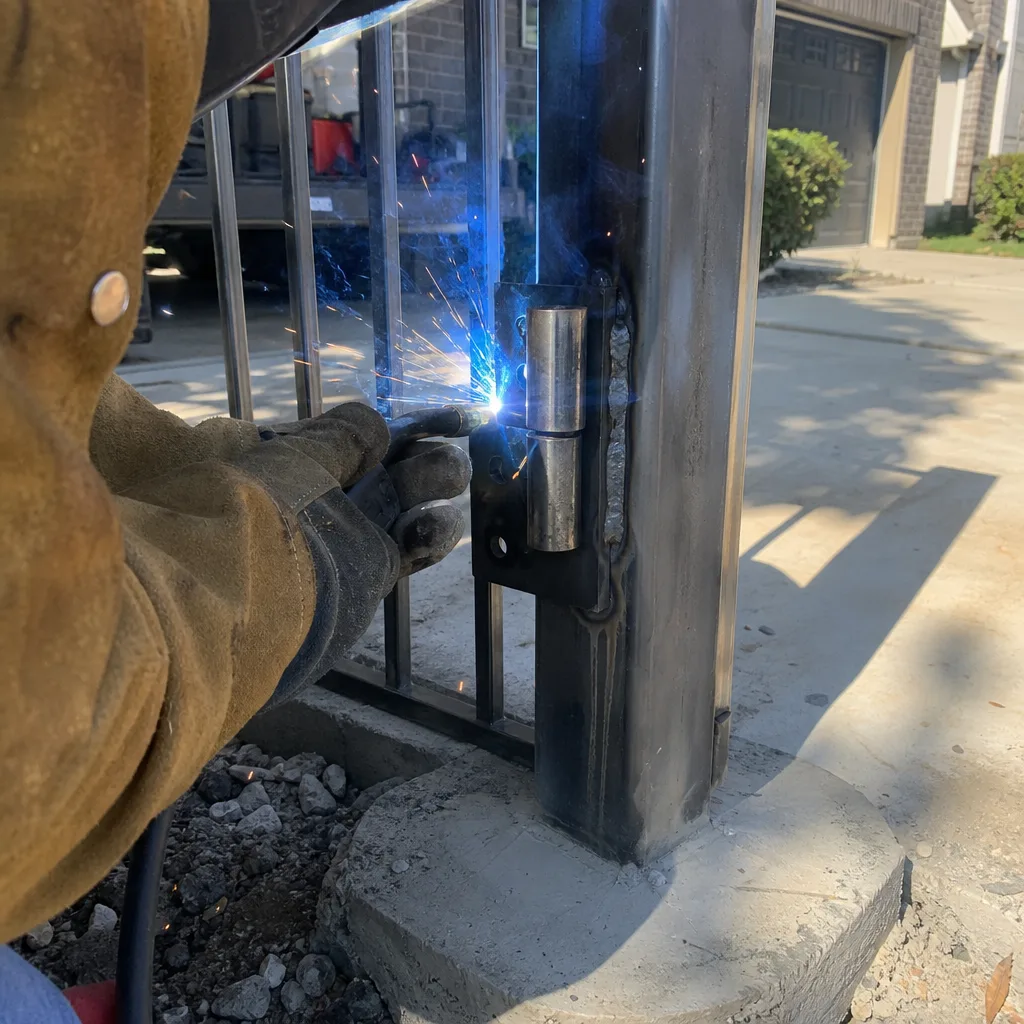
When a new automated gate does require inspection in Spring, here’s what the inspector is actually looking at. The list is specific because the inspectors work from a checklist, and if you know the checklist in advance, the inspection is a formality.
For a new automated gate in City of Houston or Harris County jurisdiction:
- Setback verification. The inspector measures the gate distance from the street or right-of-way line. If the gate swings outward, they check that the swing arc does not cross public space.
- Footing depth and width. If the county requires a footing inspection, it happens before the concrete pour. The inspector confirms the hole dimensions match the approved plan.
- UL 325 entrapment protection. The inspector tests the photo-eye by breaking the beam mid-operation. The gate must stop and reverse. The edge sensor, if present, gets physically pressed during a closing cycle.
- Operator logic settings. Force settings, close limits, and run speed get checked against the UL 325 maximums. The inspector is not looking for smooth operation; they’re looking for the gate’s failure behavior.
- Electrical work. The power run to the operator, any conduit, and the grounding connection are checked against National Electrical Code as adopted by the jurisdiction. If an electrician didn’t pull the run, the inspector may flag the work.
- Warning devices. The inspector confirms that warning signage or audible signals are present. A gate with no warning device and a photo-eye that won’t trip correctly fails the inspection on the spot.
- Final sign-off. The inspector signs the permit card, and that signed card becomes part of your property record. Lose it and you’ve lost your proof of compliance.
MUD districts may add a stormwater or drainage check, especially if the gate installation changed the driveway elevation or added a footer that could alter runoff. If your Spring home sits in a MUD, ask the MUD office before the inspection whether they want drainage documentation. It’s the question most homeowners skip, and the one that occasionally costs a re-inspection fee.
Common Mistakes to Avoid
- Assuming the city permit covers the HOA. The City of Houston and the HOA are separate approval systems that do not communicate. Passing one clears nothing with the other. Pull both, in writing, before work starts.
- Adding an operator to a manual gate without UL 325 review. The moment a motor goes on, the entrapment protection standard applies. A gate that pins a child against a post will not be defended by “it used to be a manual gate.”
- Not photographing the gate before repair. If an inspector flags a condition that existed before you touched the gate, without photos you cannot prove it. Dated photos are cheap. Re-litigating a code violation is not.
- Letting a gate swing outward over the sidewalk or street. This is a code violation in Houston and in most Spring MUD districts, even with a permit. If the gate’s natural swing crosses public space, redesign the swing direction.
- Ignoring the setback requirement. A gate placed too close to the street looks the same to the homeowner as a gate placed correctly. The inspector will measure. The difference often fails the permit at the last step.
- Paying cash without a written scope and price. The written price before work starts is the protection that keeps the invoice from growing after the gate is apart. Verbal estimates are how surprise invoices happen.
- Throwing away the permit and inspection record. At resale, the title company may ask. The HOA may ask. A future buyer may ask. The signed permit card is part of the property record, and replacing a lost one is a county clerk errand.
When to Call a Professional
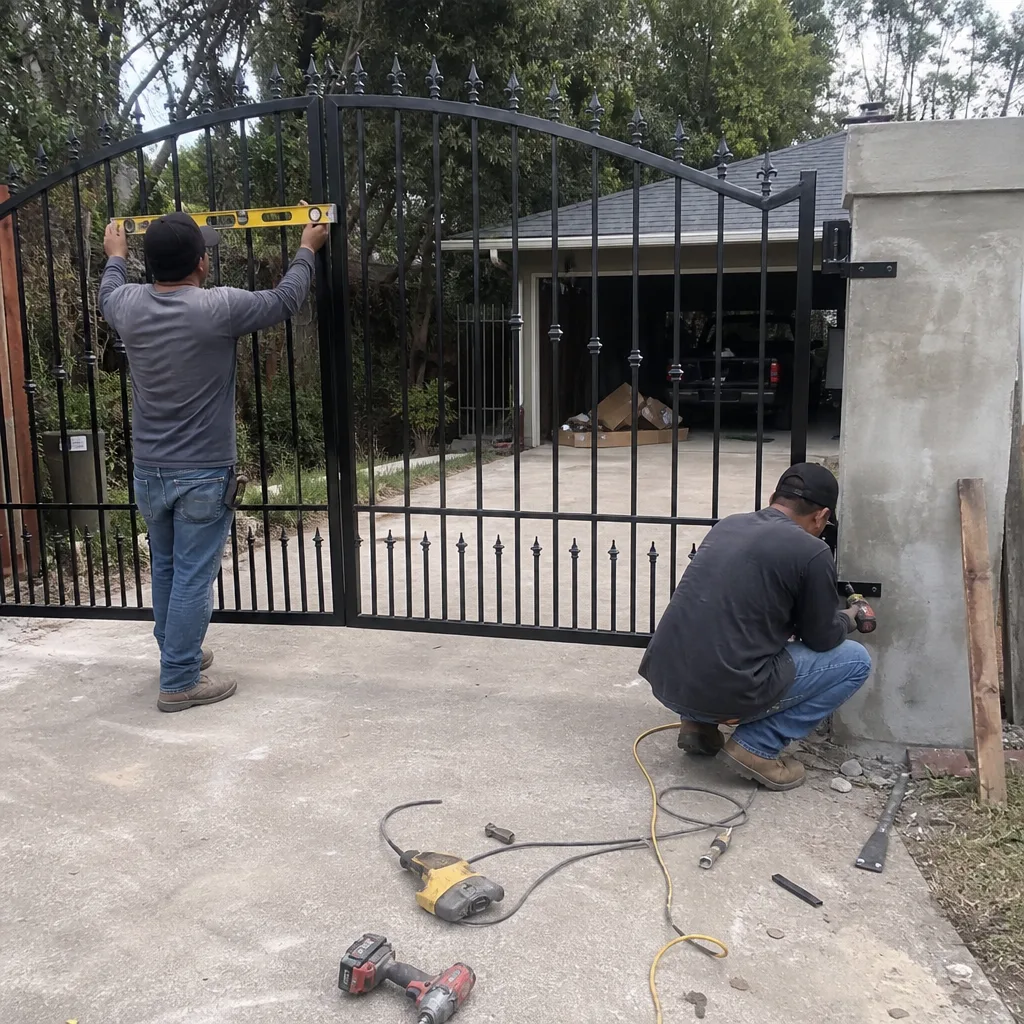
The repair-versus-replacement analysis is genuinely hard for a homeowner because the legal classifications don’t match the physical work. If your gate job involves new footings, new posts, a motor added to a manual gate, a relocated gate, or any work in a deed-restricted Spring community, a professional should look at it before tools come out. If your gate’s entrapment protection has failed, or you don’t know whether it has a photo-eye at all, that’s a safety issue on a device that can weigh several hundred pounds. Gate repair in Spring is not wall patching. The consequences of a mistake are heavy, fast, and permanent. Vance Gate Repair Spring offers free estimates in Spring, with a written price before any work begins. Call (346) 488-1637 and we’ll tell you over the phone whether your job is a repair, a replacement, or somewhere in between.
Frequently Asked Questions
No. Repair work on an existing gate, such as replacing hinges, wheels, chains, circuit boards, limit switches, or re-hanging a panel, does not require a permit anywhere in Spring or Harris County, as explained in our more guides & resources. The permit requirement triggers when the work becomes structural replacement or new construction, meaning new footings, new posts, a rebuilt frame, a relocated gate, or a motor added to a previously manual gate.
Harris County permit fees are based on project valuation, and for a typical residential driveway gate the fee runs between $100 and $400 depending on the jurisdiction and whether excavation is involved. City of Houston residential gate permits are in a similar range. MUD districts may add review fees. The exact amount changes with the project scope, so call the permitting office with your site plan in hand.
Yes. A Spring HOA can order removal of a gate installed without prior written approval if the deed restrictions grant the HOA authority over fences, gates, or exterior improvements. This is enforceable regardless of whether the city or county issued a permit. The two systems are separate, and passing one clears nothing with the other. Pull the deed restrictions before you spend anything.
UL 325 is the federal safety standard for automated gates, and it applies to every motorized gate in Texas the moment a motor is attached, regardless of permit status or HOA approval. It requires at least two independent entrapment protections, warning devices when the gate operates, and specific operator failure behaviors. If your gate is motorized, UL 325 governs it. Period.
It depends on jurisdiction. In most of unincorporated Harris County, adding an operator to a previously manual gate is classified as a change to the gate’s mechanical classification and does require a permit, though the fee is typically lower than a full new construction permit. In City of Houston, the same work may fall under a mechanical or electrical permit rather than a building permit. Either way, a motor added to a manual gate also brings UL 325 entrapment requirements into force.
Photograph the gate from at least four angles: full face, hinge side, latch side, and ground contact. Photograph the operator arm, limit switches, chain or belt, and electrical connections. Write down every pre-existing defect you can see: cracks, leans, missing pickets, torn sensor covers. Dated photos are your proof that a condition existed before your work, and that proof is what prevents a future HOA or code inspection from attributing old damage to your repair.
Any UL 325 compliant operator from a major manufacturer works, and the choice usually comes down to what fits the gate weight, what’s already on the property, and what your installer can service. For a new gate, we typically match the operator to the gate’s weight class and cycle frequency, not to a brand preference. If you already have a working Elite or FAAC operator on the property, retrofitting a different brand rarely makes sense.
The Bottom Line
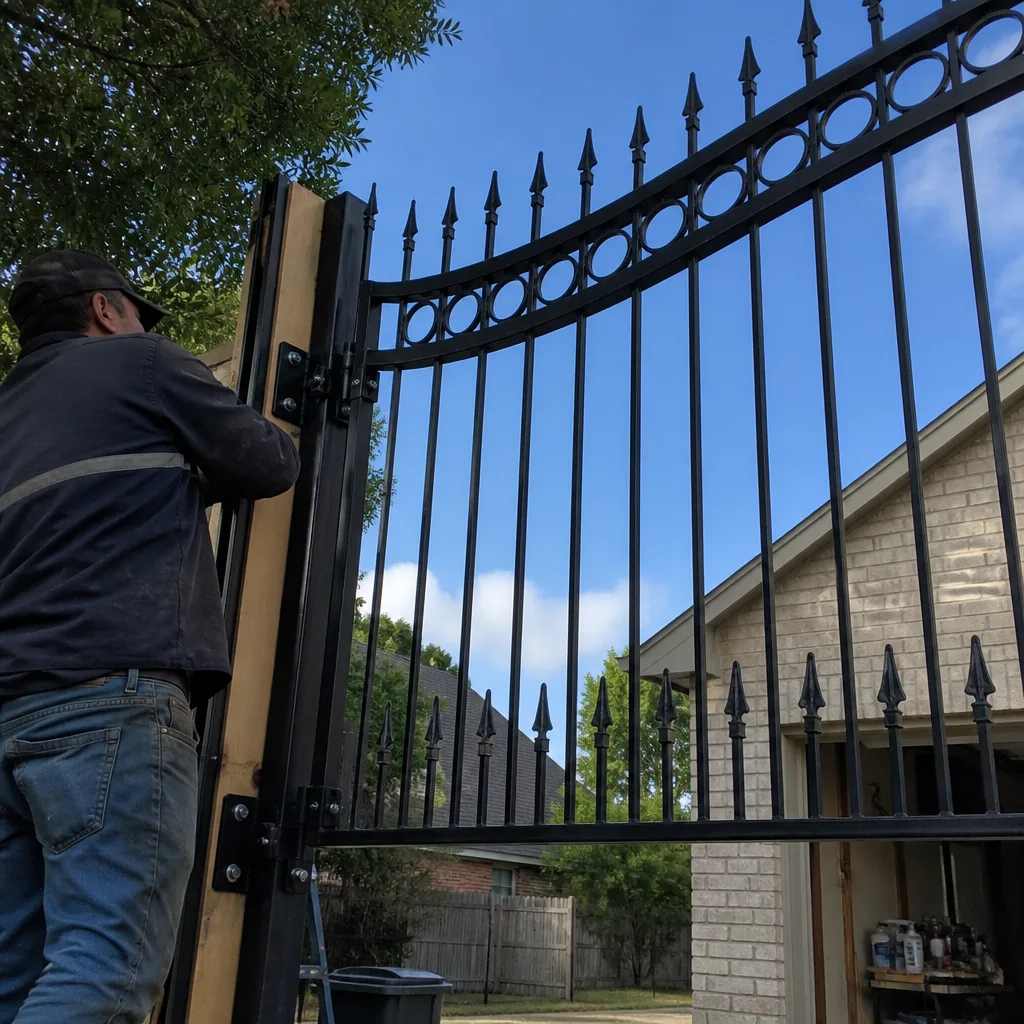
Gate repair in Spring, TX rarely needs a permit. Gate replacement, new construction, and adding automation to a manual gate frequently do. HOA deed restrictions run on a separate track from city and county code and are the more common source of forced removals. UL 325 applies to every motorized gate with or without a permit. Document everything before work starts, pull both approval layers in writing, and keep the paperwork with your property file. The homeowner who knows the lines between repair, replacement, and new construction almost never overpays, never gets surprised by an inspector, and never gets ordered to tear out work they already paid for. If you’re not sure which side of the line your gate sits on, a 10-minute phone call with a technician who’s seen the local codes in action will settle it. Call (346) 488-1637 for a free estimate and a straight answer.
Written by Adrian Vance, Owner at Vance Gate Repair Spring, serving Spring since 2014.