
Last updated September 20, 2026
Free on-site gate assessment - hinges, posts, and your LiftMaster or Nice gate operator checked before anything is quoted
The assessment is free and the quote is the invoice.


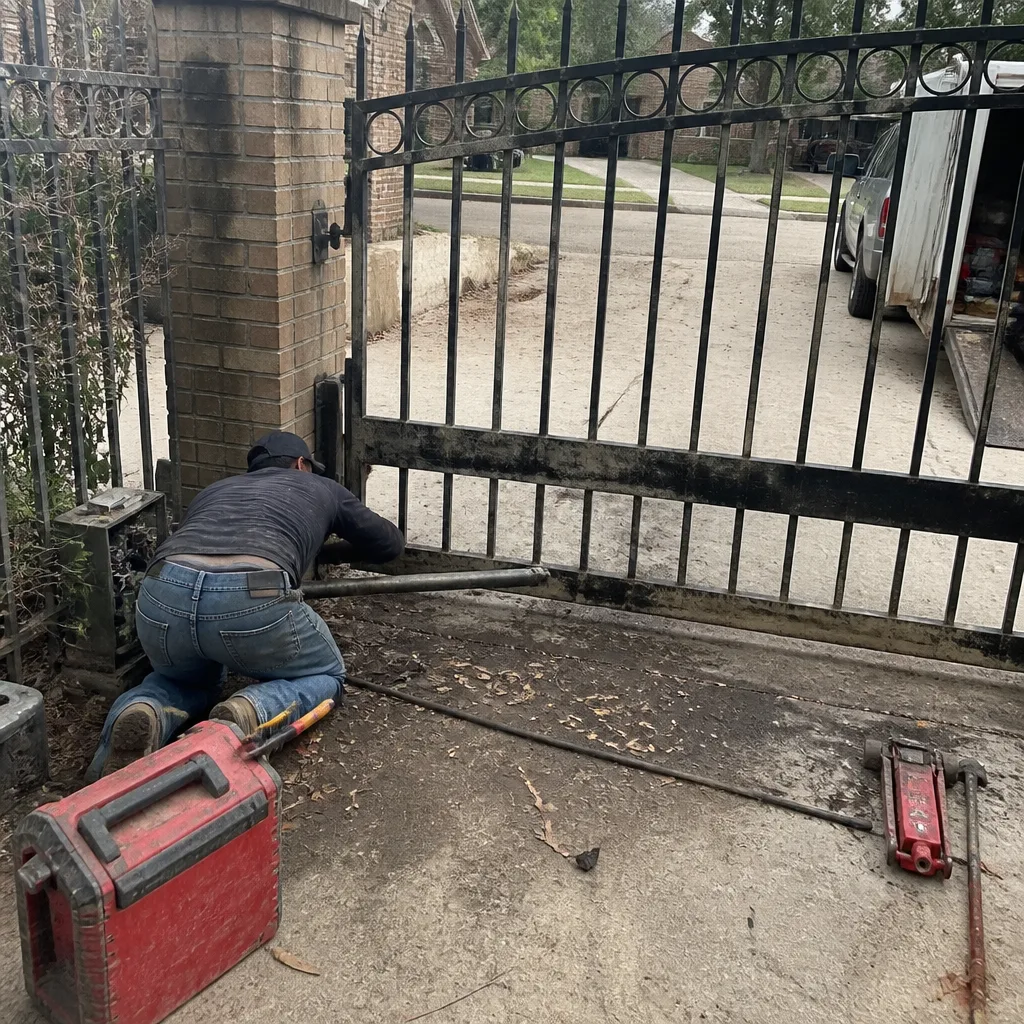 Before
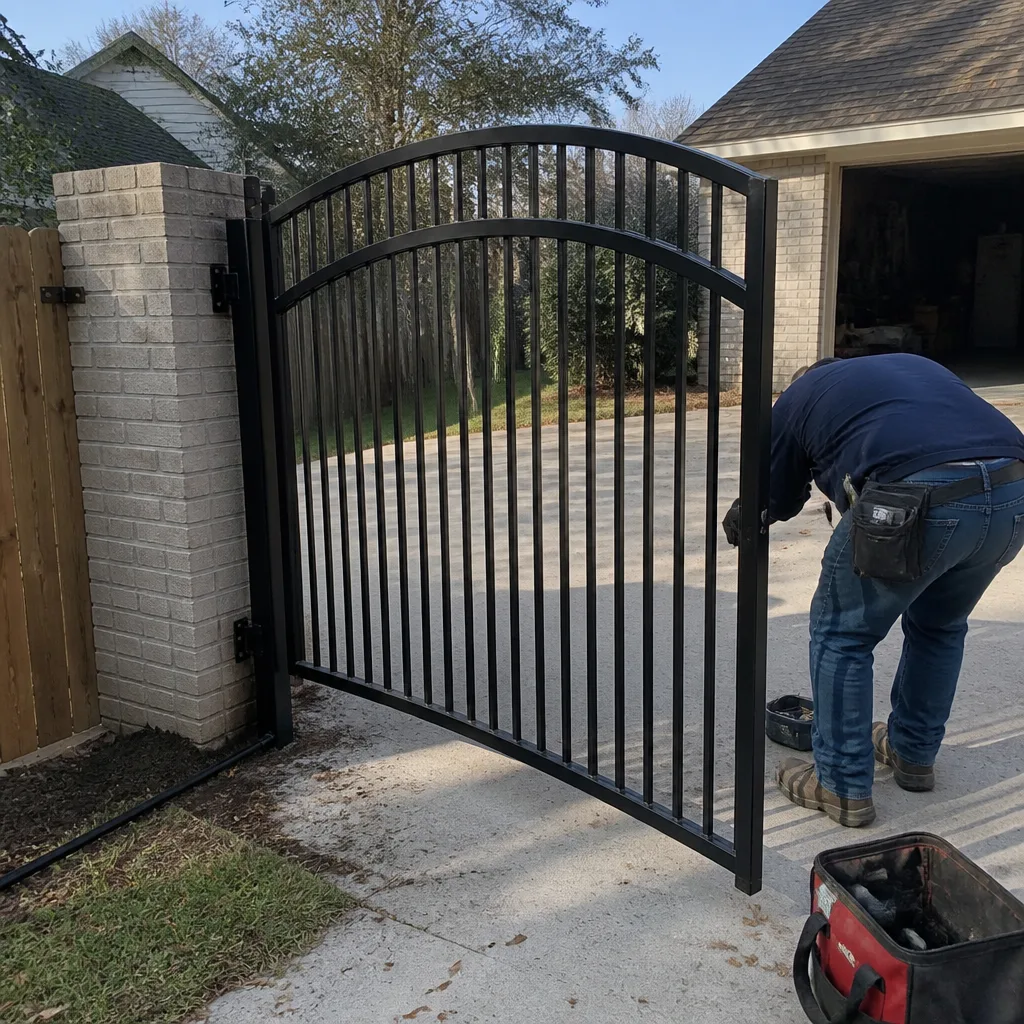 After
After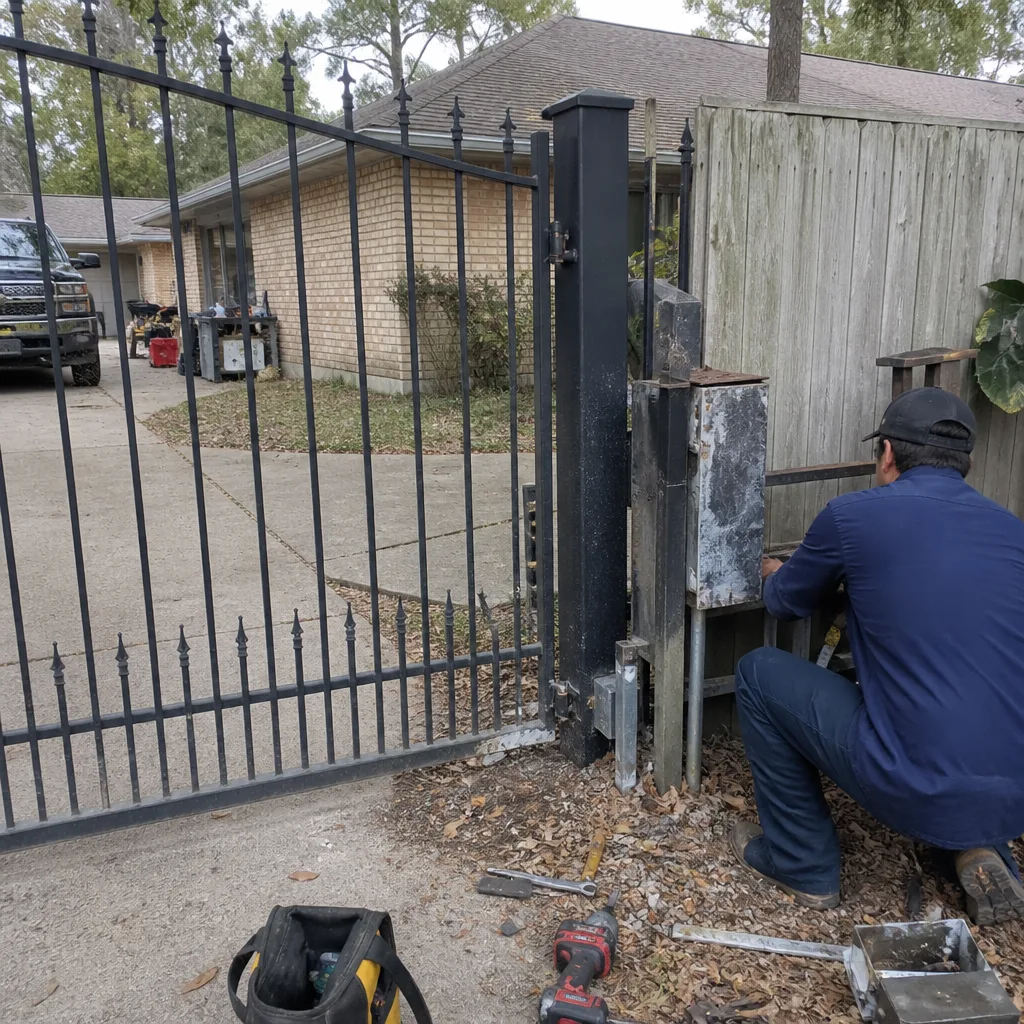 Before
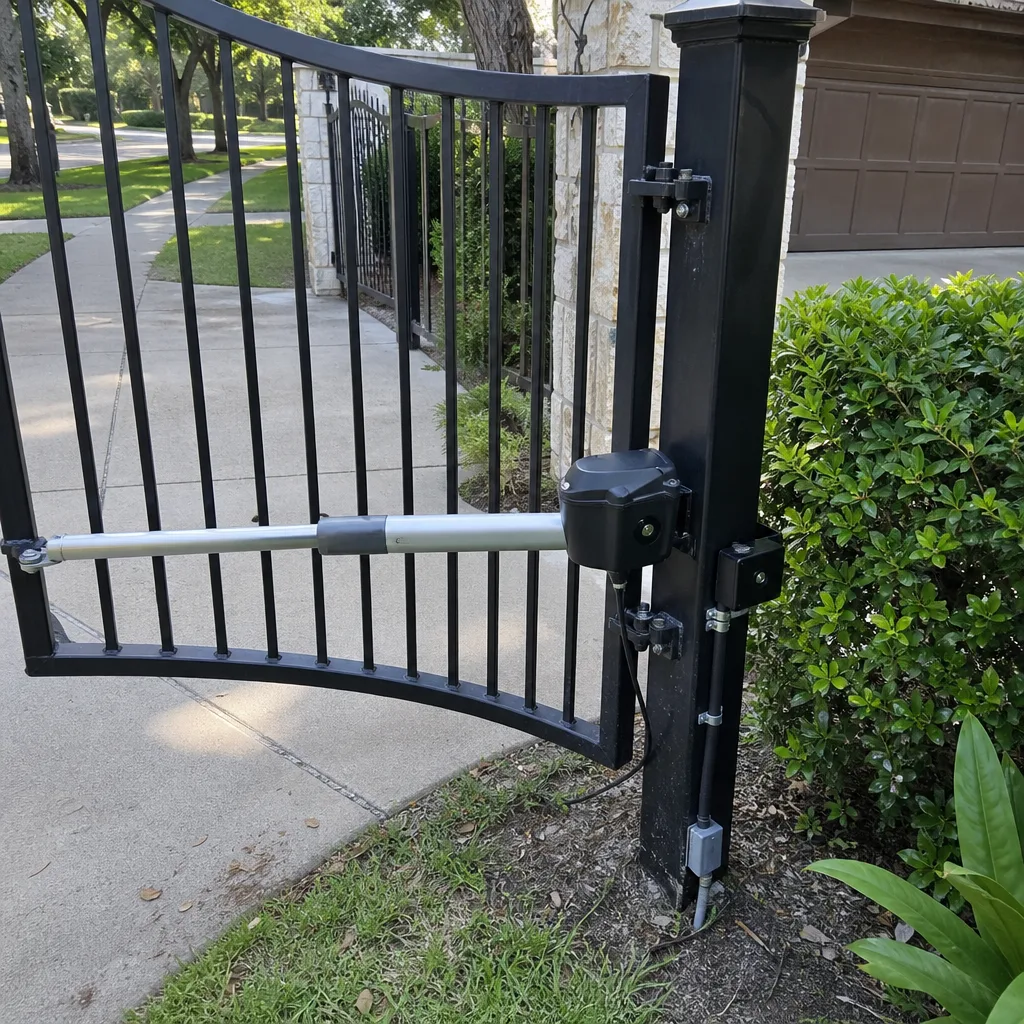 After
After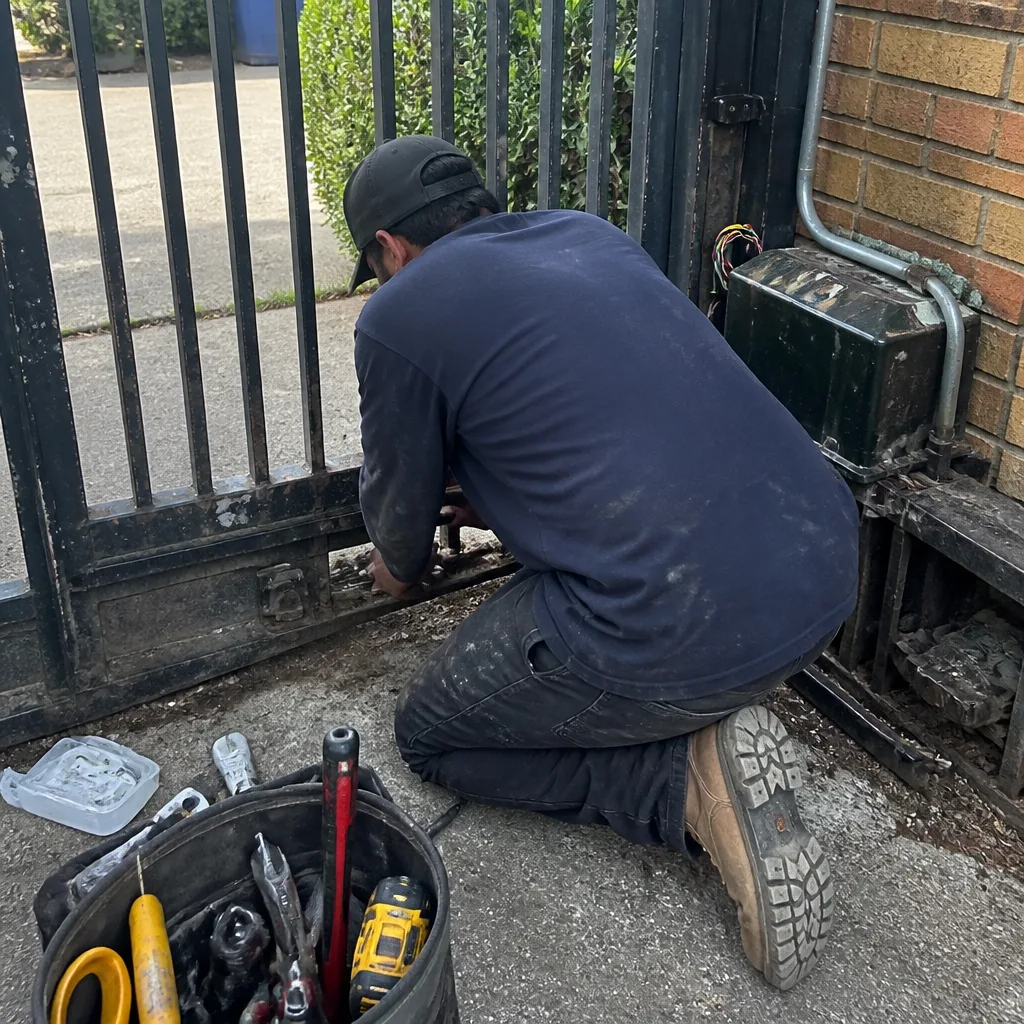 Before
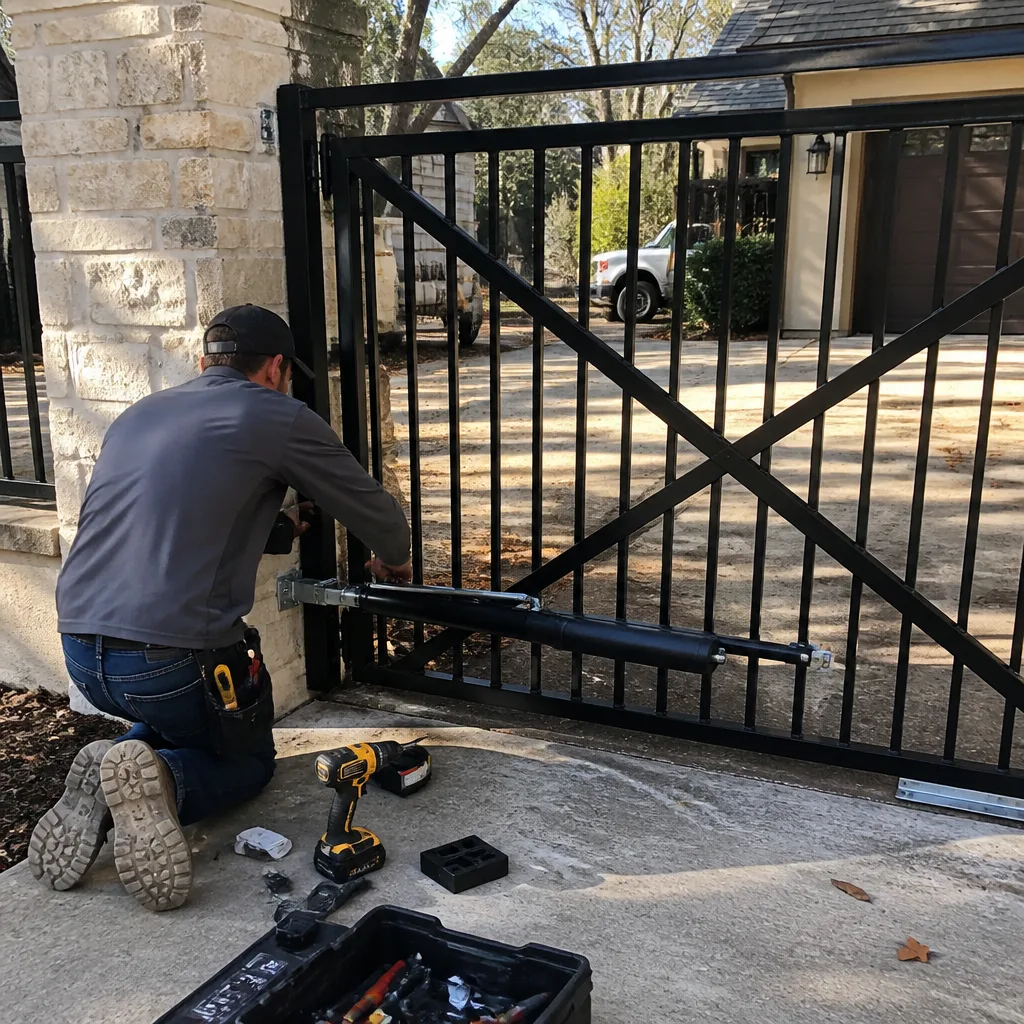 After
AfterHow to Hire a Gate Repair Contractor in Spring: A Step-by-Step Guide
Texas does not require a state license to repair automatic driveway gates. Anyone with a truck and a socket set can print a business card and start taking gate repair calls in Spring tomorrow morning. That single fact reshapes how you should approach hiring: the only reliable quality filter is the paperwork a contractor produces, or the absence of it. This guide walks you through the screening questions, the written scope requirements, and the quote-reading discipline that separates a gate technician who documents everything from a handyman who guesses. For our Gate Repair services, we apply these same standards on every job. By the end, you’ll know exactly what to ask before anyone touches your gate in Spring.
Quick Answer
Hire a gate repair contractor in Spring by demanding a written scope of work and a flat price before the job starts, verifying the contractor understands your specific operator brand (LiftMaster, FAAC, BFT, Viking, and others), and confirming every visit includes a documented photo record of what was found, adjusted, and installed. Skip any contractor who will not put the price in writing, cannot name the limit-switch adjustment on your motor, or offers only a verbal warranty. A qualified gate specialist in Spring should be able to answer three phone questions without hesitation and hand you a written line-item quote on the first visit.
Table of Contents
- The Three Questions That Separate Specialists from Handymen
- What a Written Scope of Work Must Include
- How to Read a Gate Repair Quote Line by Line
- Why a Verbal Warranty Is Worthless and What Written Terms Must Say
- How to Verify Previous Work Without Asking for References
- What Spring Homeowners Should Know About Climate, Codes, and Gate Wear
- Step-by-Step Hiring Checklist
- Common Mistakes to Avoid
BeforeAfterThe Three Questions That Separate Specialists from Handymen
Before you invite anyone to your property in Spring, ask these three questions on the phone. A gate specialist answers them the way a mechanic answers a question about a timing belt: immediately, with specifics, and without hedging. A general handyman stalls, changes the subject, or tells you the gate “just needs a new motor” without ever touching it.
Question 1: “How do you check and adjust the limit switch on a [your brand] operator?”
The limit switch controls how far the gate travels before it stops. Set it wrong and the gate either stops short of closing or over-travels and strains the motor, the chain, or the gate frame. A technician who services gate automation daily can tell you exactly how they find the limit-switch setting on your specific operator, whether that means reading a cam position on a Viking operator, checking the magnetic stop on an FAAC, or navigating the programming menu on a BFT control board. If the person pauses and says something like “we’ll take a look at it when we get there,” that’s not modesty. That’s unfamiliarity. In our experience in Spring, the contractors who cannot describe the limit-switch procedure over the phone are the same ones who replace a $900 control board to fix a $40 switch.
Question 2: “Which gate operator brands do you work on, and which brands do you replace instead of repair?”
The way a contractor answers this tells you whether they repair or re-sell. A repair-first contractor names the brands they service: LiftMaster, FAAC, BFT, Linear, Viking, Ghost Controls, DoorKing, Elite, Mighty Mule. A replacement-first contractor says “we install our own brand” or “those older motors aren’t worth fixing.” The replacement-first answer is not always wrong, but it is always self-serving. We service nine major automation brands because the existing operator on a Spring driveway is usually a quality unit that needs one specific component, not a landfill destination. If a contractor steers you toward replacement before diagnosing the failing part, get a second opinion.
Question 3: “What documentation do you leave with the customer after the job?”
Listen for specifics here: a written invoice with the part number, a photo log of the wiring before and after, the limit-switch readings recorded on paper, a written description of the adjustment made. Now compare that to the most common answer in the trade: “we just fix it and you watch it work.” Both answers result in a functioning gate today. Only one gives you a record you can hand to any future technician so the next repair does not restart from zero. This documentation habit is what separates commercial-grade gate work from driveway-level guesswork, and it costs the contractor nothing except discipline. A contractor who photographs and records everything on every job, the way Vance Gate Repair does under the Haven Standard, is a contractor who is accountable to a record, not to a memory. You can find more guides & resources on our blog.
What a Written Scope of Work Must Include
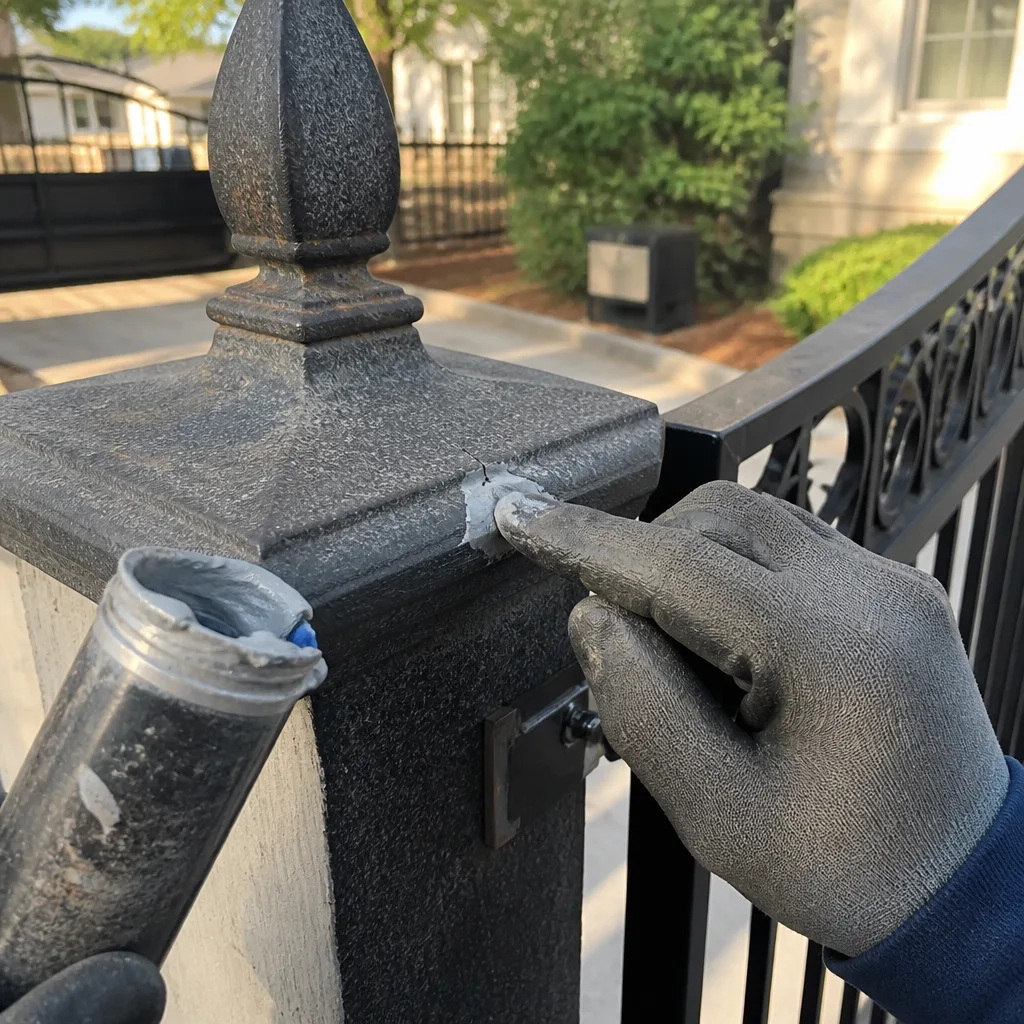
The written scope of work is the single most important piece of paper in a gate repair transaction in Spring, and the single easiest way to spot a contractor who is guessing. A real scope names the specific problem, the specific fix, and the specific parts. A vague scope uses adjectives. Here is what must appear in writing before any tool leaves the truck:
- The diagnosed problem in mechanical language. Not “the gate is broken.” Instead: “The gate fails to close fully because the close limit switch is set at 94 degrees and the gate frame contacts the post at 88 degrees.” The difference between those two sentences is the difference between a diagnostic and a guess. If the contractor cannot name the problem in mechanical terms in writing, they have not found it yet.
- The exact parts to be installed, with part numbers where available. “New limit switch” is a category. “Linear LMT-SW-01 limit switch assembly, factory replacement” is a part. Part numbers let you compare prices, verify authenticity, and reorder the same component five years from now.
- The flat price for the entire job. Not an hourly rate. Not a “plus parts” placeholder. A single dollar figure that includes labor, parts, travel, and any follow-up adjustment. If the contractor will not commit to a flat price in writing, what you are really buying is an open-ended invoice, and your gate will cost whatever the technician feels like charging when the job is done. The price should be quoted and agreed before any work starts, every time.
- A description of the finished state. “The gate will open fully and close fully, cycle five times without fault, the photo-eye will stop and reverse the gate when the beam is interrupted, and the operator will stop at the set limit without contacting the end posts.” Now you have a testable outcome. If the gate does not do those things when the contractor leaves, the scope tells you in writing that the job is not finished.
- The warranty terms in writing. More on this below, but the scope is where the warranty belongs, not a verbal promise made at the curb.
We tell every Spring homeowner the same thing: if the scope of work fits on a single sentence like “repair gate, $400, see you Tuesday,” you are not buying a repair. You are buying a lottery ticket.
How to Read a Gate Repair Quote Line by Line
A gate repair quote is not just a price. It’s a description of what the contractor knows, what they intend to do, and how they make their money. Reading it correctly takes about ten minutes and can save you hundreds of dollars in Spring. Here is what you’re looking at when the quote arrives, line by line.
Labor rate ranges for Spring-area work. Gate repair labor in the Spring market typically runs between $95 and $150 per hour depending on the complexity of the work. Motor replacement, which involves removing and remounting the operator, rerunning the limit settings, and re-syncing any safety devices, commonly lands at $250 to $450 in labor alone. A simple limit-switch adjustment or photo-eye alignment usually bills at a one-hour minimum. If a quote bundles “labor” as a single undifferentiated number with no breakdown of what the labor actually covers, ask for the line item. Legitimate contractors in Spring have no problem showing their labor structure. The ones who don’t are typically padding a number they cannot defend.
Parts markup norms. Most gate repair companies mark up parts 20 to 50 percent over wholesale to cover ordering, warranty handling, and having the part on the truck. That’s normal. What is not normal is a quote that lists “gate opener unit” at $1,800 when the same operator retails online for $1,100. If the quoted part number matches a retail sale unit and the markup exceeds 60 percent, ask why. A good technician will say “that price covers the programming and the return warranty” or “that’s my cost on this unit, here’s the invoice.” A bad one will get defensive.
Red flags in bundled pricing. The most common red flag in Spring gate quotes is the “gate service package” or “complete gate repair” line that bundles labor, parts, and an unspecified “adjustment” into one number with no internal breakdown. Bundles hide two things: how much you are paying for parts versus labor, and whether the contractor is padding the labor to subsidize a marked-down part. We write every quote as line items because a bundled price is an objection, not a detail. Ask any contractor to unbundle their bundle. If they won’t, that’s your answer.
Flat price versus time-and-materials. Some gate jobs genuinely cannot be priced flat. A fault that requires chasing an intermittent wiring problem through a 200-foot conduit run cannot always be diagnosed in the first hour. But for straightforward repairs, a spring replacement, a photo-eye alignment, a limit-switch calibration, there is no reason the price should not be flat and written before work begins. If a contractor quotes time-and-materials on a simple job, ask what could make the price go up. You will usually find the answer is “whatever I discover while I’m working.” That is not a scope. That’s a blank check.
Why a Verbal Warranty Is Worthless and What Written Terms Must Say
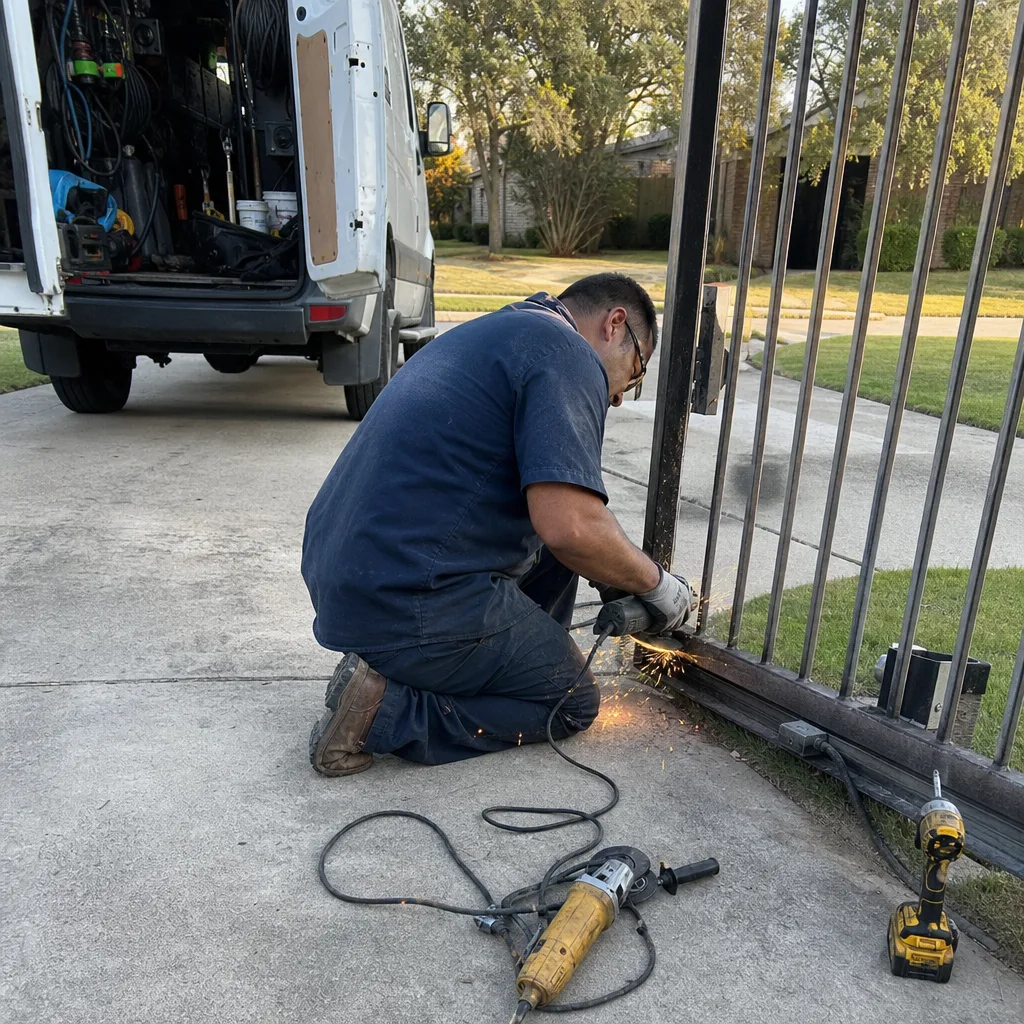
A verbal warranty is not a warranty. It’s a sentence. Texas law does not require gate repair contractors to provide any warranty at all, and when a dispute arises, the homeowner has no record of what was promised, for how long, or what remedy applies. Every Spring homeowner should insist the warranty appear in writing, on the scope of work or the invoice, specifying four things:
- The coverage period. “One year” or “365 days” is a real term. “We stand behind our work” is a slogan. The number must be written down, not described.
- What exactly is covered. Parts, labor, or both? A warranty that covers “the part” but charges $150 to come replace it is not a labor warranty. Ask directly: if the same component fails in six months, do I pay anything to have it fixed? The answer belongs in the warranty text.
- What voids the warranty. Some warranties are voided by DIY adjustments, by another contractor touching the gate, or by lack of documented maintenance. A written warranty should tell you what actions on your part cancel the coverage. If it doesn’t, the contractor retains the right to declare the warranty void at their discretion after the fact.
- The remedy timeline. “We’ll fix it” is not a timeline. “We will return within seven days and correct the issue at no cost” is a timeline. A warranty with no remedy timeline is enforceable only by your patience.
At Vance Gate Repair, the 365-Day Done Right Promise is written on every scope: if the repair is not right, we make it right within one full year, no argument, no fee, no expiration date within that window. That is what a written warranty looks like, and that is the standard every Spring homeowner should hold a contractor to.
How to Verify Previous Work Without Asking for References
References are curated. No contractor hands you the phone number of the customer who is still angry. And in gate repair, where much of the work involves wiring and settings that the customer never sees, a reference can tell you the contractor was polite and the gate works, but not whether the work was done correctly where it counts. Here is a more useful verification method we recommend to every homeowner in Spring: ask the contractor to show you documentation from a completed job.
Request a sample wiring diagram or inspection photo from a previous repair. Any contractor who truly documents their work can produce this in minutes from their job files. Ask to see a photo of a control board with the wiring labeled, or a limit-switch position recorded with a measurement. The response tells you everything. A contractor who says “I don’t take photos of my work” or “why would you need that” is telling you, in exactly those words, that no documented record exists for their previous jobs. A contractor who can show you a labeled photo of a FAAC control board with the terminal connections marked, or a before-and-after shot of a Viking operator with the limit cams repositioned, is demonstrating the documentation habit that will follow your job too.
Ask for a written price quote from a previous job. This one is subtle but powerful. If the contractor writes flat, line-item prices for every job, they can show you a redacted quote from last month. If they price verbally case-by-case, they cannot produce anything. You are not asking to verify their pricing history. You are asking to verify that the written-price practice exists at all.
This documentary approach to verification works because it eliminates the social theater of reference calls. You are not asking whether the contractor was nice. You are asking whether the contractor creates the paper trail that protects you later. In Spring gate repair, those are the same contractor.
What Spring Homeowners Should Know About Climate, Codes, and Gate Wear
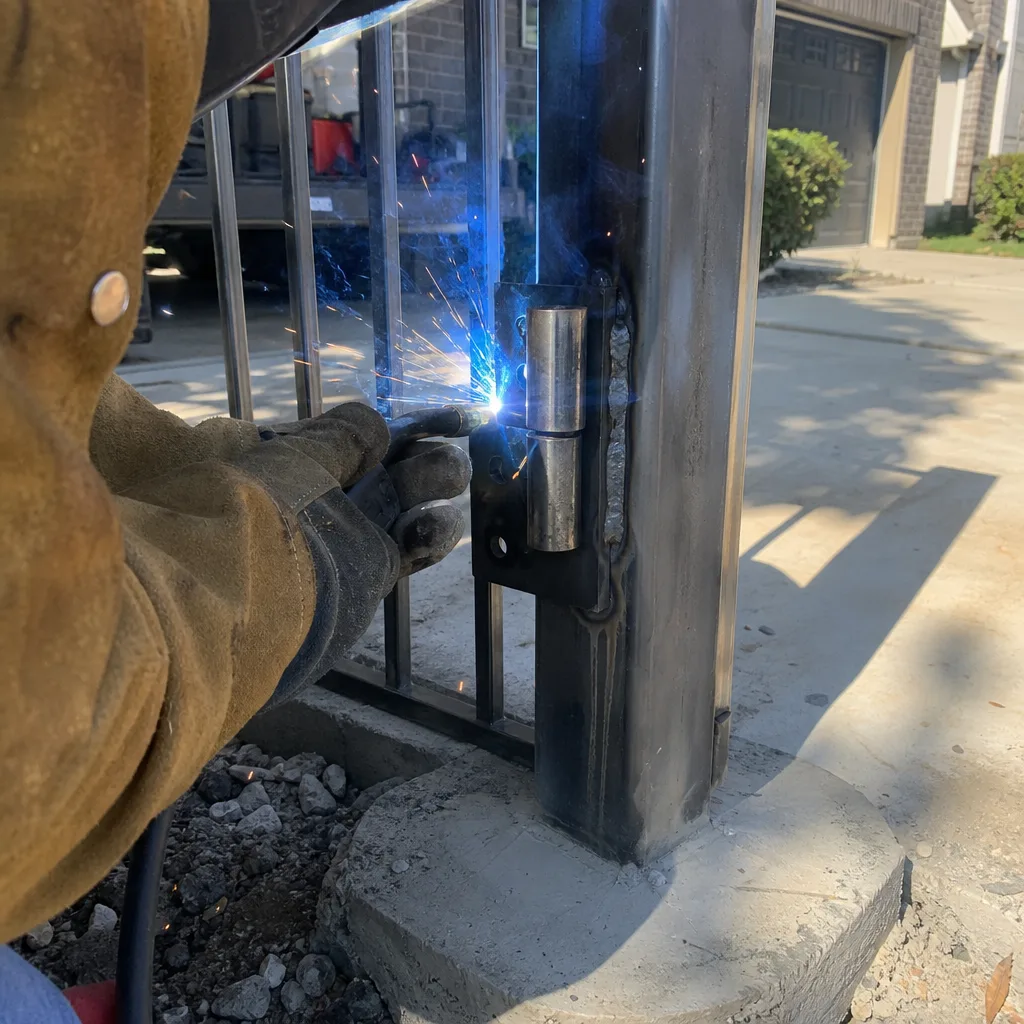
Spring’s climate does specific, predictable things to automatic driveway gates, and a contractor who has worked this market for years knows what to expect before the gate even fails. Here is the Spring-specific context that should inform your hiring conversation.
Humidity and heat load on electronics. Spring sits in a high-humidity, high-heat climate belt, and gate control boards in this market fail more often from thermal cycling and moisture intrusion than from any other cause. A control board that bakes in a metal enclosure at 110 degrees Fahrenheit all afternoon and cools to 78 at night collects condensation. Over years, that cycle corrodes solder joints and connectors. A gate technician who has worked Spring sees this on a weekly basis and will ask about enclosure ventilation, sun exposure on the operator box, and whether the board mounting area has ever been wet. A contractor who treats every control board failure as a random event is not reading the climate.
No state gate license requirement. We covered this at the top, but it bears repeating: Texas does not issue a specific gate repair license. There is no state exam, no required apprenticeship, no mandatory continuing education. This is why paperwork is the only meaningful filter. A contractor’s invoice, scope, and documentation are the only credential that matters, because the state will not provide one for you.
Soil movement and gate post lean. The clay soil in the Spring area expands when wet and contracts during dry spells, which slowly shifts gate posts out of alignment over years. The first symptom is usually a gate that scrapes the ground, drags at the latch, or trips the safety reversal because the frame is binding. A contractor who works Spring will look at post lean, soil condition, and hinge wear before blaming the motor. The gate might not need a new operator at all. It might need the post reset and the hinges rebuilt. A diagnostic that skips the post inspection is a diagnosis that missed the most common Spring failure.
No local gate permit for repairs. Repairs to existing gates do not require a city permit in most of the Spring area. New gate installations and, in some cases, significant structural modifications, may require HOA approval or a building permit depending on the property. Your contractor should know which applies to your specific situation and should tell you without hesitation. A contractor who says “you don’t need to worry about permits” is often right for repairs and dangerously wrong for new construction. The phrasing matters: the right answer is specific to the work, not a blanket reassurance.
Step-by-Step Hiring Checklist
Here is the full hiring sequence, in order, for any automatic gate repair in Spring. Use it as a checklist. Each step filters out a different failure mode.
- Document the failure before you call. Write down what the gate does and does not do. Does it open but not close? Does it stop halfway? Does the photo-eye light blink? Does the motor hum but nothing moves? This one step saves the technician a half hour of diagnosis and tells you immediately whether the company you call asks about the symptoms or just books an appointment. A contractor who asks diagnostic questions on the phone is engaged. A contractor who only asks for your address is a dispatcher.
- Call and ask the three screening questions. Limit-switch procedure, brand experience, documentation habit. Any contractor who stumbles on these three is not the contractor you want on a $1,500 automatic gate system. Move on.
- Request a written, flat-price scope before scheduling the repair. If the contractor is unwilling to put the price on paper before work begins, that is your withdrawal point. There are qualified gate contractors in Spring who will write the price down. Use one of them.
- Review the scope for numbered parts and testable outcomes. If the scope says “repair gate” without saying what the repaired gate will do, send it back and ask for specificity. You are not being difficult. You are applying the same standard the contractor’s commercial clients apply every day.
- Confirm the warranty in writing before work starts. Coverage period, parts and labor, voiding conditions, remedy timeline. If any of the four is missing, ask for it in writing. A contractor who writes the warranty down on the scope is a contractor who intends to honor it.
- Photograph your gate and operator before the technician arrives. This is your own documentation, and it takes two minutes. If the post-repair gate has a new scratch where no scratch existed, you want a before photo to point to.
- Walk through the finished gate with the technician. Test the open, the close, the photo-eye reversal, and the limit stops. If anything deviates from the written scope’s finished-state description, say so on the spot. It is much easier to correct an adjustment before the truck pulls away than to schedule a return visit.
- Collect the written documentation after the job. The invoice with the part number, the photo log, the written settings recorded. File it with the scope and the warranty. Five years from now, when the same gate behaves differently, that file is the difference between a $90 diagnostic and a $600 trial-and-error session.
If you want to work with a gate contractor in Spring who already follows every step of this checklist as standard practice, our Gate Repair in Spring page explains exactly what a diagnostic visit includes and what you will receive in writing before any work begins. We write the flat price on the scope, we document every adjustment with photos, and we leave the written record with you.
Common Mistakes to Avoid
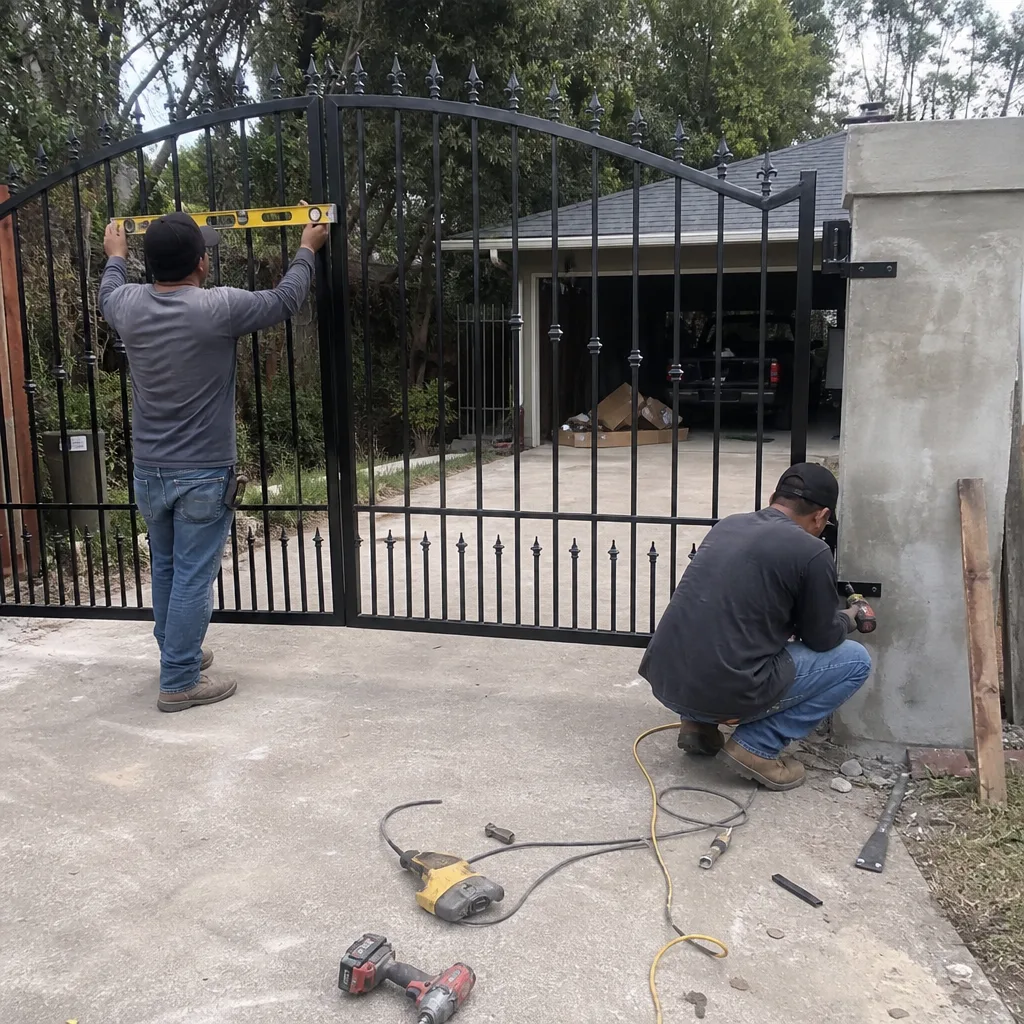
- Accepting a verbal estimate and then being surprised by the invoice. A verbal estimate is an opening remark, not a price. The price on the written scope is the number that governs. If the final invoice totals more than the written price and the contractor cannot point to a written change order you approved, you have a legitimate dispute rather than a surprise bill. The price should be quoted and agreed before any work starts, every single time.
- Choosing the lowest bid on a gate repair without comparing scopes. In Spring, two contractors can both quote “$450 to fix the gate” while one intends to replace the limit switch and the other intends to grease the hinges. If the scopes are not written in comparable mechanical terms, the prices are not comparable either. Compare the written work descriptions before you compare the dollars.
- Ignoring the photo-eye and blaming the motor. A significant share of “motor not working” calls in Spring turn out to be a misaligned or blocked photo-eye, the infrared beam that stops and reverses the gate when something crosses the path. If the motor powers up but the gate will not close, check the photo-eye alignment before calling for a motor replacement. A contractor who jumps straight to a motor swap without testing the photo-eye is not diagnosing; they’re selling.
- Replacing the operator before diagnosing the failing component. Gate operators are modular systems: motor, control board, limit assembly, capacitor, transformer, gear train. A failure in any one component can present as a “dead gate.” A contractor who says “you need a whole new operator” without naming the failed part and explaining why the operator cannot be repaired is probably not a contractor who repairs operators. Get a second opinion before authorizing a full replacement. We offer a free second opinion on any written estimate from another company; bring the paperwork and we’ll review it at no cost.
- Skipping the HOA check on a gate replacement. If your Spring subdivision has an HOA, a new gate or significant gate modification may require architectural review. Skipping this step can leave you with a functioning gate and a compliance notice from your HOA. The fix costs time and sometimes money. A contractor who works Spring HOAs regularly will ask about this before installation, not after.
- Not testing the safety reversal after a repair. Every automatic gate should reverse direction when it encounters resistance. After any repair, place an object like a trash can in the gate’s path and watch what happens. If the gate does not stop and reverse, the safety setting is wrong, and the repair is not finished regardless of how smoothly the gate moves. A technician who does not verify this with you is skipping the safety check that protects your kids, your car, and your dog.
When to Call a Professional
Automatic gate repair is not a weekend DIY project in most cases, and the safety stakes are higher than they look. Automatic gates are heavy: a 16-foot steel driveway gate can weigh 600 pounds or more, and the operators that move them generate significant force. A gate that is misadjusted, improperly repaired, or left without working safety devices is a crush hazard, an amputation hazard, and a significant liability. Gate operators also carry line voltage and are frequently wired into the home’s electrical system. If your gate is blowing fuses, tripping breakers, humming without moving, failing to reverse on contact, or the operator has visible wiring damage, call a professional. If the gate is movable only with a manual release and you cannot close it, do not leave it open and walk away; call someone who can secure it. Gate Motor & Opener in Spring covers the full range of operator diagnosis and service we handle. Vance Gate Repair Spring offers free estimates in Spring; call (346) 488-1637 and a live person will answer.
Frequently Asked Questions
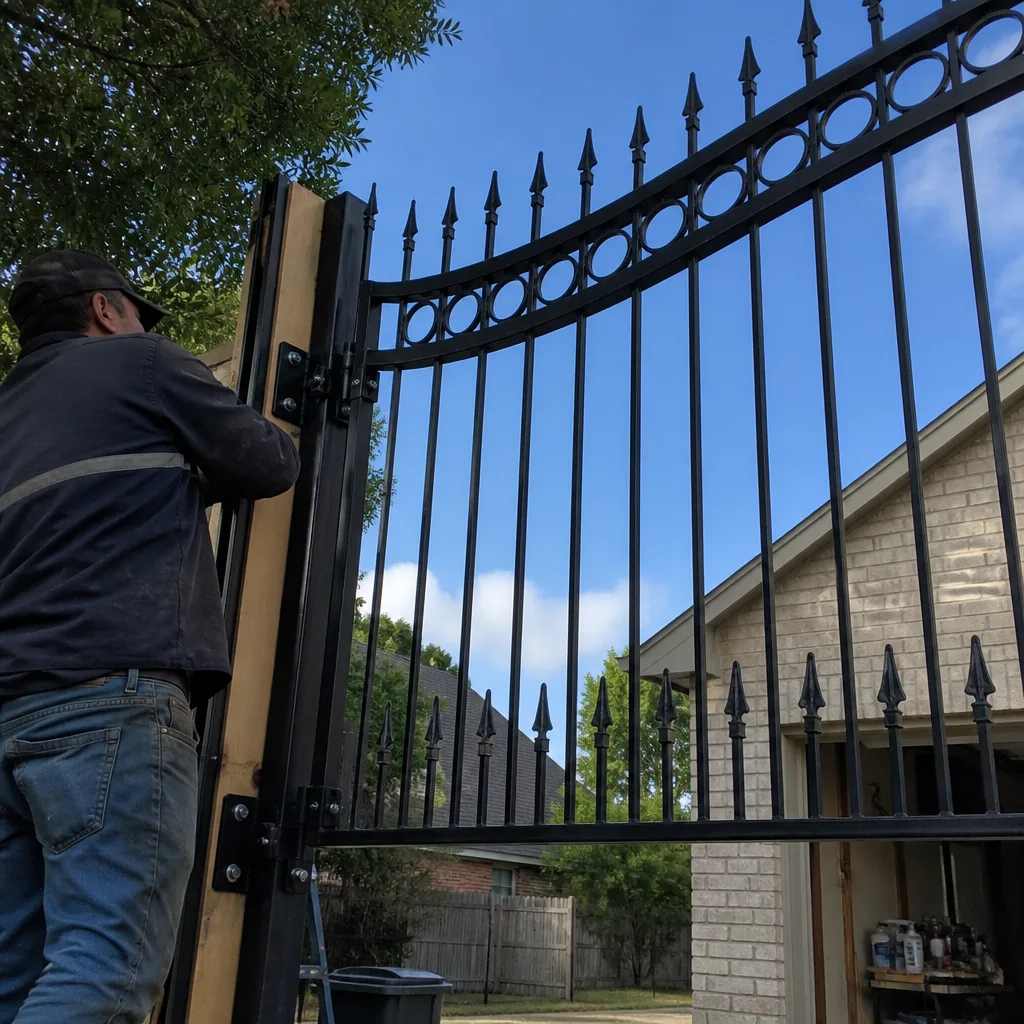
Gate repair in Spring typically runs between $150 and $650 depending on the failure. Simple repairs like a photo-eye realignment or a limit-switch adjustment usually land in the $150 to $250 range. Swing-gate motor replacements commonly run between $800 and $1,800 depending on the brand and whether the arm bracket is intact. Control board replacement on a Viking or FAAC operator falls between $450 and $900. The exact number depends on the diagnosis, which is why a written quote with the specific part and labor line items matters more than any range. Call (346) 488-1637 for an exact quote; estimates are free.
Texas does not require a gate repair license, so qualification has to be demonstrated through knowledge and documentation rather than a credential. Ask the three screening questions: how they adjust the limit switch on your operator brand, which brands they service, and what documentation they leave behind. Then request a sample wiring diagram or inspection photo from a previous job. A contractor who answers the questions confidently and can produce a documented record is qualified regardless of what certificate hangs on their wall. For a full breakdown of spring maintenance and repair priorities, read The Complete Guide to Gate Repair in Spring. A contractor who stalls on both is not.
Many common gate repairs are completed the same day: limit-switch adjustments, photo-eye realignments, capacitor replacements, and most manual release repairs take under two hours with parts on the truck. More involved repairs, like a motor replacement or a control board that requires a factory calibration, often take longer depending on part availability. If your gate is stuck open or cannot be secured, tell the dispatcher and we will prioritize it. Call (346) 488-1637 and a live person answers, any hour.
A full automatic gate installation includes the gate fabrication or assembly, the operator and mounting hardware, the concrete pad or post reinforcement, the electrical run from the house or subpanel, the safety devices (photo-eyes, safety edges where required), the limit calibration, and the final walkthrough with you. The written scope should list every one of those components in line-item form before work begins. Gate Installation in Spring covers the process in detail, including typical timelines and what the written quote includes.
Yes. A proper gate automation installation includes the low-voltage and line-voltage power run from the service point to the operator, plus the safety edge or photo-eye circuit that meets the automatic gate safety standards. These components are not optional add-ons; they are part of the written scope on every automation job we price. If you are automating an existing gate, the quote specifies the trenching route, the wire gauge, the conduit, and the safety device placement before any digging starts.
We service nine automation brands on site, including LiftMaster, FAAC, BFT, Linear, Viking, Ghost Controls, DoorKing, Elite, and Mighty Mule. The decision to repair or replace comes from the diagnosis, not from a sales preference. If the motor is seized, the gear train is stripped, and replacement parts exceed replacement cost, we will tell you that with the written pricing to prove it. If the fix is a $60 limit switch, we will hand you a written quote for a $60 limit switch. We don’t steer homeowners toward replacement when repair is the right call, and our Vance Gate Repair Spring home page explains the repair-first approach in plain language.
The Bottom Line
Hiring a gate repair contractor in Spring comes down to one filter: written proof or no written proof. No state license will sort the specialists from the guessers for you. Only the paperwork will. Ask the three screening questions before anyone steps onto your driveway. Insist on a written scope with a flat price, numbered parts, and a testable finished state. Read the quote line by line and push back on bundles. Require the warranty in writing with a coverage period, a remedy timeline, and defined voiding conditions. Verify the contractor’s documentation habit by requesting a sample wiring diagram from a previous job. If a contractor will not produce these things, you have your answer already. If they will, you have found a gate professional worth hiring.
Written by Adrian Vance, Owner at Vance Gate Repair Spring, serving Spring since 2014.